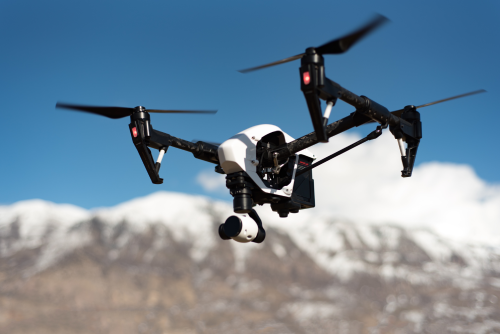
DJI Air 3S is an active prosumer multirotor from DJI aimed at creators, travelers, and serious hobby pilots who want a compact drone with more camera flexibility than a basic single-lens model. It matters because the Air 3S sits in a very attractive middle ground: more capable than many ultra-light drones, but still far more portable than larger professional aircraft. Based on the supplied record and official manufacturer context, this is best understood as a dual-camera travel drone built for image-making first.
Quick Summary Box
- Drone Name: DJI Air 3S
- Brand: DJI
- Model: Air 3S
- Category: Prosumer
- Best For: Travel creators, aerial photographers, and enthusiasts who want a foldable dual-camera DJI drone
- Price Range: Not publicly confirmed in supplied data
- Launch Year: 2024
- Availability: Active retail model; regional availability varies
- Current Status: Active
- Overall Rating: Not rated due to limited confirmed data
- Our Verdict: A strong-looking travel camera drone for users who want DJI portability plus dual-camera flexibility, but buyers should still verify bundle pricing, regional compliance, and exact current feature support before purchasing.
Introduction
The DJI Air 3S is a current DJI-branded prosumer drone from China positioned in the foldable camera-drone class. For buyers who want a travel-friendly aircraft without dropping into a much larger enterprise platform, it stands out as a camera-first option with dual-lens appeal. Readers should care because this is the type of drone many shoppers compare when deciding between portability, imaging quality, and day-to-day flying convenience.
That middle segment is especially important in today’s drone market. Entry-level and ultra-light models are easier to carry and often easier to justify under local regulations, but they can involve compromises in sensor size, flight stability in wind, or creative framing flexibility. At the other end, larger professional aircraft can deliver more capability, but they are more expensive, more cumbersome to transport, and often less realistic for casual travel or spontaneous shooting. The Air 3S exists precisely in the space between those extremes.
For many buyers, that makes it a practical rather than purely aspirational product. It is the kind of drone people consider when they want to create serious travel video, landscape imagery, real-estate content, or polished social media footage without turning every outing into a full production operation. In other words, the Air 3S is relevant not just because of what it can do on paper, but because of how often its size and capability balance will match the way real people actually fly.
Overview
What kind of drone is it?
The DJI Air 3S is a multirotor prosumer drone designed primarily for aerial photography and video capture. The supplied record identifies it as a current dual-camera travel drone, which places it squarely in the creator and advanced hobbyist market rather than the industrial, agricultural, or FPV racing categories.
That distinction matters. A prosumer drone is usually expected to deliver a more refined flight experience, stronger camera tools, and better software than a toy or beginner drone, while remaining much easier to own and use than a specialized enterprise aircraft. In the Air 3S, the emphasis appears to be on producing high-value visual content with minimal setup friction. It is meant to be folded, packed, carried, and launched frequently, not mounted with external tools or deployed as a mission-specific industrial platform.
Who should buy it?
This model is aimed at users who want better framing flexibility than a single-camera drone can offer. That includes travel filmmakers, content creators, enthusiasts stepping up from entry-level models, and light commercial users producing photo or video work within local regulations.
It also suits buyers who care about the whole experience, not just the camera. DJI’s consumer and prosumer drones are popular partly because they combine stabilization, controller options, app support, and safety systems into a relatively approachable package. So the likely Air 3S buyer is not only someone who wants strong image quality, but someone who wants those capabilities in a polished, mainstream ecosystem.
What makes it different?
Its biggest differentiator is the dual-camera concept in a compact, foldable DJI airframe. In practical terms, that means the Air 3S is not just about getting airborne easily; it is about giving the pilot more shooting options without moving to a larger professional rig. Official DJI positioning also makes it notable as a travel-oriented model rather than a payload-carrying platform.
That difference becomes meaningful the moment you start thinking in shots instead of specs. A wider camera can establish location and scale, while a medium-tele option can isolate a subject, compress background elements, and create a more cinematic perspective from farther away. For travel and creator work, that can be more valuable than simply chasing a higher megapixel number. It changes how the drone can be used in the field, especially when time, battery life, or takeoff opportunities are limited.
Key Features
- Foldable prosumer multirotor design for travel-friendly transport
- Dual-camera layout aimed at more flexible aerial composition
- Current active DJI model, not a discontinued legacy platform
- Official manufacturer context points to a creator-focused travel drone role
- Broadly published DJI Air 3S specs indicate a 1-inch primary camera plus a secondary medium-tele camera
- Broadly published official specs also indicate up to 45 minutes of claimed flight time under ideal conditions
- DJI O4-class transmission is associated with this model, with claimed long-range video transmission that varies by region and regulation
- Omnidirectional obstacle sensing is part of the Air 3S positioning, with official emphasis on improved obstacle awareness
- Compact controller ecosystem support through DJI consumer flight controls
- Better suited to imaging workflows than to carrying external payloads or specialized sensors
- Broadly published built-in storage provides useful backup capacity for quick flights and travel shooting
- Weight and feature set place it above ultra-light casual drones and closer to serious creator tools
Full Specifications Table
| Field | Specification |
|---|---|
| Brand | DJI |
| Model | Air 3S |
| Drone Type | Multirotor |
| Country of Origin | China |
| Manufacturer | DJI |
| Year Introduced | 2024 |
| Status | Active |
| Use Case | Prosumer aerial photography, travel video, hobby flying, light commercial content creation |
| Weight | Approx. 724 g |
| Dimensions (folded/unfolded) | Not publicly confirmed in supplied data |
| Max Takeoff Weight | Not publicly confirmed in supplied data |
| Battery Type | Intelligent Flight Battery, Li-ion |
| Battery Capacity | Approx. 4,276 mAh |
| Flight Time | Up to 45 minutes claimed |
| Charging Time | Not publicly confirmed in supplied data |
| Max Range | Up to 20 km claimed video transmission distance; region dependent |
| Transmission System | DJI O4 |
| Top Speed | Up to 75.6 km/h claimed |
| Wind Resistance | Up to 12 m/s claimed |
| Navigation System | GNSS satellite positioning; broadly published as GPS, Galileo, and BeiDou support |
| Obstacle Avoidance | Omnidirectional obstacle sensing; official positioning also highlights forward-facing LiDAR-assisted night awareness |
| Camera Resolution | Broadly published as 50 MP wide + 48 MP medium tele |
| Video Resolution | Up to 4K video, including high-frame-rate modes |
| Frame Rates | Up to 120 fps claimed in supported modes |
| Sensor Size | Broadly published as 1-inch wide + 1/1.3-inch medium tele |
| Gimbal | 3-axis mechanical gimbal |
| Zoom | Dual focal lengths; exact zoom behavior depends on camera and mode |
| Storage | Approx. 42 GB built-in storage; expandable storage support should be verified in official specs |
| Controller Type | DJI RC-N3 or DJI RC 2, depending on bundle |
| App Support | DJI Fly |
| Autonomous Modes | Smart RTH, subject tracking, and DJI automated capture modes are associated with this model; exact feature list should be verified by firmware and region |
| Payload Capacity | Not publicly confirmed in supplied data |
| Operating Temperature | Not publicly confirmed in supplied data |
| Water Resistance | Not publicly confirmed in supplied data |
| Noise Level | Not publicly confirmed in supplied data |
| Remote ID Support | Region dependent; verify official local specification |
| Geo-fencing | DJI geo-awareness tools are typically part of the ecosystem; exact implementation should be verified |
| Certifications | Not publicly confirmed in supplied data |
| MSRP / Launch Price | Not publicly confirmed in supplied data |
| Current Price | Not publicly confirmed in supplied data |
Design and Build Quality
As a DJI Air-series travel drone, the Air 3S is best understood as a portable foldable camera platform rather than a rugged industrial aircraft. That usually means a lightweight composite body, folding arms, compact storage, and a design philosophy centered on packing easily into a shoulder bag or small backpack.
The supplied data does not confirm exact dimensions or material composition, so buyers should check the official specification sheet if packed size is a key decision point. Even so, the Air 3S clearly belongs to the class of drones built for regular transport and quick setup rather than heavy-duty field abuse. It is also not presented as weatherproof, water-resistant, or crash-hardened, so field-readiness should be understood in a travel sense, not an all-weather enterprise sense.
One of the biggest practical design points is simply its weight class. At approximately 724 g, it remains compact enough to feel genuinely portable, but it is not in the ultra-light category. That means you get a larger platform with more room for battery capacity, stronger stabilization, and a more capable camera system, but you also leave behind some of the convenience advantages associated with sub-250 g drones. In real ownership terms, the Air 3S feels like a “serious small drone,” not a pocket casual flyer.
DJI generally has a strong reputation for polished consumer and prosumer airframe design, and the Air 3S appears positioned within that same refined, mainstream-user-friendly ecosystem. Serviceability is likely to center on replaceable propellers, batteries, controllers, and official repair support rather than owner-level structural maintenance.
That is worth emphasizing because for many buyers, build quality is not just about durability; it is about confidence. A well-designed foldable airframe usually means quicker deployment, more reliable folding-arm alignment, cleaner battery fitment, more secure gimbal protection during transport, and better day-to-day handling. Even without overclaiming specific structural details, the Air-series philosophy strongly suggests a drone designed to live in a travel kit rather than only emerge for planned shoots.
Flight Performance
On paper, the Air 3S should deliver the kind of stable, confidence-oriented flight behavior that buyers expect from DJI’s prosumer camera lineup. The broadly published official figures of up to 45 minutes claimed endurance, O4 transmission, and up to 12 m/s wind resistance suggest a drone intended for serious outdoor use rather than short, casual hops.
The claimed top speed of roughly 75.6 km/h indicates enough pace for repositioning, tracking broad moving scenes, and handling open environments, though real-world speed and flight time will always depend on wind, temperature, battery condition, and shooting style. The claimed long-range transmission figure should be treated as a lab-style maximum under regional regulatory limits and ideal conditions, not as a guaranteed practical operating distance.
In practice, the more important number for most owners is usable flight time rather than maximum claimed endurance. Real flights involve climbing, descending, hovering for composition, braking, dealing with wind, and often landing with a safe reserve still in the battery. So while the headline endurance figure is impressive for this class, buyers should think of it primarily as a sign of strong efficiency rather than a promise that every sortie will approach the published maximum.
In analysis terms, the Air 3S likely feels most at home outdoors in open or semi-open spaces where GNSS positioning, obstacle sensing, and line-of-sight flying can all work together. Indoor use is possible only with caution, but this is not an indoor-first drone. Its size, speed, and value make it much better suited to outdoor image capture than to tight interior flying.
The wind-resistance figure is also more important than it first appears. Travel shooters often work in environments that are visually appealing precisely because they are exposed: coastlines, ridgelines, overlooks, lakesides, deserts, and open urban edges. A drone that can hold position confidently and return safely in moderate wind is more useful than one that only performs well in calm conditions. That does not mean the Air 3S is a storm drone or that pilots should fly irresponsibly, but it does suggest a platform built for more than postcard-perfect weather.
Transmission performance deserves similar context. DJI’s transmission systems are often a major strength, but published maximum range figures are not the same thing as normal operating distance. In many countries, visual line-of-sight rules remain the real limit regardless of what the radio link can theoretically do. A better way to interpret O4-class transmission support is that it should contribute to a cleaner, more reliable live view and a more stable connection in ordinary use, especially in less-than-perfect RF environments.
Obstacle sensing and Smart Return to Home further reinforce the Air 3S’s confidence-oriented role. Those systems are useful safety layers, particularly for creators focused on framing a shot rather than manually micromanaging every aircraft movement. Still, buyers should treat them as assistance, not immunity. Thin branches, wires, glass, difficult lighting, and fast closing speeds can challenge any avoidance system. Good piloting habits remain essential.
Camera / Payload Performance
This is fundamentally a camera-led drone. The Air 3S is best known for its dual-camera setup, and that matters because it gives pilots two different creative viewpoints without landing to swap equipment. A wide primary camera is useful for landscapes, establishing shots, travel footage, and general-purpose aerial work, while the medium-tele option is more useful for subject isolation, compressed perspectives, and cleaner framing from a safer stand-off distance.
Broadly published official specifications point to a 1-inch main sensor, which is especially important for buyers who care about dynamic range and low-light potential. While sensor size alone does not guarantee image quality, it usually gives a travel drone more serious imaging credibility than smaller-sensor alternatives. The secondary medium-tele camera adds versatility rather than simply acting as digital crop.
That difference can be huge in real shooting situations. A wide lens is excellent for making a scene look expansive, but it can also make distant subjects feel smaller than expected. A medium-tele perspective helps solve that by bringing visual emphasis back to the subject while still preserving the aerial context. This is useful for boats on water, vehicles on mountain roads, architecture, lone hikers, resort properties, or any scene where you want stronger separation between the subject and the surrounding landscape.
A 3-axis gimbal is also significant because it supports smoother footage and makes the aircraft more viable for cinematic travel capture. Built-in storage, broadly published as about 42 GB, is a practical convenience for users who do not want every short flight to depend entirely on removable media.
The still-photo side is also relevant even for buyers who think of themselves primarily as video creators. A drone with a larger main sensor and a secondary focal length can be more useful for producing social thumbnails, marketing stills, tourism imagery, real-estate photos, and travel editorial shots. The ability to choose between a wider and more compressed perspective can make an aerial photo set look much more intentional and much less repetitive.
On the video side, the broadly published support for up to 4K recording and high-frame-rate modes suggests a flexible content tool rather than a one-mode flyer. High frame rates can be useful for slow-motion insert shots of waves, moving traffic, treelines, and action scenes, while standard frame rates remain more appropriate for narrative travel footage or cinematic sequences. Buyers with advanced post-production needs should still verify current codec, color, and profile support in official documentation before relying on specific workflow assumptions.
What the Air 3S is not, however, is a payload carrier. The supplied data does not confirm any payload capacity, and nothing in its positioning suggests that it is meant to carry external sensors, delivery gear, or specialized industrial equipment. If your project depends on thermal imaging, mapping payloads, loudspeakers, spotlights, drop systems, or interchangeable mission hardware, you are shopping in the wrong category.
Smart Features and Software
The Air 3S sits in DJI’s mature consumer/prosumer software ecosystem, which is a major part of its appeal. DJI Fly support means buyers can expect a relatively mainstream app workflow rather than a niche or highly technical ground-control environment.
Broadly published model capabilities include smart return-to-home functions, automated subject tracking, and obstacle sensing intended to reduce pilot workload during routine flights. Official product positioning around obstacle awareness is especially relevant for a travel drone, because many buyers use this class of aircraft in changing environments such as coastlines, city edges, mountain viewpoints, and tourism locations.
DJI’s automated capture modes are usually a core part of the Air-series value proposition. For the Air 3S, that likely means creator-friendly features such as tracking, automated shots, and assisted return behaviors, though exact current mode availability can depend on region, controller choice, and firmware version. Buyers who need SDK access, third-party automation, or deep enterprise mapping workflows should verify that specifically, because the Air 3S is not primarily marketed as a specialist survey or inspection platform.
This ecosystem matters more than spec sheets often suggest. A good consumer drone experience is not only about airborne performance; it is also about setup speed, firmware management, clear status indicators, flight logs, updating home points, syncing media, and navigating app menus without frustration. DJI tends to be strong in that polished-user-experience area, which is part of why its travel drones remain so popular.
Controller choice can shape the experience as well. The supplied data references DJI RC-N3 or DJI RC 2 depending on bundle, and that is not a trivial difference. For some buyers, a phone-connected controller is perfectly fine and helps lower entry cost. For others, an integrated-screen controller is worth the extra money because it reduces setup friction, preserves phone battery, and creates a more self-contained flying kit. Buyers should think about this before purchasing because the controller can affect convenience every single time the drone is used.
Firmware is another practical consideration. Feature availability, obstacle behavior, tracking performance, stability improvements, and even regional compliance handling can evolve after launch. That is normal in the DJI ecosystem, but it means owners should keep expectations aligned with the current official support state rather than early marketing summaries or old review videos.
Use Cases
The most realistic use cases for the DJI Air 3S are the following:
- Travel photography and cinematic travel video
- Aerial content creation for YouTube, social media, and brand storytelling
- Landscape and nature shooting where dual focal lengths are useful
- Real-estate photo and video work, subject to local law and permissions
- Tourism, destination, and resort media capture
- Hobby and enthusiast flying with a strong emphasis on image quality
- Light commercial aerial production for small businesses and freelancers
- General-purpose stand-off visual capture where a tele perspective is helpful
What ties these use cases together is not extreme specialization but versatile visual production. The Air 3S looks strongest when the mission is to capture attractive, polished imagery efficiently. It is especially useful for operators who want to gather a varied shot list from one compact airframe rather than carry multiple drones or accept a single fixed perspective.
For travel shooters, that can mean wide reveal shots plus tighter medium-tele passes of a landmark. For real-estate creators, it can mean broad property context combined with more flattering architectural framing. For tourism marketing, it can mean dramatic establishing imagery mixed with subject-focused sequences that feel more cinematic and less generic. That is the real-world value of the platform.
Pros and Cons
Pros
- Dual-camera design offers more creative flexibility than many single-camera drones
- Strong travel-friendly positioning in a foldable DJI airframe
- Broadly published 1-inch main sensor gives it serious imaging appeal for a portable drone
- Claimed flight endurance is strong for the class
- DJI ecosystem support is usually a major advantage for app polish, accessories, and user familiarity
- Obstacle sensing and smart safety features improve confidence for non-expert pilots
- Built-in storage adds convenience as a backup or quick-shoot feature
- Medium-tele viewpoint can improve subject isolation and safer stand-off framing
Cons
- Heavier than sub-250 g drones, which can add registration and regulatory friction
- Exact current pricing is not confirmed in the supplied data
- Not designed as a payload-carrying or industrial mission platform
- Weather resistance is not publicly confirmed in the supplied data
- Some advertised capabilities may vary by firmware, controller bundle, and region
- Travel-friendly does not mean crash-proof or all-weather rugged
- Buyers may need extra accessories quickly to unlock the best ownership experience
The key takeaway from the pros list is that the Air 3S appears optimized around practical creative value rather than novelty. The dual-camera system is not just a headline feature; it directly changes how useful the drone can be on location. The main trade-offs are equally practical. Regulatory burden, accessory costs, and lack of rugged mission capability matter more to long-term owners than glossy marketing language.
Comparison With Other Models
The most reliable comparison set for the Air 3S is within DJI’s own travel-camera lineup, because those models are closest in workflow, software, and buyer intent.
| Model | Price | Flight Time | Camera or Payload | Range | Weight | Best For | Winner |
|---|---|---|---|---|---|---|---|
| DJI Air 3S | Not publicly confirmed in supplied data | Up to 45 min claimed | Dual camera, broadly published as 1-inch wide + medium tele | Up to 20 km claimed, region dependent | Approx. 724 g | Buyers wanting dual-camera flexibility in a travel drone | Best all-round imaging flexibility |
| DJI Air 3 | Not publicly confirmed in supplied data | Up to 46 min claimed | Dual camera, smaller main sensor than Air 3S | Up to 20 km claimed, region dependent | Approx. 720 g | Value-focused shoppers in the same size class | Best discount-value alternative |
| DJI Mini 4 Pro | Not publicly confirmed in supplied data | Up to 34 min claimed with standard battery | Single-camera ultra-light drone | Up to 20 km claimed, region dependent | Under 249 g with standard battery | Portability and easier regulation in many regions | Best portability choice |
| DJI Air 2S | Not publicly confirmed in supplied data | Up to 31 min claimed | Single 1-inch main camera | Up to 12 km claimed | Approx. 595 g | Older used-market buyers wanting a 1-inch sensor | Best older-generation budget route |
DJI Air 3S vs a close competitor
A true cross-brand like-for-like comparison depends heavily on current regional availability and pricing, which are not confirmed in the supplied data. In real buyer behavior, however, one of the most common alternatives is often the DJI Mini 4 Pro because it serves travelers who prioritize portability and lighter regulatory burden. If compact legality and convenience come first, the Mini line has a clear advantage; if camera flexibility and a bigger platform matter more, the Air 3S is the stronger fit.
The emotional buying split here is simple: some users want the drone they will carry absolutely everywhere, while others want the drone they will be happier to fly when the scenery becomes spectacular. The Mini 4 Pro often wins the first question. The Air 3S more often wins the second. If you routinely travel with camera gear already and can tolerate the extra regulatory overhead, the Air 3S’s larger platform and dual focal lengths may feel much more rewarding.
DJI Air 3S vs an alternative in the same segment
The DJI Air 3 is the most obvious same-segment alternative. It shares the foldable dual-camera Air-series concept, but the Air 3S is generally positioned as the more advanced imaging option. That makes the Air 3 more attractive mainly when pricing is meaningfully lower.
For buyers, that means the decision is likely to come down to value rather than philosophy. If the Air 3S carries a premium but the Air 3 remains close enough in real-world output for your needs, the older sibling may represent better value. But if the larger main sensor and updated positioning of the Air 3S matter to your image priorities, the newer model becomes easier to justify. This is a classic “good versus better” comparison within the same family.
DJI Air 3S vs an older or previous-generation option
The DJI Air 2S still matters because it brought a 1-inch sensor to a smaller earlier-generation DJI platform. But as an older option, it gives up the Air 3S’s newer dual-camera flexibility and more current ecosystem advantages. Buyers considering used or old-stock inventory may still find it interesting, but the Air 3S is the safer long-term pick if budget allows.
The Air 2S comparison is useful because it shows how buyer priorities have shifted. A few years ago, a single strong 1-inch camera on a compact drone was enough to define the category. Now, framing flexibility, longer endurance, newer transmission systems, and broader safety features are increasingly part of what buyers expect. The Air 3S reflects that evolution.
Manufacturer Details
DJI is both the brand and the manufacturer here, so there is no separate badge-engineering distinction to explain. The company is based in China, with headquarters in Shenzhen, and it has been one of the defining names in the modern drone market since the mid-2000s.
DJI is widely known for its consumer, prosumer, FPV, agricultural, and enterprise drone lines, as well as gimbals and imaging accessories. In market reputation terms, DJI is often treated as the default benchmark for mainstream camera drones because of its strong combination of flight control, app integration, stabilization, and product polish.
That brand context matters for the Air 3S. Buyers are not only buying a drone; they are buying into an ecosystem with established controllers, familiar software, broad accessory availability, active communities, and a large installed base of users. For many people, that reduces ownership risk. It does not guarantee perfection, but it does mean support information, tutorials, spare parts channels, and third-party educational resources are usually easier to find than with smaller brands.
DJI’s reputation also influences resale and upgrade logic. Active DJI travel drones often retain attention longer than obscure alternatives because there is an obvious market of buyers who already understand the brand. For upgraders, that can matter almost as much as launch-day performance.
Support and Service Providers
For an active DJI model like the Air 3S, the most relevant support path is usually the official DJI support portal plus authorized dealers and approved repair providers. Buyers should expect access to basic consumables such as propellers, batteries, and charging accessories through mainstream channels, although exact stock varies by country.
DJI commonly offers mail-in repair and regional service support for consumer and prosumer products. Protection plans may also be available in some markets, but buyers should verify current eligibility, regional terms, and accidental-damage coverage for the Air 3S specifically. Community support is another advantage of buying into DJI: setup help, firmware advice, and workflow tips are usually easy to find from large user communities.
If after-sales service matters a lot, verify three things before purchase:
- Regional warranty validity
- Availability of official repair in your country
- Local stock for batteries, propellers, and controllers
It is also wise to think beyond emergency repairs. Ongoing ownership support includes firmware updates, battery replacement availability, controller compatibility clarity, and the ability to source original accessories months or years after launch. A drone can be excellent on day one and frustrating later if replacement batteries become hard to find or regional repair support is weak. DJI usually performs well here, but conditions still vary by market.
For professional or semi-professional users, support responsiveness can be especially important. If the Air 3S will be used for paid travel work, real-estate shoots, or recurring client content, downtime has a cost. In that case, authorized dealer relationships, protection plans, and spare-battery availability deserve serious attention before the first flight.
Where to Buy
The Air 3S is the kind of DJI product typically sold through the official brand store, authorized drone dealers, camera retailers, and large electronics marketplaces. Because it is an active model, buyers should generally have more than one purchasing route, but local availability can still vary.
When choosing a seller, it is smart to confirm:
- Which controller is included
- Whether the package is a base kit or multi-battery bundle
- Regional warranty coverage
- Battery shipping restrictions
- Whether the unit is intended for your market
Gray-market imports can sometimes look cheaper, but support, firmware region issues, and warranty complications can outweigh the savings.
For most buyers, the best purchasing route is the one that makes ownership simplest, not just cheapest. That usually means a seller that clearly identifies bundle contents, ships the correct regional version, and offers a straightforward return policy in case of activation or hardware issues. Open-box deals and marketplace listings can be tempting, but they deserve extra caution when batteries, warranty transferability, or missing accessories are involved.
Travel-focused buyers should also think about timing. If you need the drone for a trip, avoid last-minute purchases that leave no time for setup, firmware updates, registration, or practice flights. A technically good purchase can still be a bad travel experience if it arrives too close to departure.
Price and Cost Breakdown
Exact launch and current pricing are not publicly confirmed in the supplied data, so buyers should verify live pricing through DJI’s official store and reputable dealers. That said, the real cost of owning an Air-series drone is usually higher than the headline package price.
Budget for more than the aircraft alone. Typical ownership costs may include:
- The base drone bundle
- Controller choice, which can meaningfully affect the total price
- Spare batteries
- Charging hub or higher-speed charger
- Extra propellers
- microSD cards if needed
- ND filters for video work
- Carry case or travel bag
- Protection plan or insurance
- Repair costs after crashes or hard landings
For many buyers, the most important cost question is not just the starting price but the bundle structure. A cheaper kit can become less economical if you quickly need more batteries and a better controller.
This is where many first-time prosumer buyers underestimate total spend. A travel camera drone is most enjoyable when it is ready to work without compromise. One battery can feel restrictive. No case can make transport awkward. No ND filters can limit outdoor video shooting. A basic controller may be fine, but some users quickly decide they want an integrated-screen option for convenience. None of those items are mandatory on day one, yet many become highly desirable after a few real flights.
From a value perspective, the smart approach is to cost out your realistic first three months of ownership, not just checkout-day spending. If you know you will want extra batteries, a case, and a better controller, compare bundles based on that total rather than on the cheapest entry point. In many cases, a more complete package is the better buy even if its sticker price is higher.
Regulations and Compliance
The Air 3S sits in a weight class that is likely to trigger registration requirements in many jurisdictions. With a broadly published weight of about 724 g, this is not a casual toy-class aircraft from a legal perspective. Buyers should assume they may need registration, labeling, and location-based operating discipline depending on country.
Remote ID support should be verified by region, because compliance frameworks differ and product implementations are not universal worldwide. Commercial use may also require pilot certification, operational authorization, insurance, or airspace approval depending on where you fly.
A few practical compliance points:
- Check whether your country requires drone registration
- Verify Remote ID rules in your market
- Review local rules on urban flight, people, roads, and night operations
- Respect privacy and property boundaries when filming
- Confirm airspace restrictions before every flight
- Do not assume that a current DJI model is automatically compliant everywhere
If you plan to use the Air 3S for paid work, local commercial drone rules matter just as much as the drone’s hardware.
Travelers should be especially careful. Rules can change not only by country but by city, park authority, coastline, heritage site, or protected area. A drone that is perfectly legal to own may still be restricted in the exact places where you most want to fly it. Registration reciprocity between countries should never be assumed, and battery transport rules for flights may also affect how you pack.
There is also a mindset issue here: advanced safety features do not replace legal responsibility. Obstacle sensing, return-to-home, geofencing, and live airspace information are helpful tools, but the pilot remains responsible for lawful operation. The Air 3S may be easy to fly, yet it still belongs to a regulated aircraft class in most jurisdictions.
Who Should Buy This Drone?
Best for
- Travel creators who want a more capable camera drone than a basic mini-class model
- Enthusiasts stepping up to a higher-end foldable DJI platform
- Aerial photographers who value dual focal lengths
- Small commercial content producers needing polished photo and video results
- Buyers who want a current DJI prosumer drone rather than older used hardware
These buyers are likely to appreciate the Air 3S most because they are looking for a flexible visual tool, not just a recreational flyer. They value better composition options, more serious imaging hardware, stronger endurance, and the convenience of staying inside DJI’s mature creator ecosystem. For them, the extra weight and higher likely ownership cost are trade-offs rather than dealbreakers.
Not ideal for
- Users who specifically need a sub-250 g aircraft
- Pilots looking for an industrial inspection, mapping, or payload platform
- Buyers who need confirmed all-weather or water-resistant operation
- FPV pilots seeking acrobatic flight characteristics
- Budget shoppers who only need simple recreational flying
If your top priorities are minimum legal friction, maximum portability, or highly specialized mission work, the Air 3S is easier to admire than to justify. It makes the most sense when your main goal is image quality plus framing versatility in a compact format. Outside that use case, there may be better fits above or below it.
Final Verdict
The DJI Air 3S looks like one of the most compelling portable camera drones in DJI’s prosumer range because it combines a travel-friendly form factor with the creative advantage of a dual-camera system. Its biggest strengths are clear: modern DJI ecosystem support, strong claimed endurance, and more flexible framing than many smaller single-camera drones. Its main drawbacks are equally practical: heavier-than-mini regulation burden, unconfirmed current pricing in the supplied data, and a role that is clearly camera-centric rather than payload-capable or weather-hardened.
What makes it attractive is not simply that it has good-looking specifications, but that those specifications line up with how many people actually want to use a drone today. The Air 3S appears built for the traveler who wants one compact aircraft that can handle wide landscape reveals, tighter medium-tele compositions, smooth stabilized video, and routine outdoor flying without feeling like a stripped-down compromise. That is a strong value proposition if aerial imaging is the priority.
The biggest question for a buyer is not whether the Air 3S sounds capable. It does. The real question is whether its capability level matches your actual needs better than either a lighter Mini-series drone or a cheaper previous-generation Air option. If you truly want a current, portable DJI model with more compositional flexibility than a basic one-camera drone, the Air 3S makes a lot of sense. If you mostly care about regulatory simplicity, occasional hobby flights, or minimum spend, it may be more drone than you need.
If your goal is aerial photography or video and you want a compact DJI drone with more shooting range than an ultra-light model, the Air 3S is absolutely worth serious consideration. Just make sure you verify the exact bundle, regional compliance details, and current official feature list before you buy.
