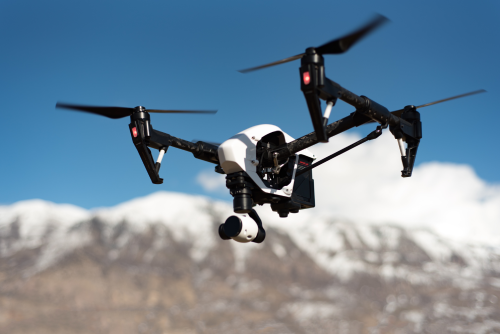
DJI Matrice 350 RTK is a professional enterprise multirotor built for organizations that need repeatable, payload-driven aerial work rather than a simple consumer camera drone. It is aimed at survey teams, inspectors, public-safety units, utilities, and industrial operators that value RTK positioning, mission flexibility, and fleet support. In DJI’s lineup, the Matrice 350 RTK matters because it sits squarely in the role of a current enterprise workhorse.
Unlike compact all-in-one drones that are designed to be easy to buy, easy to carry, and easy to fly with minimal planning, the M350 RTK is better understood as a deployable aerial system. The aircraft itself is only one part of the equation. The real value comes from how it fits into a wider operational package that may include high-accuracy positioning, swappable sensors, batteries and charging workflows, mission-planning software, maintenance routines, and organizational training standards.
That distinction is important. A buyer considering the Matrice 350 RTK is usually not asking, “Is this a good drone?” in the same way a consumer might ask that about a travel camera drone. The better question is, “Is this the right platform for the work we need to do repeatedly, reliably, and at scale?” For many enterprise teams, that is exactly where the M350 RTK starts to make sense.
Quick Summary Box
- Drone Name: DJI Matrice 350 RTK
- Brand: DJI
- Model: Matrice 350 RTK
- Category: enterprise/industrial
- Best For: Surveying, mapping, inspection, public safety, and enterprise fleet operations
- Price Range: Not publicly confirmed in supplied data
- Launch Year: 2023
- Availability: Active enterprise product; regional availability should be verified
- Current Status: Active
- Overall Rating: Not rated due to limited confirmed data
- Our Verdict: A serious RTK-enabled industrial platform for teams that need a modular, professional drone system rather than a fixed-camera all-in-one aircraft.
Introduction
The DJI Matrice 350 RTK is an active enterprise/industrial drone from DJI, a China-based manufacturer that dominates much of the modern drone market. This model is designed for professional workflows where payload flexibility, accurate positioning, and operational reliability matter more than compact size or casual ease of use. For readers comparing industrial platforms, the M350 RTK is important because it represents DJI’s current-generation heavy-duty multirotor approach for mapping, inspection, and mission-based flying.
In practical terms, the M350 RTK occupies a category that sits well above consumer and prosumer aircraft. It is not just about capturing attractive imagery. It is about collecting usable, repeatable, and often business-critical data. Depending on configuration, the same airframe might be tasked with photogrammetry over a construction site one day, thermal inspection of critical infrastructure the next, and emergency scene overview after that. That mission flexibility is one of the strongest reasons enterprise buyers consider it.
The drone also matters because many organizations are trying to reduce operational fragmentation. Instead of running one aircraft for surveying, another for thermal inspection, and another for specialized work, some teams prefer to standardize around one airframe and swap payloads as needed. The Matrice 350 RTK fits directly into that strategy. It gives companies, agencies, and integrators a platform they can build processes around.
Overview
What kind of drone is it?
The Matrice 350 RTK is a large enterprise multirotor airframe with RTK-focused positioning and support for interchangeable mission payloads. It is not a fixed-camera hobby drone. Instead, it is closer to a field tool that can be configured for different jobs depending on the sensor package and software workflow.
That means the aircraft should be viewed more like a professional platform than a stand-alone imaging device. The drone body supplies flight capability, power distribution, positioning intelligence, transmission, and payload support. The installed sensor package determines what the mission actually accomplishes. In other words, the aircraft enables the work, but the payload defines the deliverable.
This matters because buyers coming from smaller camera drones sometimes expect an enterprise aircraft to behave like a bigger version of the same product. The M350 RTK is not that. Its design assumptions are different. It expects trained users, operational planning, accessory management, and a reason for being in the air beyond casual filming.
Who should buy it?
This drone is most relevant to:
- Survey and geospatial teams
- Utility and infrastructure inspection operators
- Industrial asset management teams
- Public-safety and emergency-response organizations
- Enterprise drone departments standardizing around one platform
- Integrators that need a DJI-based payload carrier
It is especially appealing to organizations that already understand drone operations as part of a larger workflow. A survey team may care about positional consistency, overlap accuracy, and export compatibility. A utility operator may prioritize safe standoff inspection and sensor versatility. A public-safety unit may focus on deployment speed, scene awareness, and fleet readiness. While those use cases differ, they all benefit from a platform that is modular, robust, and designed for repeat professional use.
What makes it different?
What separates the Matrice 350 RTK from smaller enterprise drones is its workhorse role. It combines a larger professional airframe, RTK positioning, modular payload logic, and a DJI enterprise ecosystem that is built around repeatable operations rather than one-off flights. In practical terms, that means buyers are usually evaluating it as part of a complete mission system, not just as a drone body.
Another point of difference is operational seriousness. Many smaller drones are excellent at getting airborne quickly and producing useful results fast. The M350 RTK is aimed at teams that need more than convenience. It is intended for organizations that value procedure, standardization, documentation, and dependable field performance. That does not automatically make it the best option for every professional buyer, but it does place it clearly in a class where long-term utility matters more than immediate simplicity.
Key Features
The Matrice 350 RTK’s headline features are most meaningful when viewed through an enterprise lens. On paper, some of these may look like standard spec-sheet highlights. In real-world field use, they affect mission planning, staffing, transport, battery rotation, data consistency, and safety margins.
- RTK-capable positioning for repeatable routes and higher-accuracy workflows when properly configured
- Enterprise multirotor platform with interchangeable payload support
- Active current-status model in DJI’s industrial lineup
- Official flight-time figure of up to 55 minutes, depending on payload and conditions
- Official transmission figure of up to 20 km via DJI O3 Enterprise, subject to region and regulation
- Official top speed of up to 82.8 km/h
- Official IP55 ingress protection rating for field use
- Official operating temperature range of -20°C to 50°C
- Six-direction obstacle sensing
- Dual TB65 battery system for professional operations
- DJI RC Plus controller support
- DJI Pilot 2 workflow support
- Built for inspection, mapping, public safety, and industrial missions rather than consumer content creation
Taken together, these features describe a drone designed around uptime, flexibility, and mission repeatability. RTK helps support precise route execution and consistent data capture. A dual-battery system reduces the sense that each flight is a one-off event and instead supports a more continuous operational rhythm. Ruggedness traits like IP55 and wide operating temperature tolerance suggest a platform intended for real field environments, not only ideal weather windows.
The key feature list also shows why the M350 RTK is usually purchased by organizations, not impulse buyers. To benefit from these capabilities, users typically need documented workflows, planned payload usage, trained crews, and a clear sense of what they are trying to achieve.
Full Specifications Table
The table below reflects the confirmed information supplied for this draft. As with many enterprise aircraft, several practical capabilities depend heavily on the payload, region, firmware, and software environment, so some fields remain intentionally general.
| Field | Specification |
|---|---|
| Brand | DJI |
| Model | Matrice 350 RTK |
| Drone Type | Enterprise/industrial multirotor |
| Country of Origin | China |
| Manufacturer | DJI |
| Year Introduced | 2023 |
| Status | Active |
| Use Case | Mapping, surveying, inspection, public safety, industrial operations |
| Weight | Not publicly confirmed in supplied data |
| Dimensions (folded/unfolded) | Not publicly confirmed in supplied data |
| Max Takeoff Weight | 9.2 kg |
| Battery Type | Dual TB65 Intelligent Flight Batteries |
| Battery Capacity | 5,880 mAh per battery |
| Flight Time | Up to 55 minutes |
| Charging Time | Not publicly confirmed in supplied data |
| Max Range | Up to 20 km |
| Transmission System | DJI O3 Enterprise |
| Top Speed | Up to 82.8 km/h |
| Wind Resistance | Up to 12 m/s |
| Navigation System | GNSS + RTK |
| Obstacle Avoidance | Six-direction sensing |
| Camera Resolution | Varies by installed payload |
| Video Resolution | Varies by installed payload |
| Frame Rates | Varies by installed payload |
| Sensor Size | Varies by installed payload |
| Gimbal | Varies by installed payload and mount configuration |
| Zoom | Varies by installed payload |
| Storage | Varies by payload and controller configuration |
| Controller Type | DJI RC Plus |
| App Support | DJI Pilot 2; broader enterprise software support varies by workflow |
| Autonomous Modes | Waypoint and enterprise mission planning; exact modes vary by payload and software |
| Payload Capacity | Up to 2.7 kg |
| Operating Temperature | -20°C to 50°C |
| Water Resistance | IP55 |
| Noise Level | Not publicly confirmed in supplied data |
| Remote ID Support | Region-dependent; verify local firmware and law |
| Geo-fencing | Region- and firmware-dependent; verify current DJI flight restrictions |
| Certifications | Not publicly confirmed in supplied data |
| MSRP / Launch Price | Not publicly confirmed in supplied data |
| Current Price | Not publicly confirmed in supplied data |
One useful way to read this table is to separate “aircraft performance” from “mission performance.” Aircraft performance covers things like endurance, top speed, environmental tolerance, and payload capacity. Mission performance depends on what sensor is attached, how the mission is planned, and how the data will be used afterward. That split is central to understanding the M350 RTK.
Design and Build Quality
The Matrice 350 RTK is built like an industrial tool first and a camera platform second. As a multirotor in DJI’s Matrice family, it is expectedly larger, taller, and more mission-oriented than compact folding drones made for creators or casual pilots. The overall design logic favors field deployment, payload mounting, and operational durability over portability in a backpack.
A few design traits stand out:
- The airframe is clearly intended for vehicle-based deployment and professional transport cases.
- The landing stance and payload mounting approach suit sensors that need ground clearance.
- The foldable enterprise form factor makes storage and transport easier than a fully rigid industrial frame.
- The dual-battery architecture supports professional workflow continuity better than single-battery consumer designs.
The official IP55 rating is one of the most meaningful build-quality signals. That does not make it an all-weather aircraft, but it does suggest a platform designed with real jobsite conditions in mind. For industrial buyers, that matters more than sleek styling.
Just as important is what the design says about intended usage. The Matrice 350 RTK is made for crews that arrive on site with a mission plan, equipment checklist, spare batteries, and a defined objective. Its size alone communicates that it belongs to a more formal operating environment. This is not typically the kind of aircraft a user casually unfolds on a hiking trail or carries in a messenger bag between appointments.
The foldable structure still matters, though. In enterprise aviation, portability is not the same as convenience. A platform can be too large for casual carry yet still benefit greatly from efficient transport geometry. Foldability can mean better packing efficiency in hard cases, faster deployment from a vehicle, and easier storage in fleet environments. Those advantages become more visible when a team manages multiple aircraft or needs to move equipment between sites in one day.
The battery design also reflects field logic rather than consumer expectations. A dual-battery system offers a layer of operational seriousness that single-battery systems often lack in heavier mission drones. It supports more consistent power delivery and aligns with the way professional teams tend to manage charging cycles, battery health, and sortie planning. In practical terms, that can make the platform feel less like a gadget and more like a dependable work asset.
Build quality in this class is also about maintenance friendliness. Enterprise buyers care about prop changes, arm locks, connector durability, battery insertion confidence, transport wear, and how well an aircraft holds up when used often rather than occasionally. Even when not every detail is captured in a spec table, the Matrice series reputation generally centers on that tool-oriented philosophy. For many organizations, confidence in that physical design language is part of the buying decision.
Flight Performance
On paper, the Matrice 350 RTK is designed for stable, repeatable mission flying rather than nimble recreational handling. The official figures point to strong endurance, solid speed, and useful wind tolerance for a professional multirotor:
- Up to 55 minutes flight time
- Up to 82.8 km/h top speed
- Up to 12 m/s wind resistance
- Up to 20 km transmission figure
In practical analysis, that combination suggests a drone that should feel composed in open outdoor environments and capable of covering meaningful industrial work areas without immediately running into consumer-style endurance limits. RTK is especially relevant here because it improves route repeatability and positional confidence in workflows where overlap, revisits, and data consistency matter.
This is not an ideal indoor aircraft for most users. Its size, mission class, and typical payload setups make it much better suited to controlled outdoor operations with trained crews. It is also not the kind of drone you buy for sporty manual flying; it is bought to execute tasks predictably.
The official flight-time figure is one of the most attractive numbers on the page, but enterprise buyers should interpret it realistically. Endurance claims are almost always influenced by payload weight, air temperature, wind, speed profile, altitude, and mission style. Hovering with one payload type can produce very different results from flying a large-area mapping mission with another. A more useful takeaway is not that every mission will approach the headline number, but that the platform is designed with enough endurance headroom to remain useful under demanding conditions.
Top speed matters less for cinematic work than for task efficiency. In enterprise operations, speed can mean faster transit to a point of interest, quicker repositioning between targets, or the ability to react decisively in public-safety contexts when time matters. That does not mean the aircraft should be flown aggressively at all times. Rather, it suggests the M350 RTK has the performance reserve expected from a professional machine.
Wind resistance is another spec that becomes more important as the mission stakes rise. If a survey team must capture consistent overlap over a site, or an inspection team needs a stable hover near infrastructure, a platform that handles wind confidently can directly influence data quality and operational predictability. The quoted resistance figure does not remove the need for pilot judgment, but it does indicate that the aircraft is built for conditions that would begin to challenge lighter platforms sooner.
The transmission figure should also be read with enterprise caution. Range claims are often far higher than what lawful operations will actually use, especially in regions where visual line of sight rules apply. The more relevant point is link robustness. A stronger enterprise transmission system can help maintain confidence in image feed quality, control responsiveness, and general situational awareness in complex outdoor environments.
RTK deserves special emphasis in flight performance because it changes how the aircraft fits into professional workflows. For tasks such as mapping, repeated inspection routes, and infrastructure monitoring, reliable positional accuracy can reduce rework and improve consistency between missions. It can also support more repeatable autonomous execution. That does not mean RTK alone guarantees perfect results; correction methods, workflow design, and environmental conditions still matter. But on a platform like the M350 RTK, RTK is not a marketing extra. It is a core operational feature.
Camera / Payload Performance
The Matrice 350 RTK should be understood primarily as a payload carrier, not as a fixed-camera drone. That distinction is critical.
Its real value depends on what sensor package is attached. In enterprise terms, that is a strength rather than a weakness:
- Mapping teams can configure it around survey or photogrammetry payloads.
- Inspection teams can fit zoom, thermal, or mixed-sensor payloads.
- Industrial operators can tailor the platform to specific infrastructure and asset workflows.
- Organizations can standardize one airframe while changing sensors by mission type.
Because payload choice drives image quality, zoom capability, thermal utility, low-light performance, and data outputs, there is no single camera verdict for the M350 RTK itself. Buyers should focus on the total package: aircraft, payload, controller, software, corrections workflow, and post-processing stack.
For many enterprises, that modular approach is the whole point. It can be more expensive than buying a smaller all-in-one drone, but it is usually much more flexible across departments and mission sets.
That flexibility matters most when the mission portfolio is broad. A utility company may need visual inspection on one day, thermal diagnostics on another, and more specialized spatial data later. A police or fire unit may prioritize thermal awareness for one callout and daylight zoom capability for another. A construction or engineering firm may value high-resolution mapping workflows and repeat site documentation. A fixed-camera drone can sometimes handle one of those jobs well. A modular aircraft can potentially support all of them with the right procurement strategy.
There is also a business argument here. A standardized airframe can simplify pilot familiarization, spare-parts stocking, battery management, and maintenance procedures even when the organization runs multiple mission types. That can be operationally cleaner than training teams on several unrelated aircraft, each with different interfaces and limitations. For larger departments, that standardization can be worth a great deal over time.
The tradeoff is complexity. Payload flexibility means more decisions before purchase and more discipline after purchase. Buyers need to confirm compatibility, understand the strengths and limitations of each sensor, and ensure that post-processing tools match the data being collected. A powerful payload on the wrong workflow can be disappointing, while a carefully matched payload and software stack can transform the aircraft into a highly efficient business tool.
For that reason, the M350 RTK is best evaluated from the mission backward, not the aircraft forward. Start with the deliverable: orthomosaics, inspection imagery, thermal diagnostics, volumetric models, live incident awareness, or asset documentation. Then work back toward the right payload, the right flight plan, and the right support tools. If the Matrice 350 RTK fits that chain well, its modular nature becomes a major advantage rather than a complication.
Smart Features and Software
With the Matrice 350 RTK, software matters almost as much as hardware. This is the kind of platform where mission planning, route repeatability, logging, fleet management, and payload integration often decide the real-world value.
Commonly associated DJI enterprise workflow elements include:
- DJI Pilot 2 for core flight operations
- Waypoint and mission-planning functions
- RTK-enabled positioning workflows
- Enterprise fleet and cloud management options such as DJI FlightHub 2
- Integration paths for supported payloads and professional operations
For buyers with specialized needs, software verification is essential. Before purchasing, it is worth confirming:
- Exact payload compatibility
- Current firmware support
- Regional software availability
- Any SDK or API requirements for custom workflows
- Cloud or fleet-management costs, if applicable
In other words, the M350 RTK is not just an aircraft decision. It is a workflow decision.
That workflow emphasis is a defining feature of enterprise drone ownership. A capable airframe without the right planning tools can create friction very quickly. Teams may struggle with repeatability, data organization, pilot handoff, route consistency, or reporting. By contrast, a mature software environment can turn the aircraft into a dependable operational asset rather than an occasional flying camera.
DJI Pilot 2 matters in that context because the operator experience in enterprise flying is different from recreational flying. Mission setup, preflight information, payload controls, route execution, and situational overlays all influence field efficiency. A controller and app pairing that supports professional use can reduce cognitive load in demanding scenarios, especially when crews must make decisions quickly or follow standardized internal procedures.
Waypoint and automated mission logic are particularly valuable for repeatable work. Mapping, corridor inspection, and recurring site documentation all benefit when missions can be planned in advance and flown consistently over time. That repeatability is not just a convenience feature. It affects data comparability, labor efficiency, and the organization’s ability to build dependable operating procedures.
Cloud and fleet tools become more relevant as the number of pilots, aircraft, and missions increases. A single pilot running one aircraft may not immediately feel the need for deeper management software. A utility, engineering firm, or public agency with multiple crews often will. Mission logs, fleet status, remote coordination, and centralized records can all become meaningful operational benefits.
SDK and integration questions are also worth highlighting. Some enterprise buyers need more than what is available out of the box. They may require custom inspection logic, organization-specific data pipelines, third-party analytics, or integration into an existing operational platform. For those users, the buying process should include direct confirmation that the aircraft and software stack align with their technical requirements. That kind of verification can prevent expensive frustration later.
Use Cases
The most realistic use cases for the DJI Matrice 350 RTK are professional and mission-led.
- Surveying and mapping
- Corridor and utility inspection
- Power, oil, gas, and industrial asset inspection
- Construction progress documentation
- Public-safety scene overview and incident documentation
- Search support and disaster assessment where lawful and authorized
- Telecom tower inspection
- Environmental monitoring and land management
- Enterprise pilot training on a standardized fleet platform
Each of these use cases benefits from a different combination of the platform’s strengths.
Surveying and mapping benefit from RTK-enabled workflows, repeatable flight paths, and the ability to mount appropriate imaging payloads. For teams generating deliverables that must line up with real-world coordinates and consistent site records, platform accuracy and mission stability matter a great deal.
Corridor and utility inspection often demand route repeatability, strong transmission performance, and payload flexibility. Power lines, pipelines, rail corridors, and other linear assets can be operationally demanding, especially when terrain, access limitations, or inspection detail vary from mission to mission.
Industrial asset inspection is one of the clearest reasons to consider a modular enterprise aircraft. Refineries, substations, energy facilities, storage sites, and process plants may call for different sensor combinations depending on what is being assessed. A platform that can be configured around those needs is easier to justify than a fixed-camera aircraft with hard limits.
Construction progress documentation may sound simpler, but enterprise buyers often need more than occasional overhead photos. They may require scheduled site captures, consistent angles, progress comparison over time, or mapping-grade datasets that fit into planning and reporting workflows.
Public safety is another strong fit. Agencies evaluating the M350 RTK will usually care about reliability, payload options, environmental tolerance, and organizational standardization. Incident documentation, overwatch, and scene awareness can all benefit from a platform designed for more demanding operational contexts.
Search support and disaster assessment can also suit the airframe where regulations and mission authorization allow. In these situations, endurance, control confidence, and payload choice become especially important. Teams do not want a system that is only excellent on paper; they want one that works predictably under stress.
Telecom tower inspection and environmental monitoring further show why modularity matters. Not every task is the same, and the ability to adapt the aircraft to different sensing requirements can extend the useful life of the platform across departments and project types.
Pros and Cons
Pros
-
Active enterprise platform from a major, well-established manufacturer
That matters for support expectations, software maturity, and the likelihood of ongoing ecosystem relevance. -
RTK capability makes it suitable for repeatable professional workflows
For mapping, inspection, and revisits, positional confidence can improve consistency and reduce unnecessary rework. -
Modular payload approach is far more flexible than a fixed-camera drone
One airframe can potentially serve multiple teams and mission types when properly configured. -
Strong official endurance, speed, and transmission figures for its class
These numbers suggest a platform designed to remain useful in larger or more demanding operating environments. -
IP55 rating and wide operating temperature range support real field work
Environmental resilience is a practical strength for organizations that do not operate only in ideal weather windows. -
DJI ecosystem can simplify sourcing, training, and fleet standardization
For many buyers, ecosystem depth is not a side benefit; it is a major reason to choose the platform.
Cons
-
Total ownership cost can rise quickly once payloads, batteries, software, and accessories are included
Enterprise buyers should think in terms of system cost, not airframe cost. -
Larger and more operationally demanding than compact enterprise drones
Transport, deployment, staffing, and training all become more significant. -
Not a turn-key camera drone; usefulness depends heavily on payload selection
A poor sensor choice can leave the platform underused or mismatched to the mission. -
Heavier regulatory, training, and procedural burden than smaller aircraft
Larger enterprise drones often bring more oversight and internal compliance requirements. -
Exact price, bundle contents, and regional procurement options must be verified
Enterprise purchasing is rarely as simple as adding an aircraft to a cart. -
Some buyers may prefer lighter, faster-deploying integrated models for simpler missions
If portability and speed of setup dominate the use case, a smaller platform may be the smarter choice.
Comparison With Other Models
| Model | Price | Flight Time | Camera or Payload | Range | Weight | Best For | Winner |
|---|---|---|---|---|---|---|---|
| DJI Matrice 350 RTK | Not publicly confirmed in supplied data | Up to 55 min | Swappable enterprise payloads | Up to 20 km | Large enterprise airframe; MTOW 9.2 kg | Flexible industrial fleet work | Best overall for modular enterprise missions |
| DJI Matrice 30T | Not publicly confirmed in supplied data | More compact mission class | Integrated thermal and zoom payload | Not publicly confirmed in supplied data | More portable class | Rapid deployment and quicker-response field work | Best for portability |
| DJI Matrice 300 RTK | Not publicly confirmed in supplied data | 55-minute class | Swappable enterprise payloads | Not publicly confirmed in supplied data | Large enterprise airframe | Existing legacy Matrice fleets | Best for continuity if already invested |
DJI Matrice 350 RTK vs a close competitor
A perfect apples-to-apples competitor is harder to define here than in the consumer market because enterprise buyers often purchase a full package of aircraft, sensors, software, batteries, and support. In many real purchasing decisions, the Matrice 350 RTK is compared less against a single direct rival and more against smaller integrated enterprise drones or older fleet-standard airframes.
That is one reason enterprise buying conversations are more nuanced than consumer comparisons. A smaller drone might be cheaper, lighter, and easier to deploy, yet still be the weaker choice if the organization needs payload interchangeability, heavier-lift capability, or broader workflow integration. Conversely, a larger aircraft can be technically impressive but still be the wrong tool if the operational demand does not justify its complexity.
DJI Matrice 350 RTK vs an alternative in the same segment
Compared with a more compact integrated enterprise option such as the Matrice 30T, the Matrice 350 RTK is the more flexible and scalable choice. The tradeoff is portability. If your work changes by payload and mission type, the M350 RTK is the stronger long-term platform. If fast deployment and lower complexity matter more, a smaller integrated aircraft can be the easier buy.
This is a classic flexibility-versus-simplicity decision. The M30T-style concept is attractive because it gets teams moving quickly with fewer configuration decisions. The M350 RTK is attractive because it can do more over time. A buyer choosing between them should think less about raw specs and more about the next two to four years of actual missions.
DJI Matrice 350 RTK vs an older or previous-generation option
Against the older Matrice 300 RTK, the Matrice 350 RTK is the more sensible choice for new buyers because it is the active current-generation model in this line. Existing M300 RTK operators may still weigh upgrade cost against continuity, but new fleet standardization generally favors the platform with the clearer current support position.
That support position matters in enterprise planning. Even when older aircraft remain capable, organizations often prefer the platform with the better forward-looking ecosystem story. New purchases usually benefit from clearer parts availability, fresher firmware attention, and stronger dealer focus. For buyers starting from zero, that can outweigh the marginal appeal of legacy continuity.
Manufacturer Details
DJI is both the brand and the manufacturer behind the Matrice 350 RTK. The company is headquartered in China, specifically Shenzhen, and was founded in 2006. It has become one of the most influential drone makers in the world across consumer, prosumer, agricultural, and enterprise categories.
Major DJI product areas include:
- Consumer camera drones
- FPV drones
- Enterprise and industrial platforms
- Agricultural systems
- Gimbals and imaging tools
In the drone market, DJI’s reputation is built on strong hardware integration, mature flight software, and a broad ecosystem of accessories and payloads. For enterprise buyers, that ecosystem depth is often one of the biggest reasons to consider a Matrice platform in the first place.
DJI’s enterprise relevance is not just about market share. It is also about operational familiarity. Many pilots, integrators, and service partners already understand DJI systems, which can lower the barrier to training and deployment compared with more niche platforms. That does not automatically make DJI the right answer for every procurement environment, but it does mean the brand enters many enterprise conversations with an ecosystem advantage.
For some organizations, manufacturer reputation also influences internal approval. Procurement teams, operations managers, and safety stakeholders often prefer equipment from a company with a visible support network and an established user base. In practice, that can make adoption smoother than it would be with a less proven platform, especially when the aircraft will be used across multiple departments.
Support and Service Providers
For a drone like the Matrice 350 RTK, support quality matters almost as much as flight performance. Buyers should expect to work through official DJI Enterprise channels, authorized repair providers, and regional enterprise dealers rather than relying only on general retail support.
Important support areas to verify before purchase:
- Official regional support availability
- Authorized repair options
- Spare battery and propeller availability
- Payload-specific service support
- Warranty terms for the airframe and sensors
- Training partners for enterprise flight teams
- Turnaround time for repairs and maintenance
Because service coverage can vary by country and dealer, organizations should confirm the actual support path in their own region before standardizing on the platform.
This point becomes even more important when the drone supports business-critical work. If an aircraft going down means delayed inspections, stalled project deliverables, or reduced emergency-response capability, after-sales support is not a minor detail. It is part of operational resilience.
Buyers should also think about service at the payload level. A modular enterprise system is only as dependable as its least-supported component. If one sensor is easy to replace and another has a long repair cycle, that difference can affect mission planning and downtime risk. Dealers that understand both the airframe and the payload ecosystem are often more valuable than sellers focused only on getting the initial purchase closed.
Training is another underrated support category. For a platform like the M350 RTK, good training can reduce incidents, improve data quality, and shorten the time it takes for a team to become productive. Organizations should consider whether they need initial pilot familiarization, advanced mission training, inspection-specific workflows, or internal train-the-trainer support.
Where to Buy
The Matrice 350 RTK is best purchased through enterprise-focused channels rather than general hobby retail.
Typical buying routes include:
- Official DJI enterprise sales channels
- Authorized DJI Enterprise dealers
- Regional distributors
- System integrators packaging the drone with payloads and software
- Specialized commercial drone resellers
For many buyers, procurement is bundle-based. That means the final purchase may include the aircraft, controller, batteries, charging solution, payloads, and support services together. Regional availability may differ, so it is smart to confirm local stock, training, and after-sales coverage before placing an order.
In many cases, the best seller is not simply the one offering the lowest upfront quote. It is the one that can provide the right package, realistic support expectations, and accurate compatibility guidance. Enterprise procurement often benefits from pre-sales consultation, especially if the organization is choosing among multiple payloads or considering cloud and software add-ons.
A strong dealer or integrator can also help buyers avoid a common mistake: purchasing an excellent aircraft with an incomplete mission kit. Extra batteries, transport protection, charging infrastructure, spare props, and software support may not look exciting on paper, but they can decide whether the platform feels practical in the field. Buying the M350 RTK as a complete system usually leads to better outcomes than buying only the aircraft body and trying to fill in the gaps later.
Price and Cost Breakdown
A single clean price figure is not publicly confirmed in the supplied data, and that is common for enterprise drones where the real cost depends heavily on the payload package and dealer bundle.
When budgeting for a Matrice 350 RTK, buyers should account for more than the airframe:
- Aircraft body
- Controller
- Flight batteries
- Charging station or charging hardware
- Payloads such as mapping, thermal, zoom, or LiDAR systems
- Spare props and maintenance items
- Cases and transport solutions
- RTK-related infrastructure or correction services
- Software subscriptions or cloud tools
- Insurance
- Training and certification costs
- Downtime and repair planning
For serious organizations, this is a system-level purchase. A cheap airframe price without the right payload or support package can be misleading.
The most useful way to evaluate cost here is through total cost of ownership rather than sticker price. Enterprise buyers should ask: How much will it cost to deploy this platform properly for one year? For three years? What is the expected accessory replacement cycle? How many batteries are required to support one field team for a full day? What happens if a payload is out for service? Those questions often reveal the true budget picture more clearly than the initial quote.
There is also an efficiency side to the cost discussion. A more expensive drone can still be the better value if it reduces labor, increases deliverable quality, shortens site time, or enables work that otherwise would require more expensive manned alternatives. The M350 RTK is often easier to justify when buyers connect cost directly to mission outcomes rather than comparing it only to cheaper drones.
Regulations and Compliance
The Matrice 350 RTK sits firmly in the professional drone category, so buyers should assume meaningful regulatory obligations.
Key points to verify locally include:
- Aircraft registration requirements
- Commercial pilot licensing or certification rules
- Remote ID rules, where applicable
- Operating permissions for heavier drones
- Airspace authorization near controlled or sensitive areas
- Privacy and data-handling rules for camera and thermal use
- Any extra rules for industrial, infrastructure, or public-safety operations
Because this is a larger enterprise multirotor, legal operation may involve more paperwork, procedures, and oversight than with a smaller subcategory drone. Remote ID support and geo-awareness behavior can also vary by region, firmware, and applicable law. Always verify the latest local rules before deployment.
Internal compliance can matter as much as legal compliance. Large organizations often require operations manuals, maintenance logs, battery tracking, incident reporting processes, and risk assessments before a platform is approved for recurring use. Public agencies may have procurement, cybersecurity, and records-management requirements that go beyond normal commercial flying rules. Regulated industries may also impose their own documentation expectations.
The larger and more capable the aircraft, the more important it becomes to treat compliance as part of deployment rather than a post-purchase chore. A drone like the M350 RTK can be an outstanding operational asset, but only if the organization is prepared to build the procedures needed to use it lawfully and consistently.
Who Should Buy This Drone?
Best for
- Enterprise teams needing a flexible multi-payload platform
- Survey and mapping operators using RTK workflows
- Utilities and infrastructure inspectors
- Public-safety organizations that need a scalable DJI fleet platform
- Operators who value official ecosystem support and service structure
- Buyers standardizing around one professional airframe for multiple mission types
The strongest candidates are organizations with recurring, documented needs. If the aircraft will be flown frequently, across multiple projects, or by more than one trained operator, the M350 RTK’s platform approach becomes easier to defend. It is especially attractive when the buyer knows that different sensors will be needed over time.
Not ideal for
- Casual hobby flyers
- Budget-focused buyers looking for a simple all-in-one camera drone
- Creators who mainly want cinematic footage with minimal setup
- Operators who need the smallest, easiest-to-carry enterprise aircraft
- New pilots without a clear operational need or training plan
In those cases, the Matrice 350 RTK is often too much drone. Its strengths only become valuable when the mission really requires them. If the work is basic documentation, occasional roof checks, or light visual capture with minimal organizational structure, a smaller integrated model may offer a better balance of cost, portability, and simplicity.
Final Verdict
The DJI Matrice 350 RTK earns its reputation as a current enterprise workhorse because it checks the boxes that matter in professional operations: RTK capability, payload flexibility, rugged field-ready design, and access to DJI’s mature enterprise ecosystem. Its biggest strengths are modularity, mission fit, and fleet relevance. Its biggest drawbacks are cost, complexity, and the fact that the final value depends heavily on which payloads and software stack you actually buy.
What makes the M350 RTK compelling is not that it tries to be everything for everyone. It does not. Instead, it is purpose-built for organizations that need a dependable aerial platform capable of supporting serious work over time. If your team values repeatable missions, swappable sensors, strong field durability, and the ability to build standardized procedures around one aircraft family, the Matrice 350 RTK makes a strong case for itself.
At the same time, it is important not to overbuy. This is not a casual recommendation for every commercial operator. Teams that prioritize ultra-fast deployment, lighter transport burden, lower training overhead, or a simpler all-in-one experience may be better served by a smaller integrated enterprise drone. The M350 RTK becomes most attractive when the mission set is varied, the data requirements are meaningful, and the organization intends to treat the aircraft as a true operational asset rather than a convenient add-on.
If you need a serious industrial platform for mapping, inspection, utilities, or public-safety work, the Matrice 350 RTK deserves a place on the shortlist. If you want a lightweight, low-cost, all-in-one drone, this is almost certainly more aircraft than you need.
