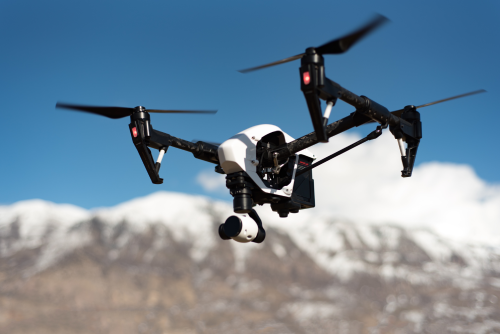
The DJI Mavic 2 Pro is a foldable consumer/prosumer camera drone built for users who want strong aerial image quality in a portable multirotor platform. It is aimed at creators, enthusiasts, and light commercial users who value a larger camera sensor than many compact drones offered in its era. Even as a legacy/discontinued model, it still matters because it helped define the premium foldable drone category and remains relevant on the used market.
Quick Summary Box
- Drone Name: DJI Mavic 2 Pro
- Brand: DJI
- Model: Mavic 2 Pro
- Category: Consumer/prosumer foldable multirotor camera drone
- Best For: Aerial photography and videography users who want a legacy DJI platform with a larger camera sensor
- Price Range: Launch MSRP widely documented at US$1,449; current used/refurbished pricing varies by region and condition
- Launch Year: 2018
- Availability: Discontinued; mostly found used, refurbished, or as remaining old stock
- Current Status: Legacy/discontinued
- Overall Rating: Not rated due to limited confirmed data
- Our Verdict: Still attractive for image-quality-focused buyers if purchased at the right used-market price and with careful checks on battery health, support, and compliance
Introduction
The Mavic 2 Pro is a legacy DJI drone from China that sits in the consumer/prosumer segment and uses a foldable multirotor airframe. It was designed to give photographers and video creators better camera performance than smaller-sensor folding drones, while keeping the convenience of a travel-friendly platform. Readers still care about it because it remains one of the best-known older DJI camera drones, but its discontinued status means buyers must weigh image quality against aging batteries, uncertain parts availability, and older software support.
What makes the Mavic 2 Pro especially interesting is that it arrived during a period when portable camera drones were rapidly improving, yet many still made clear compromises on sensor size and image flexibility. DJI’s answer was to combine the convenience of the Mavic line with a more serious camera, producing a drone that felt like a meaningful step up for stills and general video work. For many users at the time, it was the first foldable drone that genuinely felt capable of delivering premium-looking travel, landscape, and commercial-style footage without moving up to a much larger platform.
That history matters today because the Mavic 2 Pro still occupies a specific niche on the used market. It is no longer the newest or easiest option, but it can still make sense for buyers who care more about camera quality and flight confidence than having the latest processing, app ecosystem, or compliance features. In other words, this is not just an old drone people remember fondly; it is a model that still deserves a serious look if your priorities line up with its strengths.
Overview
What kind of drone is it?
The DJI Mavic 2 Pro is a premium foldable camera drone in DJI’s consumer/prosumer lineup. It is not a toy-class aircraft and not a dedicated enterprise payload carrier either. Its core identity is simple: a portable aerial imaging platform with a stronger camera package than many compact drones of its generation.
It is best understood as a bridge product. On one side, it offers the convenience, user-friendly design, and integrated app experience expected from a consumer drone. On the other, it aims higher in image quality and flight sophistication than casual entry-level aircraft. That makes it appealing to users who want a drone primarily for photos and video, but who do not necessarily need the modular payload options or specialized workflow support of a larger commercial system.
The foldable design also defines what kind of drone it is in practical terms. This is a machine meant to travel in a backpack, come out quickly on location, and capture stabilized aerial footage with less setup burden than a larger rig. That portability is a major reason it stayed influential for so long.
Who should buy it?
This model makes the most sense for:
- Hobbyists stepping into higher-quality aerial imaging
- Creators who prioritize stills and smooth 4K video
- Journalists and documentarians using a compact travel drone
- Buyers looking for used-market value rather than the newest DJI platform
- Existing DJI users already comfortable with the older DJI GO 4 ecosystem
It can also suit photographers who already know what they want from a drone and are willing to buy carefully. A used Mavic 2 Pro is usually not the best “impulse purchase” drone. It rewards buyers who understand how to inspect hardware, evaluate battery condition, verify software compatibility, and compare total system cost rather than just headline price.
It is less suitable for buyers who want the latest compliance features, the lightest possible airframe, or a fresh long-term support runway. If you want the easiest ownership experience, a newer aircraft is often the safer path. If you want a proven camera-focused legacy platform and are comfortable with the trade-offs, the Mavic 2 Pro can still be a compelling choice.
What makes it different?
The Mavic 2 Pro is best known for pairing a foldable Mavic airframe with a 1-inch 20 MP Hasselblad-branded camera. That sensor size, along with a 3-axis gimbal and intelligent flight features, gave it a serious imaging edge over smaller-sensor portable drones at the time. Its legacy status is now part of the story too: the hardware remains capable, but ownership risk is higher than with a current-generation model.
A key part of its appeal was balance. It did not try to be everything. Instead, it focused on delivering a premium portable camera experience with strong stabilization, dependable flight behavior, and a feature set that felt advanced without becoming overly specialized. Even now, many used buyers are not comparing it to industrial aircraft or racing drones; they are comparing it to other camera drones and asking a narrower question: does it still produce the kind of footage and still images I want? For a surprising number of users, the answer is still yes.
Key Features
- Foldable multirotor design for easier transport and storage
- 1-inch 20 MP Hasselblad-branded camera
- Up to 4K video capture
- 3-axis mechanical gimbal for stabilized footage
- Up to 31 minutes official maximum flight time
- OcuSync 2.0 transmission system
- Up to 8 km official maximum transmission range, region dependent
- Top speed up to 72 km/h
- Omnidirectional obstacle sensing
- GPS and GLONASS positioning support
- Intelligent flight features commonly documented for the Mavic 2 platform, including Return to Home, ActiveTrack 2.0, Hyperlapse, Point of Interest, and APAS
- Internal storage plus microSD support
- Legacy/discontinued status, which makes battery condition and spare-parts access especially important before buying
These headline features help explain why the Mavic 2 Pro remained popular long after launch. The design was not just about portability; it was about taking premium-style imaging into situations where carrying a larger aircraft would be inconvenient. The combination of the bigger sensor, stabilized gimbal, and obstacle sensing made it feel more complete than many smaller portable drones from the same period.
It is also worth remembering that “feature-rich” in the context of a 2018 drone is not identical to “feature-rich” in the context of 2026. The Mavic 2 Pro still covers the essentials well, but buyers should evaluate those features through a present-day lens. The question is less whether it once looked impressive and more whether its capabilities still align with your actual shooting needs.
Full Specifications Table
| Specification | Details |
|---|---|
| Brand | DJI |
| Model | Mavic 2 Pro |
| Drone Type | Foldable multirotor camera drone |
| Country of Origin | China |
| Manufacturer | DJI |
| Year Introduced | 2018 |
| Status | Legacy/discontinued |
| Use Case | Consumer/prosumer aerial photography and videography |
| Weight | 907 g |
| Dimensions (folded/unfolded) | Folded: 214 × 91 × 84 mm; Unfolded: 322 × 242 × 84 mm |
| Max Takeoff Weight | Not publicly confirmed in supplied data |
| Battery Type | 4S LiPo Intelligent Flight Battery |
| Battery Capacity | 3850 mAh |
| Flight Time | Up to 31 minutes |
| Charging Time | Not publicly confirmed in supplied data |
| Max Range | Up to 8 km, region dependent |
| Transmission System | OcuSync 2.0 |
| Top Speed | Up to 72 km/h |
| Wind Resistance | Up to 10.8 m/s |
| Navigation System | GPS + GLONASS |
| Obstacle Avoidance | Omnidirectional obstacle sensing |
| Camera Resolution | 20 MP |
| Video Resolution | Up to 4K |
| Frame Rates | Up to 4K at 30 fps; higher frame rates at lower resolutions |
| Sensor Size | 1-inch CMOS |
| Gimbal | 3-axis mechanical gimbal |
| Zoom | No optical zoom on the Pro variant |
| Storage | 8 GB internal storage plus microSD support |
| Controller Type | DJI remote controller |
| App Support | DJI GO 4 |
| Autonomous Modes | Return to Home, ActiveTrack 2.0, Hyperlapse, Point of Interest, QuickShots, APAS |
| Payload Capacity | Not publicly confirmed in supplied data |
| Operating Temperature | Not publicly confirmed in supplied data |
| Water Resistance | No official water-resistance rating publicly confirmed in supplied data |
| Noise Level | Not publicly confirmed in supplied data |
| Remote ID Support | Not publicly confirmed in supplied data |
| Geo-fencing | DJI geofencing ecosystem support, region dependent |
| Certifications | Not publicly confirmed in supplied data |
| MSRP / Launch Price | US$1,449 widely documented at launch, region dependent |
| Current Price | Not publicly confirmed in supplied data; varies in used/refurbished markets |
The specifications still read well for a legacy consumer/prosumer drone, especially when you focus on the camera, transmission system, and obstacle sensing. The 907 g weight places it well above ultralight categories, but it also signals that this was not designed as a stripped-down minimalist flyer. DJI clearly built it as a more substantial platform intended to deliver stable camera performance first.
The most important thing to remember with spec sheets is that age changes how those numbers should be interpreted. “Up to 31 minutes” sounds strong, but on a years-old used drone that figure depends heavily on battery condition. “Up to 8 km” sounds impressive, but legal line-of-sight rules and modern interference environments matter more than theoretical range. The table is useful, but real buying decisions should be based on practical condition and operational context.
Design and Build Quality
The Mavic 2 Pro uses DJI’s familiar folding Mavic layout, which remains one of the main reasons the aircraft stayed popular for so long. It packs into a relatively small travel footprint compared with non-folding camera drones, yet it is still large enough to feel like a serious platform rather than a lightweight toy. At 907 g, it is noticeably heavier than newer compact models, but that extra mass can also contribute to a more planted feel in the air.
Build quality is generally associated with DJI’s mature consumer/prosumer design language: compact arms, integrated landing stance, camera mounted on a protected gimbal assembly, and a body shaped for portability rather than rugged abuse. This is not a ruggedized all-weather aircraft, and there is no official waterproof rating confirmed in the supplied data. For field use, that means normal portable-drone expectations apply: avoid rain, sand, salt spray, and careless transport.
One of the understated strengths of the design is that it feels deliberate rather than gimmicky. The folding arms are there to reduce carrying size, not to create a fragile novelty. The aircraft has enough size and weight to feel composed during setup and launch, while the gimbal-mounted camera remains the focal point of the design. The result is a drone that still looks and feels like a serious imaging tool rather than an entry-level gadget.
The controller experience also matters. DJI’s remote from this era is generally regarded as practical and straightforward, with a more traditional feel than some later ultra-compact controllers. For many users, that translates into confidence: clear stick control, a familiar layout, and an ecosystem that was mature when the product was current. On the other hand, buyers should remember that phone mounting, cables, and port standards may feel older by 2026, especially if they use newer mobile devices.
As a used purchase in 2026, serviceability matters more than original fit and finish. Buyers should pay close attention to:
- Gimbal condition
- Folding-arm stiffness
- Motor smoothness
- Battery swelling or age
- Sensor and obstacle-avoidance cleanliness
- Controller stick wear
- Charger and cable condition
A careful physical inspection should go beyond appearance. Cosmetic scratches are not automatically a problem, but shell cracks near arm hinges, uneven motor sound, loose landing stance, or a gimbal that vibrates at startup are much more serious warning signs. If possible, ask for a full startup demonstration, a short hover test, and recent original image/video files from the drone. Those checks reveal far more than a seller’s description.
Flight Performance
On paper, the Mavic 2 Pro remains a capable flyer for its class. Officially documented performance figures include up to 31 minutes of flight time, up to 72 km/h top speed, and up to 8 km transmission range depending on region and operating conditions. Those are best-case figures rather than guarantees, and real-world performance on an older used drone will depend heavily on battery health, firmware state, weather, and pilot habits.
In practical terms, the flight character is best understood as stable, camera-oriented, and confidence-inspiring rather than hyper-aggressive. The weight and overall DJI flight tuning generally suggest a smoother, more controlled feel than ultralight drones. That makes it well suited to cinematic movement, hovering, and repeatable positioning.
This is one of the reasons the Mavic 2 Pro still feels relevant. A drone used for imaging does not need to feel exciting in the same way a sport-focused aircraft does. It needs to track smoothly, hold position predictably, and allow deliberate framing. The Mavic 2 Pro’s reputation was built on exactly that kind of calm, usable performance. For users filming landscapes, coastlines, roads, architecture, or slow reveal shots, that kind of behavior matters more than a flashy spec list.
Signal confidence was one of the Mavic 2 platform’s strong points in its time thanks to OcuSync 2.0. It is still a respectable system, but it is now older than DJI’s more recent transmission generations. Buyers comparing it with newer aircraft should expect solid legacy performance, not class-leading modern link performance. In open environments, it can still feel very dependable. In dense urban areas with radio interference, your real experience may vary more significantly.
Wind handling should be decent for a foldable drone in this weight class, especially with the official 10.8 m/s resistance figure. Still, no compact camera drone should be treated as an all-weather machine. Indoor use is possible only with care and space, and this is not the kind of aircraft most casual users would choose for tight indoor flying.
Real-world endurance also deserves perspective. Published maximum flight times are typically measured under ideal conditions, and actual usable flight time is always lower once you factor in wind, forward movement, safety reserve, and battery aging. With a legacy platform, battery health becomes one of the biggest performance variables. A used drone with multiple healthy batteries can still be practical; a cheaper unit with tired batteries may quickly become frustrating.
Obstacle sensing is another important part of flight performance, but it should be viewed realistically. Omnidirectional sensing adds a welcome safety layer, especially for newer pilots or for complex shots near structures. It does not make the aircraft crash-proof. Thin branches, wires, reflective surfaces, low-light conditions, and fast manual inputs can all reduce how protective these systems feel in practice. It is best treated as supplemental protection, not as permission to fly carelessly.
Camera / Payload Performance
The camera is the main reason the Mavic 2 Pro still gets attention. Its 1-inch 20 MP sensor was a major advantage in the foldable-drone market, and it remains meaningful today for buyers who care more about image quality than having the newest airframe. Compared with smaller-sensor legacy drones, a 1-inch sensor typically offers better dynamic range potential, cleaner tonal rendering, and stronger overall flexibility in challenging light.
The Mavic 2 Pro is widely known for its Hasselblad-branded camera and adjustable aperture design, which made it appealing to serious enthusiasts and working creators. Up to 4K video and a 3-axis mechanical gimbal keep it relevant for general content creation, travel work, landscape shooting, and professional-looking B-roll. By modern standards, the camera still holds up better for thoughtful composition than for spec-sheet chasing.
That distinction is important. If your priority is polished 8-bit-or-better aerial footage for YouTube, travel edits, social content, landscape prints, or general commercial inserts, the Mavic 2 Pro still has a lot going for it. If your priority is the most advanced modern recording pipeline, the highest frame rates, vertical-native social workflows, or the latest computational processing, then its age becomes more obvious.
For still photography, the larger sensor remains the headline benefit. Images generally have more room for tonal nuance than what you would expect from older small-sensor foldables. In good light, this translates into pleasing detail and a more robust editing starting point. In more difficult scenes, such as sunrise, sunset, or high-contrast landscapes, the sensor can be especially valuable. It does not rewrite the laws of physics, but it gives the aircraft a more serious photographic foundation than many earlier portable drones.
For video, the combination of stabilized gimbal footage and a larger sensor means results can still look very respectable when shot carefully. The Mavic 2 Pro is particularly well suited to slow movement, deliberate framing, and broad scenic compositions. It is less about flashy action capture and more about controlled aerial storytelling. The adjustable aperture also gave users more exposure control than many competing portable drones, which was useful when trying to maintain preferred shutter settings in varying light.
Where it may feel dated is in comparison with newer drones that offer more advanced computational processing, higher frame-rate options, and more recent color or codec workflows. Even so, for many still-photo users and standard 4K shooters, the Mavic 2 Pro remains credible.
There are also some practical limitations buyers should keep in mind. The Pro variant does not offer the optical zoom flexibility of the Mavic 2 Zoom. It is not a modular payload platform. And for technical mapping or survey work, the lack of a specialized camera setup and the age of the ecosystem may be limiting. Rolling-shutter behavior, software compatibility, and mission-planning support can matter more in those workflows than raw image appeal.
As for payload use, this is not a payload-first industrial platform. No payload capacity is publicly confirmed in the supplied data, and buyers should not assume interchangeable mission equipment support. The Mavic 2 Pro should be purchased for its built-in camera, not for external payload ambitions.
Smart Features and Software
The Mavic 2 Pro belongs to DJI’s mature intelligent-flight era and is commonly associated with a useful set of automated features. Officially documented Mavic 2 platform features include:
- Return to Home
- ActiveTrack 2.0
- Hyperlapse
- Point of Interest
- QuickShots
- APAS obstacle-aware assisted flight
These features matter because they reduce pilot workload for casual filming and help less experienced users get cleaner movement without needing advanced manual flying skill.
Return to Home remains one of the most practically important features, especially for newer pilots or complex outdoor locations. Hyperlapse and QuickShots help creators get more visually polished results with less setup time. Point of Interest is useful for repeatable orbit-style shots, and ActiveTrack expands what a solo operator can attempt when filming moving subjects. None of these modes remove the need for judgment, but they do make the aircraft more accessible and more versatile for one-person operation.
APAS and obstacle-aware assistance were also meaningful features for the period. They helped reinforce the Mavic 2 Pro’s identity as a sophisticated camera drone rather than a bare-bones flyer. That said, intelligent features on older drones should always be approached with realistic expectations. Automated tracking and avoidance can be helpful, but they are rarely as foolproof as marketing materials suggest, and performance can vary by environment.
Software support is the more complicated part in 2026. The drone is associated with the DJI GO 4 app rather than DJI’s newer app environment. That means buyers should verify:
- Phone and tablet compatibility
- Current app availability in their region
- Firmware update status
- Controller-device cable support
- Third-party app compatibility if mapping or specialty workflows are needed
Because this is a legacy platform, software convenience may depend as much on your mobile device and region as on the drone itself.
This is one of the biggest practical reasons some buyers choose newer models instead. Even if the aircraft itself still flies and shoots well, the ownership experience can become less seamless when the surrounding software ecosystem ages. App installation methods, operating system changes, cable fit, and firmware behavior can all become small friction points. None of those issues automatically make the Mavic 2 Pro a bad buy, but they do mean a cautious buyer should test the full workflow before relying on it.
Use Cases
The most realistic use cases for the Mavic 2 Pro are those that benefit from a good camera in a compact foldable aircraft.
- Aerial photography
- Travel videography
- Landscape and nature imaging
- Real-estate marketing footage
- Documentary and journalism B-roll where legally permitted
- Enthusiast recreational flying
- Creator training on a premium legacy DJI platform
- Basic visual site overview work where a consumer/prosumer camera drone is acceptable
Each of these use cases plays to the Mavic 2 Pro’s core strengths. Aerial photography benefits from the 1-inch sensor and stable hover performance. Travel work benefits from the foldable design, which still feels practical for backpack or carry-on use. Landscape creators benefit from the camera’s more serious imaging intent, while real-estate shooters can still get polished establishing shots and smooth flyovers without moving to a bulkier system.
For journalists and documentary users, the drone can be attractive because it offers strong image quality in a compact platform that can be deployed quickly. For recreational users, it can serve as a way to experience a more premium DJI platform without paying current flagship pricing. For creators learning aerial composition, it can also be a valuable training tool because it encourages slow, controlled flying and deliberate framing rather than reckless experimentation.
It is less compelling for heavy industrial payload work, specialized surveying chains that depend on current software support, or operations that need the newest compliance features. Buyers in those categories usually need stronger assurances around workflow continuity, support, and legal fit than a discontinued consumer/prosumer platform can comfortably provide.
Pros and Cons
Pros
- Strong image-quality potential from a 1-inch 20 MP camera
- Foldable design remains practical for transport and storage
- Mature DJI flight behavior and user-friendly handling
- Omnidirectional obstacle sensing is still valuable on a legacy platform
- OcuSync 2.0 remains respectable for a discontinued consumer/prosumer drone
- Good fit for buyers who want premium legacy hardware at the right used-market price
Cons
- Discontinued status increases ownership risk
- Battery age and replacement availability can be major concerns
- Current support, repair turnaround, and spare-parts access may vary by region
- Heavier than newer compact drones, which often means stricter registration obligations
- 4K capture ceiling and overall feature set now look dated against newer DJI models
- Remote ID and current regulatory fit should be verified rather than assumed
- Not designed as a payload carrier or rugged all-weather platform
The pros are strongest when evaluated through an image-quality-first lens. If your main goal is to get a foldable drone with a more serious camera than many older compacts, the Mavic 2 Pro still makes sense. The cons become more important when you evaluate it as a long-term ownership decision rather than a short-term bargain. That is why condition, support, and regulatory compatibility are just as important as camera specs when deciding whether to buy one now.
Comparison With Other Models
| Model | Price | Flight Time | Camera or Payload | Range | Weight | Best For | Winner |
|---|---|---|---|---|---|---|---|
| DJI Mavic 2 Pro | Legacy market varies; launched at premium prosumer pricing | Up to 31 min | 1-inch 20 MP camera, 4K video | Up to 8 km | 907 g | Image-quality-focused used buyers | Best image quality among Mavic 2 siblings |
| DJI Mavic 2 Zoom | Legacy market varies | Up to 31 min | 1/2.3-inch 12 MP camera with optical zoom | Up to 8 km | 905 g | Users who value zoom framing flexibility | Best optical zoom in the Mavic 2 family |
| DJI Air 2S | Market varies by region | Up to 31 min | 1-inch 20 MP camera, newer generation processing | Up to 12 km | 595 g | Buyers wanting a newer compact all-rounder | Better modern value and portability |
| DJI Mavic Pro | Legacy market varies | Up to 27 min | 1/2.3-inch 12 MP camera | Up to 7 km | 734 g | Older-budget DJI foldable buyers | Lower-cost legacy entry point |
The table shows why the Mavic 2 Pro still has a market. It sits in an unusual middle ground: older than many alternatives, heavier than newer compact models, but still appealing because of its camera and mature overall package. It is not automatically the best choice simply because it was premium at launch, yet it also should not be dismissed as obsolete if the price and condition are right.
Mavic 2 Pro vs a close competitor
The DJI Mavic 2 Zoom is the closest direct comparison because it shares the same airframe family. The choice is straightforward: pick the Mavic 2 Pro if you care more about sensor size and overall image quality, and pick the Mavic 2 Zoom if optical zoom is more important to your shooting style than absolute camera quality.
That difference becomes especially clear in actual shooting scenarios. The Zoom can be more flexible for perspective control, safety distance, and visually compressed shots, which some creators love. The Pro is usually the more photography-oriented option, particularly for users who value broader image quality benefits over focal flexibility. In short, the Pro is the imaging-first sibling; the Zoom is the framing-flexibility sibling.
Mavic 2 Pro vs an alternative in the same segment
Against the DJI Air 2S, the Mavic 2 Pro faces a newer and lighter alternative with a similarly appealing 1-inch camera class. For many fresh buyers, the Air 2S is the easier recommendation because it is newer, lighter, and generally better aligned with later-generation DJI workflows. The Mavic 2 Pro still makes sense mainly when its used-market pricing is favorable or when a buyer specifically wants the Mavic 2 platform.
The Air 2S also better reflects later design priorities: reduced weight, newer transmission performance, and a more current place in DJI’s software and support landscape. That means the Mavic 2 Pro must usually win on value, package completeness, or buyer preference rather than on simple modernity. If the price gap is small, many buyers will favor the newer model. If the Mavic 2 Pro is significantly cheaper and in excellent condition, the decision becomes more interesting.
Mavic 2 Pro vs an older or previous-generation option
Compared with the original DJI Mavic Pro, the Mavic 2 Pro is the more serious imaging tool. The larger sensor, better obstacle awareness, and more advanced overall package make it the more capable aircraft if the condition is good and the price difference is reasonable.
The original Mavic Pro may still appeal to buyers chasing the lowest possible entry price into legacy DJI folding drones. But if camera quality is central to the decision, the Mavic 2 Pro is the one that feels more purpose-built for modern-looking content. The first Mavic helped define portable drones; the Mavic 2 Pro refined that idea into something much more photography-focused.
Manufacturer Details
DJI, formally known as SZ DJI Technology Co., Ltd., is the manufacturer and brand behind the Mavic 2 Pro. The company is headquartered in China and is widely recognized as one of the most influential names in the global drone market. DJI built its reputation through consumer camera drones, prosumer aerial platforms, enterprise systems, handheld gimbals, and imaging accessories.
In this case, the brand and manufacturer are effectively the same: DJI designed, marketed, and supported the aircraft under its own name. The company’s broader market reputation is built on flight stability, camera integration, and polished consumer drone ecosystems, though support and policy discussions can vary by country and over time.
The Mavic line in particular became one of DJI’s most important product families because it helped normalize the idea that a foldable drone could still be a serious imaging platform. The Mavic 2 Pro was a major part of that story. Understanding the manufacturer matters here because the product’s legacy value is tied not only to the hardware but also to DJI’s long-standing ecosystem, parts network, user community, and software history.
Support and Service Providers
For a legacy DJI model, support should be approached carefully and pragmatically.
Potential support sources include:
- Official DJI support portal
- Authorized DJI repair centers
- Regional electronics and drone service shops
- Independent camera-drone repair specialists
- Owner communities and user forums for troubleshooting and parts guidance
Key reality check: this is a discontinued model. That can affect parts availability, turnaround times, and battery sourcing. Before buying, verify:
- Whether official repairs are still offered in your region
- Whether genuine batteries are still obtainable
- Whether propellers, chargers, and gimbal parts are available
- Whether firmware support is still stable for your mobile device setup
- Whether any warranty coverage is still valid, which is not publicly confirmed in the supplied data
Community knowledge for DJI drones is usually strong, but community support is not the same as guaranteed manufacturer support.
When possible, ask sellers for more than photos. Request battery screenshots, proof of flight status, app connection screenshots, and recent sample footage. If buying from a refurbisher or dealer, ask whether the batteries were tested, whether the gimbal has been calibrated, and whether the aircraft has been flown after inspection. Small questions like these often reveal whether you are dealing with a careful seller or simply someone moving old stock.
Independent repair shops can be useful for older drones, but quality varies widely. A good shop may be able to replace shells, landing components, ribbon cables, or gimbal parts. A poor shop may create new problems. Because the Mavic 2 Pro is no longer current, finding a competent service provider matters more than it would for a fresh retail model with broad official support.
Where to Buy
Because the Mavic 2 Pro is discontinued, buying options are usually different from those of a current retail drone.
Most realistic purchase channels are:
- Official brand store remaining old stock, if any
- Authorized DJI dealers with leftover inventory
- Refurbished resellers
- Local drone retailers
- General online marketplaces
- Private used-market listings
For a legacy purchase, the checklist matters more than the listing headline. Verify:
- Battery age, cycle count, and swelling
- Camera sharpness and gimbal stability
- Obstacle sensor condition
- Controller and charger inclusion
- Propeller and arm condition
- Firmware and app compatibility
- Return policy or inspection window
- Region compatibility and local power accessories
A cheap used price is not necessarily a good value if the batteries or gimbal need replacement soon.
If you can inspect locally, that is often the best path. An in-person test lets you watch startup behavior, listen to the motors, check GPS acquisition, view the camera feed, and confirm that the gimbal initializes cleanly. If you are buying online, favor sellers who provide detailed photos, transparent accessory lists, battery information, and original sample files instead of vague promises.
Refurbished sellers may charge more than a private seller, but the premium can be worth it if you get testing, limited warranty support, or an inspection window. With a discontinued drone, trust and verifiable condition are often more valuable than getting the absolute lowest price.
Price and Cost Breakdown
The Mavic 2 Pro launched at a widely documented MSRP of US$1,449 for the standard package, though regional pricing varied. That tells you where it sat in the market: clearly premium consumer/prosumer rather than entry-level.
Current pricing is harder to standardize. Because the drone is discontinued, the real 2026 market price depends on:
- Condition
- Number and health of batteries
- Included controller and charger
- Spare propellers and accessories
- Whether it is refurbished, private-sale, or dealer-sold
- Cosmetic wear versus actual flight hours
Ownership costs can go beyond the purchase price:
- Replacement batteries may be the biggest hidden cost
- Gimbal or camera repairs can quickly change the economics
- Extra props, charging accessories, and carrying cases add up
- Third-party software costs depend on the workflow and are not publicly confirmed in the supplied data
- Insurance or protection-plan availability for a legacy model should be verified before budgeting
For many buyers, the right way to budget for a Mavic 2 Pro is to think in terms of total usable package cost, not just listing price.
That means asking a simple question: if you buy this drone today, what will it cost to make it genuinely ready for your use over the next year? A listing may look attractive until you discover it includes one tired battery, missing cables, worn props, and a controller with heavy cosmetic and functional wear. By contrast, a higher-priced kit with multiple healthy batteries, a charger hub, case, and recent proof of proper operation may be the better value.
This is also where newer alternatives become relevant. If the final cost of getting a used Mavic 2 Pro fully operational starts approaching the price of a more modern drone with better support and easier compliance, the legacy appeal becomes weaker. The Mavic 2 Pro usually makes the most sense when it clearly delivers premium camera value at a meaningful discount to newer options.
Regulations and Compliance
The Mavic 2 Pro is not a sub-250 g drone. At about 907 g, it will commonly fall into registration and operating-rule categories in many countries. Buyers should assume that legal requirements may apply even for recreational use.
Important points to verify locally:
- Registration requirements
- Remote ID obligations
- Recreational versus commercial pilot rules
- Altitude and airspace restrictions
- Privacy and filming restrictions
- Local geofencing or restricted-area policies
- Insurance expectations for commercial work
Remote ID support is not publicly confirmed in the supplied data, so do not assume it is compliant with your local rules without checking. Also remember that a drone’s technical ceiling or range specification is not a legal permission to fly that high or that far. Commercial operators, journalists, and researchers should confirm all national and local requirements before deployment.
This is a particularly important area for legacy aircraft. Many regions have introduced new class systems, remote identification expectations, or updated recreational/commercial distinctions since the Mavic 2 Pro launched. An older drone can still be legal to fly, but it may not fit as cleanly into current frameworks as a newly released model. In some places, older aircraft fall into transitional or legacy categories that impose additional limits.
It is also wise to think beyond basic registration. Some jurisdictions have separate rules for flights near people, operations in controlled airspace, night flying, or commercial image capture. A buyer using the drone for real-estate work, journalism, inspections, or any paid service should be especially careful. The aircraft’s capabilities are only part of the equation; legal eligibility and workflow compliance matter just as much.
Who Should Buy This Drone?
Best for
- Buyers who prioritize image quality over having the newest platform
- Creators looking for a used-market 1-inch-sensor DJI drone
- Existing DJI GO 4 users who understand older DJI workflows
- Hobbyists and enthusiasts wanting a premium legacy foldable
- Photographers who value stills and stabilized 4K over cutting-edge feature lists
This drone is best for buyers who know why they want it. If you specifically want the Mavic 2 Pro’s mix of foldable design, larger sensor, mature flight behavior, and used-market value, it can still be a smart purchase. It is particularly appealing to people who see drones primarily as camera tools rather than gadgets to upgrade constantly.
Not ideal for
- First-time buyers who want maximum future-proofing
- Users who need the latest compliance features with minimal uncertainty
- Shoppers specifically trying to stay under lighter registration classes
- Enterprise users who need current payload ecosystems or modern fleet support
- Anyone who cannot verify battery condition, app compatibility, or repair options before purchase
If you are new to drones and want the least complicated path, a newer model is often easier to live with. The Mavic 2 Pro can be rewarding, but it is not the most forgiving purchase if you are unsure how to evaluate aging hardware or navigate legacy software support.
Final Verdict
The DJI Mavic 2 Pro remains one of the most important legacy prosumer camera drones because it brought a 1-inch sensor and serious imaging intent into a foldable DJI airframe. Its biggest strengths are still clear: strong aerial image quality for its class, a mature and confidence-inspiring flight platform, and useful obstacle sensing in a portable design.
Its biggest drawbacks are equally clear in 2026: it is discontinued, battery and parts risk are real, software age matters, and regulatory fit should be checked rather than assumed. If you can find a clean, well-maintained unit at the right price, the Mavic 2 Pro is still worth serious consideration for photography-focused buyers. If you want the safest long-term buy, newer support, or clearer compliance confidence, a more recent model is usually the smarter choice.
The best way to think about the Mavic 2 Pro today is not as a current flagship that happens to be older, but as a capable legacy imaging tool with a very specific value proposition. It is most attractive when bought carefully, tested thoroughly, and used for the kinds of aerial photography and videography it was built to do. For the right buyer, it can still deliver impressive results. For the wrong buyer, especially one expecting modern support with no complications, it can quickly become a false economy.
So the verdict is nuanced but straightforward: the Mavic 2 Pro is still relevant, still capable, and still easy to appreciate, but only when purchased with open eyes. If image quality, portability, and used-market value are your priorities, it remains a strong legacy option. If convenience, future-proofing, and low-risk ownership matter more, your money is usually better spent on something newer.
