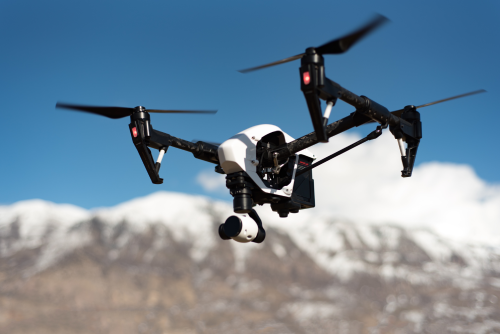
The DJI Mavic 3 Classic is a foldable prosumer camera drone aimed at creators, advanced hobbyists, and small professional teams that want high-end image quality in a relatively portable package. It matters because it keeps the large-sensor imaging approach of the Mavic 3 family while simplifying the setup to a single main camera. For buyers comparing upper-tier DJI drones, it sits between mainstream travel drones and more expensive multi-camera flagships.
That positioning is more important than it first appears. A lot of drone buyers do not actually need a stack of cameras, industrial accessories, or enterprise-only features. What they want is a dependable aircraft with excellent image quality, long enough battery life to work without constant interruptions, and a mature software and support ecosystem. The Mavic 3 Classic exists almost specifically for that buyer. It is not the cheapest way into DJI, but it may be one of the clearest expressions of the “camera-first” prosumer drone idea: one very capable main camera, a strong flight platform, and fewer distractions.
Quick Summary Box
- Drone Name: DJI Mavic 3 Classic
- Brand: DJI
- Model: Mavic 3 Classic
- Category: Prosumer
- Best For: Aerial photography, cinematic video, advanced hobby flying, and small commercial content work
- Price Range: Not publicly confirmed in supplied data
- Launch Year: 2022
- Availability: Active product; regional stock and bundle availability should be verified
- Current Status: Active
- Overall Rating: Not rated due to limited confirmed data
- Our Verdict: A strong camera-first Mavic variant that keeps the large 4/3 main camera and long endurance of the platform, making it a compelling choice for buyers who do not need the extra lenses of the Mavic 3 Pro
Introduction
The DJI Mavic 3 Classic is an active prosumer multirotor from DJI, the Chinese manufacturer that dominates much of the consumer and creator drone market. In practical terms, it is a premium folding camera drone designed for people who care more about image quality and flight confidence than entry-level price. Readers should care because it targets a very common buying question: whether a single excellent main camera is enough, or whether paying more for extra lenses is worth it.
That question matters because the drone market has matured. Buyers are no longer comparing only “toy” drones against “serious” drones. Now they are often comparing several very capable DJI models that each solve a slightly different problem. Some prioritize portability. Some prioritize value. Some prioritize multi-camera flexibility. The Mavic 3 Classic prioritizes the quality of its primary camera and the overall strength of the airframe around it.
For photographers and filmmakers, that can be a very rational trade. A great main wide camera handles the vast majority of typical aerial work: landscapes, coastline shots, establishing views, real-estate reveals, resort overviews, promotional flyovers, and travel content. If those are the kinds of shots you capture most often, then a strong single-camera drone can be more attractive than a more expensive multi-lens model. It is easier to learn, easier to budget for, and often easier to trust in the field because your workflow stays focused.
Overview
What kind of drone is it?
This is a foldable multirotor camera drone in the prosumer segment. That means it sits above beginner-friendly hobby models and below enterprise aircraft built around interchangeable payloads, thermal tools, or heavy-duty inspection workflows. The Mavic 3 Classic is primarily a creator drone, not a cargo, mapping, or industrial payload platform.
Calling it “prosumer” is useful because it describes both its strengths and its boundaries. On one hand, it is significantly more capable than entry-level drones in sensor size, endurance, transmission system, obstacle sensing, and general flight sophistication. On the other hand, it is still designed around a relatively compact folding format, consumer-style app control, and creator-focused features rather than modular mission equipment.
In other words, it is the kind of drone you buy when your deliverable is usually footage or photography, not a thermal report, precision map, or industrial inspection dataset.
Who should buy it?
It is best suited to:
- Serious hobbyists moving beyond entry-level drones
- Travel creators who want better image quality than many smaller drones can deliver
- Real-estate, tourism, and promotional video shooters
- Small production teams that want a compact aerial camera
- Buyers who like the Mavic 3 platform but do not need a multi-camera setup
It is especially attractive to buyers who already know what they want from a drone. If you are the kind of user who mostly flies for polished visual output and you tend to prefer a clean, wide-angle cinematic style, the Mavic 3 Classic makes a lot of sense. It is less about experimentation with multiple focal lengths and more about consistently getting high-quality footage from a capable, proven main camera.
What makes it different?
Its biggest differentiator is simple: it brings the Mavic 3 family’s large main camera experience in a more straightforward single-camera package. That makes it appealing to buyers who want premium image quality, long official flight time, and DJI’s mature flying ecosystem without stepping up to a more complex and more expensive multi-lens configuration.
That “single-camera” identity should not be read as a compromise in the negative sense. For many users, it is a strength. It reduces the decision load in the air. It keeps the aircraft focused on the lens and sensor combination that matters most. It also tends to make the buying decision cleaner: if your work rarely demands tele compression or multi-focal storytelling from the same aircraft, paying for extra cameras may not improve your actual output very much.
Key Features
- Foldable prosumer multirotor airframe for easier transport
- Large 4/3 CMOS Hasselblad main camera
- 20 MP still image capability
- Up to 5.1K video recording
- 3-axis mechanical gimbal for stabilized footage
- Up to 46 minutes of official flight time
- DJI O3+ transmission system
- Omnidirectional obstacle sensing
- APAS 5.0 obstacle-assisted flight support
- Intelligent Return to Home and DJI Fly app support
- Strong official wind resistance for a folding camera drone
- Single-camera design that prioritizes main-camera quality over multi-lens flexibility
- No user-swappable mission payload system publicly emphasized for this model
- No weatherproof rating publicly confirmed in supplied data
Taken together, these features describe a drone that is not trying to be everything for everyone. Its headline value is not unusual accessories or enterprise modularity. It is the combination of a relatively large sensor, strong stabilization, mature transmission, and long endurance in a body that still folds into something manageable for travel and field deployment.
Full Specifications Table
| Specification | Details |
|---|---|
| Brand | DJI |
| Model | Mavic 3 Classic |
| Drone Type | Foldable multirotor camera drone |
| Country of Origin | China |
| Manufacturer | DJI |
| Year Introduced | 2022 |
| Status | Active |
| Use Case | Aerial photography, cinematic video, advanced hobby and prosumer content creation |
| Weight | Approx. 895 g takeoff weight |
| Dimensions (folded/unfolded) | Folded: approx. 221 × 96.3 × 90.3 mm; Unfolded: approx. 347.5 × 283 × 107.7 mm |
| Max Takeoff Weight | Not publicly confirmed separately in supplied data; standard takeoff weight is approx. 895 g |
| Battery Type | DJI Intelligent Flight Battery, LiPo 4S |
| Battery Capacity | 5000 mAh |
| Flight Time | Up to 46 minutes (official figure) |
| Charging Time | Not publicly confirmed in supplied data |
| Max Range | Official transmission rating varies by region; up to 15 km in FCC regions is publicly associated with DJI O3+ |
| Transmission System | DJI O3+ |
| Top Speed | Up to 75.6 km/h |
| Wind Resistance | Up to 12 m/s |
| Navigation System | GNSS support including GPS, Galileo, and BeiDou |
| Obstacle Avoidance | Omnidirectional obstacle sensing |
| Camera Resolution | 20 MP |
| Video Resolution | Up to 5.1K |
| Frame Rates | Up to 5.1K/50fps and up to 4K/120fps |
| Sensor Size | 4/3 CMOS |
| Gimbal | 3-axis mechanical gimbal |
| Zoom | Digital zoom supported; exact ratios vary by mode and recording settings |
| Storage | Internal storage plus microSD expansion; exact internal capacity not publicly confirmed in supplied data |
| Controller Type | Bundle-dependent; commonly sold with DJI RC-N1 or DJI RC |
| App Support | DJI Fly |
| Autonomous Modes | Intelligent Return to Home and creator-focused automated flight/capture tools; exact current mode set should be verified by firmware version |
| Payload Capacity | Not publicly confirmed in supplied data; not positioned as a user-payload platform |
| Operating Temperature | Approx. -10°C to 40°C |
| Water Resistance | Not publicly confirmed in supplied data |
| Noise Level | Not publicly confirmed in supplied data |
| Remote ID Support | Region- and firmware-dependent; verify local compliance status before purchase or operation |
| Geo-fencing | DJI flight restriction and geospatial warning tools may apply; verify current regional implementation |
| Certifications | Not publicly confirmed in supplied data |
| MSRP / Launch Price | Not publicly confirmed in supplied data |
| Current Price | Not publicly confirmed in supplied data |
The specifications tell a clear story. This is not a light sub-250 g travel drone and it is not an industrial heavy-lift machine. It sits in the middle ground where portability, strong camera hardware, and meaningful flight performance meet. For many buyers, that balance is exactly the appeal.
Design and Build Quality
As a Mavic-series aircraft, the Mavic 3 Classic follows the now-familiar DJI formula: a folding airframe built for transport, field setup, and travel-friendly storage rather than rugged industrial abuse. That matters because portability is one of its practical strengths. It is much easier to carry than larger enterprise aircraft, but it is still substantial enough to feel like a serious camera platform rather than a lightweight toy.
Its approximate 895 g takeoff weight places it in a premium camera-drone class. In buyer terms, that usually means better stability and stronger camera hardware than very small drones, but also more regulatory attention and less flexibility in very tight spaces. It is portable, but it is not tiny. That distinction matters when you are planning travel, hiking, quick roadside launches, or work in more complex environments.
The overall design language of the Mavic 3 platform leans toward clean surfaces, integrated sensors, and a front-mounted gimbal that visually emphasizes the camera as the product’s centerpiece. That is appropriate here. The aircraft exists to carry a strong camera well, not simply to be as compact as possible at any cost.
Likely design strengths include:
- Compact folding arms for easier packing
- Front-mounted stabilized camera for creator-focused shooting
- Mature DJI consumer/prosumer fit and finish
- Field-friendly battery swap workflow
- Clean travel form factor for outdoor production work
Likely limitations include:
- No public waterproof or weather-sealed rating
- Not intended for harsh industrial handling
- No public indication of interchangeable payload support
- More care needed around the exposed gimbal during transport and setup
In practical ownership terms, the build quality conversation is less about whether it feels premium and more about how you use it. This is the kind of drone that rewards careful transport habits. A good case, responsible packing, gimbal protection during transit, and disciplined takeoff and landing practices matter. Unlike industrial drones with more ruggedized frames and mission-specific hardware, the Mavic 3 Classic is meant to remain clean, protected, and well maintained.
That said, DJI’s foldable aircraft are popular partly because they strike a useful compromise. They are not fragile in the sense of being disposable or flimsy. They are simply specialized. Treat it like a flying camera system rather than a rough-service field tool and the design makes sense.
Flight Performance
On official specs, the Mavic 3 Classic is a strong performer for a folding prosumer drone. DJI publicly associates this model with up to 46 minutes of flight time, up to 75.6 km/h top speed, a 6,000 m service ceiling, and wind resistance up to 12 m/s. Real-world endurance will always be lower once you account for wind, repeated climbs, aggressive flying, and landing reserve, but even with that reality, the official numbers place it in an upper tier for portable camera drones.
That endurance number is especially meaningful for creators. Long advertised flight time is not just a marketing bullet; it affects how a shoot feels. More battery duration means fewer rushed camera moves, more time to reposition for a second angle, and less pressure to land immediately after a single pass. Even if real-world usable time is notably below the maximum figure, starting from a high official ceiling is still a clear advantage.
The flight character is best understood as stable and camera-oriented rather than hyper-agile. That is not a weakness. For photography and smooth cinematic work, predictable hovering, controlled braking, and good positioning hold are usually more valuable than race-like responsiveness. If your goal is to reveal a property, track a moving subject at a measured pace, or orbit a scenic landmark without jerky corrections, stability is part of the product value.
Signal confidence is another major part of the experience. DJI O3+ transmission gives the aircraft a strong official communications foundation, though actual legal flying distance depends on local regulations, environment, interference, and region-specific power limits. In practice, this is the kind of drone meant to give pilots confidence in open outdoor spaces, not to encourage extreme-distance flying.
Expected flight strengths:
- Long official endurance for a foldable camera drone
- Strong top speed when needed for repositioning
- Good wind handling on paper for its class
- Mature stabilization and hovering behavior
- Omnidirectional sensing adds confidence in many outdoor scenarios
Things to keep in mind:
- Indoor use is possible only in controlled spaces and is not its ideal environment
- Heavier class means more caution around people, obstacles, and takeoff areas
- Wind, cold weather, and battery age materially affect real flight time
- Obstacle sensing helps, but it is not a substitute for line-of-sight piloting and airspace awareness
It is also worth understanding what “good flight performance” means for a drone like this. It does not only mean speed or range. It means low pilot workload. It means the aircraft holds position reliably while you think about framing. It means the gimbal and flight control system work together well enough that your shots do not constantly require correction in post. It means the aircraft feels trustworthy in the situations it was designed for: open landscapes, coastal overlooks, real-estate exteriors, travel content, and structured commercial shoots.
Pilots stepping up from smaller drones may also notice that a heavier, more premium aircraft can feel calmer in the air, particularly outdoors. That does not make it immune to wind, but it can improve the overall sense of composure. For camera work, that matters.
Camera / Payload Performance
The camera is the main reason to buy the DJI Mavic 3 Classic. Its standout hardware is the 20 MP 4/3 CMOS Hasselblad main camera on a 3-axis mechanical gimbal. For buyers comparing drones, the 4/3 sensor point is important: a larger sensor generally gives a camera more room to gather light and preserve tonal detail than the smaller sensors common in lower-tier models.
In practical creator terms, that should translate into stronger potential for:
- Better-looking landscape footage
- More flexible grading than smaller-sensor drones
- Better low-light behavior relative to many midrange consumer models
- More professional-looking stills and promotional video
The drone also supports up to 5.1K video, which keeps it relevant for high-resolution production and reframing workflows. High-frame-rate 4K options further improve its usefulness for slow-motion clips and polished social or commercial edits.
The reason larger-sensor drones remain attractive is not only technical bragging rights. It is workflow quality. Better source footage can hold up more cleanly when you adjust contrast, recover highlights, balance difficult skies, or match aerial footage with ground cameras. If you are working on travel films, branded edits, tourism campaigns, or real-estate content, that extra image flexibility can make the difference between footage that looks merely good and footage that feels polished.
The 3-axis mechanical gimbal is equally important. Sensor quality matters, but aerial footage only feels premium when motion is controlled well. A reliable stabilized gimbal allows the drone to produce smooth pans, calm forward motion, and slower cinematic reveals without the harsh shake that quickly makes footage feel amateurish. The Mavic 3 Classic’s appeal comes from this full stack: large sensor, solid stabilization, and a mature flight platform underneath.
The biggest tradeoff is what the Classic does not include. Unlike some other higher-tier Mavic variants, it is a single-main-camera product rather than a multi-lens platform. That means no built-in tele workflow advantage and no instant focal-length flexibility for compressed perspectives or safer stand-off shots. For many buyers that is perfectly fine; in fact, it simplifies the shooting experience. But if you want multiple native perspectives in one aircraft, you may need to look higher in the lineup.
That tradeoff is worth thinking through honestly. A lot of drone footage is shot on the widest, best camera anyway. If your deliverables are mostly sweeping outdoor visuals, scenic establishment shots, and broad commercial coverage, the missing tele options may not matter often. But if you regularly shoot architecture from stand-off distances, need compressed mountain layers, or want more variety without changing aircraft, then the Classic’s simplified camera setup becomes more of a limitation.
As for payload performance, this is not a general-purpose payload carrier. There is no public positioning here for interchangeable mission modules, thermal imaging, spraying, cargo, or sensor-swapping enterprise work. The payload is the camera system, and the product should be judged accordingly.
Smart Features and Software
The Mavic 3 Classic sits inside DJI’s mature consumer/prosumer software ecosystem, with DJI Fly as the core app environment. That matters because even buyers focused on hardware eventually live with the software day to day: setup, camera control, firmware updates, safety prompts, automated shot modes, and flight logs all flow through that ecosystem.
Known or commonly expected platform capabilities include:
- Intelligent Return to Home
- GNSS-assisted hovering and positioning
- Omnidirectional obstacle sensing
- APAS 5.0 obstacle-assisted route adjustment
- Automated creator tools such as subject tracking and cinematic shot presets
- Controller-and-bundle flexibility depending on purchase package
For content creators, DJI’s software value is usually less about full industrial autonomy and more about reducing workload. Features like automated shot paths, return-to-home logic, and assisted obstacle handling can help solo operators capture usable footage more consistently. That is particularly valuable when one person is handling location awareness, camera setup, lighting conditions, client communication, and flight safety at the same time.
Obstacle sensing is also best understood as a confidence feature rather than an invincibility feature. Omnidirectional sensing can help reduce risk during certain flight paths and improve the practicality of assisted movements, but it does not remove the need for good judgment. Thin branches, wires, low-light conditions, reflective surfaces, and fast-moving scenes can still create problems. Sensible pilots treat smart sensing as backup, not permission to fly carelessly.
That said, buyers who rely on specific advanced automation features such as repeatable waypoint routes, SDK access, or specialized workflow integrations should verify the current firmware-level feature set before purchase. DJI’s feature availability can vary by model, controller, and software generation. If your work depends on a very specific mode, do not assume that all Mavic-branded drones support it the same way.
Controller choice can also affect the ownership experience. Since bundles may vary, some buyers will prefer the simpler integrated-screen controller experience, while others may prefer a lower-entry-cost option that relies on a connected mobile device. This is less about raw flight capability and more about comfort, convenience, and how quickly you can get into the air on location.
Use Cases
The most realistic uses for the DJI Mavic 3 Classic are camera-led missions where image quality matters more than payload flexibility.
- Aerial photography for landscapes, travel, and scenic work
- Cinematic video for YouTube, brand content, and documentaries
- Real-estate and resort marketing footage
- Tourism and destination promotion
- Small business promotional video production
- General outdoor hobby flying for advanced pilots
- Visual site documentation and progress updates where survey-grade output is not required
- Content creation teams that want a premium main camera without moving to a larger enterprise platform
These use cases all share one thing: the output is visual storytelling, not specialized data capture. A hotel, resort, or vacation rental video benefits from smooth reveal shots and strong dynamic range. A travel filmmaker benefits from a high-quality main camera and enough endurance to experiment with multiple passes. A real-estate operator benefits from stable orbits, elevated perspective changes, and footage that grades nicely alongside ground shots.
It is also a good fit for small commercial teams because it compresses a lot of capability into a compact system. For many businesses, carrying a large enterprise drone is unnecessary and inefficient. The Mavic 3 Classic is closer to a flying camera that can travel, be deployed quickly, and still deliver output that feels premium.
Less realistic uses include thermal inspection, spraying, cargo work, heavy industrial sensing, or interchangeable-payload missions. It can document a site visually, but it is not built as a flexible mission platform. If your work depends on specialized sensors or repeatable industrial workflows, this is the wrong category of aircraft.
Pros and Cons
Pros
- Large 4/3 main camera is a major image-quality advantage in this class
- Single-camera setup is simpler and often more cost-rational than multi-camera flagships
- Long official flight time for a folding prosumer drone
- DJI O3+ and omnidirectional sensing support a confident flying experience
- Foldable design remains practical for travel and field work
- Strong fit for creators who care most about the primary wide camera
Cons
- Price is likely still premium compared with midrange drones, though exact figures should be verified
- No extra tele cameras, which limits focal-length flexibility versus higher-end alternatives
- Not a payload-oriented or enterprise mission platform
- No public waterproof rating, so weather tolerance should be treated conservatively
- Approx. 895 g weight places it above the lightest regulatory classes in many regions
- Buyers needing specialized autonomy or industrial workflows must verify feature support carefully
The pros and cons are fairly straightforward because the product itself is straightforward. The Mavic 3 Classic is strong where it intends to be strong: main-camera quality, endurance, portability for its class, and overall ecosystem maturity. Its drawbacks are mainly about what it intentionally is not. It is not the cheapest DJI option, not the lightest, and not the most flexible in terms of camera variety or mission expansion.
That kind of clarity is actually useful. If you like the strengths, the Classic can be a smart buy. If its limitations directly conflict with your workflow, there are better alternatives without needing to force a fit.
Comparison With Other Models
| Model | Price | Flight Time | Camera or Payload | Range | Weight | Best For | Winner |
|---|---|---|---|---|---|---|---|
| DJI Mavic 3 Classic | Premium, bundle-dependent | Up to 46 min | 20 MP 4/3 Hasselblad main camera, up to 5.1K video | O3+; official rating varies by region, up to 15 km FCC | 895 g | Buyers who want strong main-camera quality without a multi-camera premium | Best single-camera value in the Mavic 3 family |
| DJI Mavic 3 Pro | Higher | Up to 43 min | Multi-camera setup with added focal-length flexibility | O3+; up to 15 km FCC class | 958 g | Creators who want multiple native perspectives in one drone | Winner if lens flexibility matters most |
| DJI Air 3 | Lower | Up to 46 min | Dual-camera setup with smaller main sensor class | O4 class transmission; region dependent | 720 g | Value-focused creators and travelers | Winner on price-to-portability value |
| DJI Mavic 2 Pro | Legacy / used-market dependent | Up to 31 min | Older 1-inch Hasselblad camera | Older transmission platform | 907 g | Buyers shopping older used gear | Winner only if budget matters more than modern features |
DJI Mavic 3 Classic vs a close competitor
The most direct close competitor is the DJI Mavic 3 Pro. Both sit in the same family, but the buying logic is different. The Classic is the cleaner choice if your work is mainly done on the main wide camera and you want to save money and complexity. The Pro becomes the better tool if you regularly need multiple focal lengths for compression, safer stand-off framing, or faster on-location shot variety.
This is less about which drone is “better” in the abstract and more about how you actually shoot. If 80 to 90 percent of your footage would come from the best wide camera anyway, the Classic can feel like the more efficient purchase. If your style depends on switching perspectives without moving the aircraft dramatically, the Pro’s added lenses can justify the higher cost.
DJI Mavic 3 Classic vs an alternative in the same segment
Against the DJI Air 3, the Mavic 3 Classic is usually about image-quality priority versus value priority. Air 3 gives many buyers more approachable pricing and a very capable dual-camera setup, while the Mavic 3 Classic counters with a larger main sensor and a more premium imaging proposition. If the main wide camera matters most, the Classic is often the more serious creative tool.
The Air 3 may also appeal more to travelers who want a slightly lighter package and stronger value per dollar. But for buyers who care deeply about image character, grading latitude, and squeezing more quality out of each flight, the Classic has a clear argument.
DJI Mavic 3 Classic vs an older or previous-generation option
Compared with the DJI Mavic 2 Pro, the Mavic 3 Classic represents a clear modernization in endurance, sensing, transmission, and platform maturity. The Mavic 2 Pro can still make sense on the used market, but it is a legacy choice with greater long-term support and adoption risk.
That matters more than spec sheets alone suggest. A used older drone may look appealing on price, but battery health, repair support, controller compatibility, and software aging all become part of the ownership equation. The Mavic 3 Classic is a much safer bet if you plan to rely on the drone regularly rather than occasionally.
Manufacturer Details
DJI is both the brand and the manufacturer here, so there is no separate consumer-facing badge versus factory identity to untangle. The company is headquartered in China, with Shenzhen widely recognized as its home base, and it has been a defining force in modern civilian drones since the mid-2000s.
DJI’s major product lines have included:
- Mini series for lightweight consumer flying
- Air series for midrange travel and creator use
- Mavic series for premium foldable camera drones
- FPV and Avata lines for immersive flying
- Enterprise and public-safety systems
- Agricultural platforms for spraying and field operations
In market reputation terms, DJI is widely viewed as the benchmark brand in consumer and prosumer drones, especially for stabilized camera performance, polished software, and broad ecosystem maturity.
That reputation matters because buying a drone is partly buying an ecosystem. You are not just buying propellers and a camera. You are buying batteries, controllers, firmware support, tutorials, accessories, repair channels, and long-term platform confidence. DJI’s market position gives it a practical advantage in all of those areas, even if regional restrictions, stock conditions, or local support quality can still vary.
Support and Service Providers
Support is one of DJI’s practical advantages, but buyers should still verify service details in their own region. For an active model like the Mavic 3 Classic, the most relevant support paths typically include the official support portal, authorized repair channels, firmware support, and spare parts availability through approved dealers.
Areas to verify before buying:
- Official repair availability in your country
- Battery, propeller, and gimbal part availability
- Accident coverage or protection-plan options in your market
- Controller compatibility and firmware update path
- Regional turnaround times for service work
Because this is a widely recognized DJI platform, community support is also a real asset. Owners can usually find setup guides, troubleshooting help, and user workflow advice through the broader DJI community and drone-creator ecosystem. Still, for paid work, official repair and warranty-backed support matter more than forum advice.
For professionals and serious hobbyists, downtime is part of the support calculation. A premium drone is most valuable when it is available and working. That means it is worth checking whether your local market has strong repair logistics, whether batteries are easy to replace, and whether warranty service is realistic rather than theoretical. If a drone must be shipped internationally for every issue, the convenience of the platform may be reduced.
Where to Buy
The DJI Mavic 3 Classic is the kind of drone typically sold through:
- The official brand store
- Authorized DJI dealers
- Specialist drone retailers
- Major camera and electronics sellers
- Regional drone distributors
- Reputable online marketplaces with verified seller status
When comparing sellers, verify more than price. Check:
- Which controller is included
- Whether the package is aircraft-only or a full combo
- Regional warranty eligibility
- Return policy
- Battery shipping limitations
- Local service support
For a premium DJI drone, authorized channels are usually the safer choice than gray-market imports, especially if you care about warranty coverage and firmware support. A cheaper listing can become expensive very quickly if it arrives with limited regional support, unclear return rights, or incompatible bundle components.
It is also wise to compare full-package value rather than just aircraft price. A slightly more expensive authorized kit may include the controller you actually want, plus warranty support and clearer local service access. That can be a better long-term purchase than a lower-cost listing that creates uncertainty from day one.
Price and Cost Breakdown
A precise launch MSRP and current street price are not publicly confirmed in the supplied data for this page. Buyers should verify current pricing through the official store and authorized dealers because DJI bundle structure, regional taxes, and stock conditions can materially change the real cost.
What matters more than a single headline price is total ownership cost. For the Mavic 3 Classic, that usually includes:
- Aircraft-only versus controller-bundled package differences
- At least one extra battery for practical field use
- Charging hub and faster charger
- High-speed microSD cards
- ND filters for video work
- Spare propellers
- Carry case or travel bag
- Insurance or accident protection plan where offered
- Potential repair cost if the gimbal or arms are damaged
For comparison shopping, the important budgeting question is this: if the price gap to a DJI Air model is large, are you paying for image quality you will actually use? And if the gap to a Mavic 3 Pro is small in your region, do you need the extra lenses enough to justify stepping up?
This is where buyers can save themselves regret. The cheapest viable purchase is not always the cheapest aircraft. If you are buying the Mavic 3 Classic for serious content work, you will almost certainly want spare batteries, storage, and basic accessories from the start. Likewise, if you are stretching your budget just to get into the Mavic 3 family but you do not really need its camera advantages, a lower-priced model may offer better value overall.
On the other hand, if aerial image quality directly supports your work, spending more upfront can be justified. Better source footage can shorten editing time, improve client-facing results, and keep your drone useful for longer before you feel pressure to upgrade.
Regulations and Compliance
Regulatory treatment depends on where you fly, but this drone’s approximate 895 g class means it will fall into a more regulated bracket than very small sub-250 g drones in many jurisdictions.
Key points to verify locally:
- Registration requirements for the aircraft and operator
- Remote ID rules and whether your firmware/controller setup satisfies them
- Commercial licensing or certification for paid work
- Altitude limits and airspace authorization rules
- Night flying requirements
- Privacy and property rules around filming
- Geofenced or restricted areas near airports, infrastructure, or sensitive sites
Practical rule of thumb: do not assume that because this is a mainstream DJI drone, it is automatically compliant everywhere. Compliance is location-specific. Always verify current aviation authority rules, especially if you fly commercially or travel internationally with the drone.
The weight class alone means this is not the kind of drone you buy casually and fly anywhere without planning. That is not a criticism of the product; it is simply part of owning a higher-capability aircraft. If you are already comfortable with registration, airspace checks, and operating rules, this will be normal. If you are moving up from a much smaller drone, expect your responsibilities to increase.
International travel adds another layer. Some countries have strict import, registration, or authorization rules, and geo-restriction implementation may vary. If travel content is part of your intended use, compliance research should be part of trip planning, not an afterthought at the airport.
Who Should Buy This Drone?
Best for
- Creators who prioritize main-camera image quality
- Advanced hobbyists stepping into premium aerial imaging
- Small production teams shooting promos, travel, or landscape content
- Buyers who want Mavic 3-series quality without paying for multiple cameras
- Pilots who value long endurance and a mature DJI ecosystem
This drone makes the most sense for people who are intentionally buying for visual quality. If your main question is, “What is the best footage I can get from a relatively portable DJI drone without paying for extra lenses I may rarely use?” the Mavic 3 Classic is a strong answer. It is a focused tool for users who know that the main wide camera will do most of the work.
Not ideal for
- Budget-first buyers looking for the lowest-cost DJI option
- Pilots who specifically want multiple native focal lengths
- Operators needing thermal, zoom-inspection, or interchangeable payload workflows
- Users who mainly fly indoors or in tight confined spaces
- Buyers trying to stay in the lightest regulatory classes
- Anyone who needs a weather-sealed platform for routine adverse-weather work
It is also not ideal for buyers who equate “more expensive” with “better for every situation.” If portability, lighter regulation, or lower total cost matter more to you than large-sensor imaging, another model may fit better. The Mavic 3 Classic rewards a specific kind of priority: image quality first, mission flexibility second.
Final Verdict
The DJI Mavic 3 Classic looks like one of the smartest camera-first choices in DJI’s premium folding lineup. Its biggest strengths are the large 4/3 main camera, strong official endurance, and mature flight platform. Its biggest drawbacks are equally clear: it is still a premium-priced drone class, it lacks the multi-lens flexibility of higher-end siblings, and it is not built for enterprise payload work or casual low-regulation flying.
What makes it compelling is how coherent the package feels. Instead of trying to cover every possible use case, it focuses on doing a smaller number of things very well. It gives creators a high-quality primary camera, a stable and capable airframe, long battery potential, and a software environment that is already familiar to a large part of the drone market. That kind of focus can be more valuable than feature overload.
If your priority is high-quality aerial photo and video from a single excellent main camera, the Mavic 3 Classic is easy to take seriously. If you need tele reach, industrial workflows, or the lowest possible price, there are better fits. For serious creators who want premium imaging without unnecessary complexity, this is one of the more compelling DJI options to consider.
In short, the Mavic 3 Classic is best understood as the practical premium choice in the Mavic 3 family. Not the most feature-packed, not the least expensive, but very often the most sensible for buyers who want great footage and a straightforward reason to buy.
