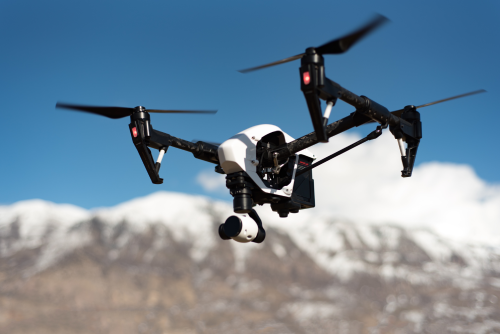
DJI Mavic 4 Pro is an active DJI prosumer multirotor that appears on the manufacturer’s regional web presence in 2026. It is aimed at buyers who want a premium, camera-focused drone from the DJI ecosystem, including advanced hobbyists, content creators, and small commercial operators. The model matters because the Mavic line usually represents DJI’s high-end portable drone class: the place where image quality, travel convenience, software polish, and broad market appeal tend to meet. At the same time, many of the hard specifications for this exact model are not publicly confirmed in the supplied data, so any evaluation has to stay grounded in confirmed facts rather than assumption.
That makes the DJI Mavic 4 Pro an interesting case. It is clearly relevant enough to be visible in DJI’s regional web presence, and the Mavic badge alone will put it on a lot of upgrade shortlists. But until your region’s official listing fully confirms items like weight, camera configuration, flight time, and controller options, this remains a model that should be approached with informed caution. The opportunity is real, but so is the need to verify details before spending premium-drone money.
Quick Summary Box
- Drone Name: DJI Mavic 4 Pro
- Brand: DJI
- Model: Mavic 4 Pro
- Category: Prosumer multirotor
- Best For: Advanced hobbyists, creators, and small commercial users looking at DJI’s premium portable drone class
- Price Range: Not publicly confirmed in supplied data
- Launch Year: Not publicly confirmed in supplied data
- Availability: Appears on DJI regional web results in 2026; regional availability should be verified
- Current Status: Active
- Overall Rating: Not rated due to limited confirmed data
- Our Verdict: A potentially important DJI flagship-style prosumer drone, but buyers should verify official specs, bundles, and regional support before treating it as a finalized purchase choice
Introduction
The DJI Mavic 4 Pro sits in the prosumer part of the drone market, which usually means a step above beginner drones but below large enterprise, industrial, or specialty filmmaking platforms. In practical buying terms, that is often the most competitive and most appealing part of the market. It is where users expect strong image quality, polished stabilization, intelligent flight aids, and a portable design that can be packed for travel or quick field work. It is also where pricing typically rises enough that assumptions become risky.
With DJI listed as both brand and manufacturer, and the model marked active, this is best understood as a current-generation, camera-led multirotor rather than a legacy aircraft or discontinued listing. That alone gives it significance. DJI’s Mavic naming has historically been associated with premium portable drones that appeal to users who want more than basic aerial snapshots. Many buyers see the Mavic tier as the level where drones become serious tools for content creation rather than just recreational gadgets.
Because the supplied record is intentionally conservative, this page focuses on three things: what is confirmed, what can be reasonably inferred from the product segment, and what buyers still need to check on the official DJI product listing before making a final decision. That approach may feel cautious, but it is the right one. For a premium drone purchase, details like controller bundle, region-specific feature availability, battery performance, and camera codec support can materially change whether a model is a smart buy.
Overview
What kind of drone is it?
The DJI Mavic 4 Pro is a DJI-branded multirotor in the prosumer segment. That normally places it in the premium portable drone category, where buyers care about image quality, flight stability, ease of transport, and a polished software ecosystem. It is not presented here as a heavy-lift, agricultural, delivery, or enterprise inspection aircraft.
The multirotor classification matters because it tells you a lot about how the aircraft is meant to be used. Multirotors are especially good at vertical takeoff and landing, stable hovering, precise low-speed movement, and controlled framing for stills or video. Those traits are exactly what photographers, videographers, and solo operators usually want. They are less about raw efficiency than fixed-wing aircraft, but far better for point-of-view flexibility and stop-and-hold positioning.
In other words, this is the type of drone you would expect to deploy for capturing a property reveal, following a scenic line through a landscape, hovering for a careful composition, or taking a smooth ascending shot over a venue. That is very different from a racing drone optimized for manual agility or an industrial aircraft designed around payload interchangeability.
Who should buy it?
This model is most likely relevant to:
- Serious hobby pilots who want a more capable platform than basic entry-level drones
- Aerial photographers and videographers who prioritize image quality and stabilization
- Travel and outdoor creators who want premium performance in a transportable package
- Real estate and property media teams needing polished overhead visuals
- Small businesses that rely on high-quality promotional footage or recurring visual updates
- DJI users comparing an upgrade from Mini, Air, or older Mavic platforms
Each of those groups tends to care about a slightly different part of the buying equation. Hobby pilots may be attracted to flight confidence, premium features, and image quality. Content creators usually care more about camera behavior, color workflow, quick setup, and reliability under changing field conditions. Small commercial users often place higher value on repeatability, service support, accessory availability, and how quickly the drone can go from case to airborne capture.
That is why the Mavic 4 Pro matters even before every spec is confirmed. Buyers in this tier are not just shopping for a toy. They are often shopping for a tool that needs to fit into a workflow.
What makes it different?
What makes the Mavic 4 Pro noteworthy is less about confirmed raw specs and more about where it sits in DJI’s lineup. The Mavic name usually signals a more premium class than entry-level consumer drones, with portability and camera performance as core selling points. It tends to represent a tier where DJI tries to balance travel-friendly design with higher-end imaging and advanced automation.
Its presence on DJI’s 2026 regional web results suggests it is relevant in the current market, but readers should not assume any specific camera, flight-time, or autonomy advantage until the official spec sheet for their region is verified. That is especially important because the Mavic family has historically been compared not only against outside competitors, but also against DJI’s own Mini and Air lines. For many buyers, the question is not simply “Is this a good drone?” but “Is it enough of an upgrade over the other DJI options to justify the extra cost and likely extra regulatory burden?”
That is where the Mavic 4 Pro becomes strategically interesting. If it improves meaningfully on existing DJI creator drones, it could become a top-tier portable choice. If the gap is smaller than expected, other DJI models may remain the better-value purchase.
Key Features
- Active DJI model: Confirmed as active in the supplied record, which makes it relevant to current buyers rather than collectors or used-market shoppers
- Prosumer positioning: Intended for users who want more than a basic hobby drone and are likely to care about output quality, workflow, and consistency
- Multirotor airframe: Supports vertical takeoff and landing, hover, and precise low-speed positioning, all of which are central to creator-friendly aerial shooting
- China-origin DJI platform: Built by one of the most recognized drone manufacturers in the market, with broad ecosystem awareness and established user familiarity
- Likely camera-first design: Reasonable segment-based expectation, though camera details are not publicly confirmed in the supplied data
- Likely portability focus: Mavic branding strongly suggests a travel-friendly layout, but folded size, carry format, and exact form factor are not confirmed
- Current-market relevance: Listed in 2026 DJI regional web presence, indicating that the model is not merely historical or speculative within the supplied record
- Ecosystem appeal: Likely to interest buyers already invested in DJI controllers, batteries, software habits, and accessory purchasing patterns, though exact compatibility is not publicly confirmed
- Upgrade interest: Especially relevant to users wondering whether to move up from Mini- or Air-class platforms into DJI’s premium portable tier
- Commercial curiosity: Likely to draw attention from small business users who want better media results without moving into bulky enterprise systems
What stands out here is not a single killer feature that can be pointed to on paper, because the supplied data does not support that. Instead, the appeal is about category placement. Buyers looking at this model are generally chasing a combination of better imaging potential, more confidence in flight, stronger perceived build quality, and a more premium overall experience. The key feature set, therefore, is as much about market position as it is about individual hardware details.
Full Specifications Table
| Field | Details |
|---|---|
| Brand | DJI |
| Model | DJI Mavic 4 Pro |
| Drone Type | Multirotor |
| Country of Origin | China |
| Manufacturer | DJI |
| Year Introduced | Not publicly confirmed in supplied data |
| Status | Active |
| Use Case | Prosumer aerial imaging and general-purpose creator use |
| Weight | Not publicly confirmed in supplied data |
| Dimensions (folded/unfolded) | Not publicly confirmed in supplied data |
| Max Takeoff Weight | Not publicly confirmed in supplied data |
| Battery Type | Not publicly confirmed in supplied data |
| Battery Capacity | Not publicly confirmed in supplied data |
| Flight Time | Not publicly confirmed in supplied data |
| Charging Time | Not publicly confirmed in supplied data |
| Max Range | Not publicly confirmed in supplied data |
| Transmission System | Not publicly confirmed in supplied data |
| Top Speed | Not publicly confirmed in supplied data |
| Wind Resistance | Not publicly confirmed in supplied data |
| Navigation System | Not publicly confirmed in supplied data |
| Obstacle Avoidance | Not publicly confirmed in supplied data |
| Camera Resolution | Not publicly confirmed in supplied data |
| Video Resolution | Not publicly confirmed in supplied data |
| Frame Rates | Not publicly confirmed in supplied data |
| Sensor Size | Not publicly confirmed in supplied data |
| Gimbal | Not publicly confirmed in supplied data |
| Zoom | Not publicly confirmed in supplied data |
| Storage | Not publicly confirmed in supplied data |
| Controller Type | Not publicly confirmed in supplied data |
| App Support | Not publicly confirmed in supplied data |
| Autonomous Modes | Not publicly confirmed in supplied data |
| Payload Capacity | Not publicly confirmed in supplied data |
| Operating Temperature | Not publicly confirmed in supplied data |
| Water Resistance | Not publicly confirmed in supplied data |
| Noise Level | Not publicly confirmed in supplied data |
| Remote ID Support | Not publicly confirmed in supplied data |
| Geo-fencing | Not publicly confirmed in supplied data |
| Certifications | Not publicly confirmed in supplied data |
| MSRP / Launch Price | Not publicly confirmed in supplied data |
| Current Price | Not publicly confirmed in supplied data |
The table above may look sparse, but that sparsity is itself useful information. It means buyers should resist the temptation to fill in the blanks with rumors, leaks, or assumptions based on other DJI products. In the premium drone category, small differences in camera hardware, controller package, or transmission system can have a major impact on the real-world value of the aircraft.
For practical shopping, this table should function as a verification checklist. When an official regional product page, retailer listing, or dealer spec sheet becomes available, these are the fields that deserve close attention before you compare the Mavic 4 Pro against alternatives.
Design and Build Quality
No official dimensions, weight, or material breakdown are confirmed in the supplied data, so the design discussion has to stay conservative. Still, a DJI prosumer multirotor carrying the Mavic name strongly suggests a portable airframe intended for transport, quick deployment, and camera-led use rather than rough industrial abuse.
In practical terms, buyers should expect the design priorities to center on:
- portability
- integrated stabilization
- ease of packing
- fast setup in the field
- consumer-friendly battery and controller handling
Those design priorities are not trivial. For many users, the difference between a drone that gets taken everywhere and a drone that stays home often comes down to travel friction. If a model packs easily, deploys quickly, and feels manageable to carry with extra batteries and a controller, it is much more likely to become part of regular shooting routines. That has always been one of the strongest arguments for portable premium drones versus larger professional platforms.
What remains unconfirmed is the exact folded mechanism, propeller layout, landing stance, and overall size class. That matters because portability is one of the biggest reasons people choose Mavic-series drones over larger enterprise platforms. A small change in folded shape can affect bag choice, hiking convenience, air-travel packing, and how quickly the drone can be set up in a tight shooting window.
Build quality is another area where DJI usually scores well in the broader market, but this specific page cannot responsibly claim exact materials, structural rigidity, weather tolerance, or serviceability for the Mavic 4 Pro without official product documentation. Buyers who work in demanding environments should look beyond the marketing surface and confirm details that affect long-term ownership, such as:
- how exposed the gimbal and camera assembly are during transport
- whether propellers can remain mounted in the folded state
- how secure the battery retention system is
- whether the cooling approach appears designed for repeated warm-weather shooting
- how visible and accessible sensors are for cleaning and maintenance
- whether the controller bundle is optimized for phone attachment or integrated-screen use
If you plan to travel with it often, use it near sand or salt air, or rely on it for paid work, verify the airframe finish, cooling approach, and any weather-related limitations before buying. A premium drone can be highly capable and still not be the right tool for coastal wind, dusty construction edges, or frequent rapid deployment in rough conditions.
Flight Performance
The confirmed facts here are simple: this is an active DJI multirotor in the prosumer segment. That alone suggests a flight character aimed more at stability, positioning confidence, and smooth camera movement than at aggressive FPV-style handling. For the audience this drone is likely targeting, that is the right emphasis.
From a buyer perspective, the likely strengths of a drone in this class are:
- controlled hovering
- predictable takeoff and landing behavior
- easy low-speed framing
- accessible flight controls for non-racing pilots
- smooth directional movement suitable for cinematic shots
- enough power to remain practical outdoors rather than being limited to calm conditions only
For content creators, flight performance is not just about maximum speed. It is about how confidently the aircraft holds a line, how smoothly it responds to stick input, how usable it is in moderate wind, and how stable the footage remains while the pilot is making small corrections. A drone that is technically fast but difficult to finesse can be less useful than a slower drone that feels predictable and refined.
What is not publicly confirmed in the supplied data is just as important:
- top speed
- maximum range
- ceiling
- wind resistance
- transmission system
- exact navigation stack
- obstacle sensing performance
That means no one should assume this drone meaningfully outflies current DJI alternatives until the official flight spec sheet is checked. Range numbers in particular are often misunderstood. Quoted transmission distances are rarely the same as realistic operating distance in a legal, interference-limited, line-of-sight environment. Likewise, flight-time claims are usually made under ideal conditions and do not always translate to mixed real-world shooting sessions with wind, repeated climbs, and stop-start repositioning.
As analysis, the Mavic 4 Pro will probably be better suited to outdoor imaging and open-space flight than indoor flying. Most prosumer GPS camera drones can operate indoors in limited scenarios, but indoor usability depends heavily on sensor layout, visual positioning behavior, lighting conditions, prop protection, and pilot experience. Since those details are not confirmed here, it is safer to treat it as an outdoor-first aircraft.
A smart buyer should also pay attention to how the drone fits their own flying style. Some users need long, slow surveying passes. Others need short cinematic bursts with frequent landing and relocation. Some care about responsive sport-mode travel between points, while others prioritize the gentlest possible camera movement. The official flight specs matter, but the feel of the aircraft in actual use will matter just as much.
Camera / Payload Performance
The camera or payload package is the biggest missing piece in the supplied record. For a prosumer DJI Mavic model, the strongest market assumption is that the drone is built primarily around an integrated stabilized camera system, not a swappable industrial payload architecture. But the exact camera stack is not publicly confirmed here, and that is a major limitation for any serious buying advice.
Before treating the Mavic 4 Pro as a creator upgrade, buyers should verify:
- sensor size
- number of cameras or focal lengths
- still image resolution
- maximum video resolution
- frame-rate options
- color profiles and log formats
- low-light capability
- zoom type and limits
- internal storage, if any
Those details determine whether the drone is best for cinematic video, travel content, real estate imaging, social media production, or more technical documentation work. For many creators, the single most important question is not resolution but flexibility. A drone with multiple focal lengths or stronger dynamic range may be dramatically more useful in the field than one that simply lists a higher headline pixel count.
If you are a working professional, also verify whether the camera supports repeatable framing, stable metadata, and workflow-friendly file formats. If you want to use it for mapping or measurement, do not assume survey-grade suitability without confirmed shutter type, positional metadata behavior, and software compatibility.
There are also important quality-of-life imaging questions that may matter more than headline specs:
- How well does the camera handle sunrise, sunset, or mixed-contrast scenes?
- Is there enough bitrate or codec flexibility for professional editing?
- Do different lenses, if present, color-match well enough for a single project timeline?
- Can you trust autofocus or focus behavior in changing scenes?
- Are there profile options that fit your grading workflow?
- Is vertical or social-content delivery supported in a meaningful way, if that matters to your business?
For real estate shooters, a strong wide main camera with clean daylight color may matter more than zoom. For travel creators, low-light behavior and portability may matter more than the most advanced professional codec. For YouTube and brand-content teams, consistency across repeated shoots often matters more than peak image quality in perfect conditions.
Because no camera hardware details are confirmed in the supplied data, this section is less about what the Mavic 4 Pro definitely offers and more about what buyers should insist on learning before purchase. In a product tier like this, the camera is not a side detail. It is the reason many people buy the drone in the first place.
Smart Features and Software
DJI’s prosumer drones typically compete on software polish as much as hardware, but the exact smart features for the Mavic 4 Pro are not publicly confirmed in the supplied data. That means buyers should treat the software layer as a checklist rather than a guaranteed feature set.
Key items to verify on the official product page include:
- return-to-home behavior
- subject tracking
- waypoint-style route planning
- automated cinematic modes
- obstacle-sensing assisted flight
- app compatibility
- controller screen options
- firmware update process
- geofencing behavior
- Remote ID handling
- any SDK or API access
For many buyers, software matters more than one extra minute of flight time. A mature app, reliable controller pairing, and smooth media transfer can have a bigger day-to-day impact than headline spec-sheet numbers. Until DJI publishes the exact workflow details for your region and bundle, it is safest to assume that software capability is a major potential strength, but not a confirmed one.
This matters especially for solo creators and small businesses. Smart features are often the difference between getting the shot and missing it. Subject tracking can reduce pilot workload when filming movement. Waypoint or route planning can make repeat capture far more consistent. Quick transfer options can accelerate same-day social posting. Controller choices can affect both convenience and reliability, particularly for users who would rather avoid connecting a personal phone every time they fly.
Software maturity also affects risk management. A good return-to-home implementation, clear obstacle warnings, stable firmware, and predictable app behavior all contribute to a safer operating experience. Conversely, even strong hardware can feel frustrating if the control app is unreliable or if updates introduce uncertainty into a working routine.
Commercial buyers should take one extra step and confirm whether the software environment fits their long-term needs. If you plan to integrate third-party workflows, fleet management, mapping tools, or specialized operation planning, the availability or absence of SDK support may matter more than any single camera number.
Use Cases
Based on its prosumer DJI positioning, the most realistic use cases for the Mavic 4 Pro are likely to be the following:
- Aerial photography for enthusiasts and serious hobbyists: Ideal for users who want more control, better image potential, and a more premium flying experience than a starter drone
- Travel and landscape videography: A portable premium drone is often a good fit for scenic capture, road trips, hiking destinations, and destination content creation
- Real estate and property marketing visuals: Overhead establishing shots, neighborhood context, and smooth reveal footage are natural fits for this class
- Social media, YouTube, and branded content creation: Portable camera drones can be highly effective for intros, transitions, location reveals, and visual variety in creator work
- General premium hobby flying: Some buyers simply want a sophisticated drone experience without entering industrial pricing or complexity
- Small business overhead imaging: Hospitality, tourism, outdoor recreation, and local service businesses often benefit from polished aerial media
- Event venue overviews, where legal and safe: Pre-event location scouting and venue imagery may be practical depending on local rules and operating conditions
- Training for users moving up from entry-level DJI drones: A higher-tier portable drone can be a logical next step for pilots who have outgrown basic platforms
Potential but unconfirmed use cases that require more spec verification include:
- repeatable waypoint capture
- mapping or photogrammetry
- detailed inspection work
- formal commercial documentation workflows
The distinction between “likely” and “possible with verification” is important. A lot of drones can technically be used for many tasks, but that does not mean they are the right choice for those tasks. For example, a drone can capture images of a roof without being the best inspection platform. It can collect overlapping photos without being ideal for photogrammetry. It can record event surroundings without necessarily fitting the legal or safety constraints of event-day flying.
That is why the best use cases for the Mavic 4 Pro, based on current confirmed information, are still image-led and content-led rather than specialized industrial missions.
Pros and Cons
Pros
- Active DJI model with official manufacturer presence in 2026
- Sits in the prosumer segment, which is often the sweet spot between ease of use and performance
- Multirotor layout is ideal for hover-based shooting and vertical takeoff/landing
- Likely attractive to creators and advanced hobbyists already familiar with DJI products
- Mavic branding suggests a premium portable-drone focus
- DJI’s broader market reputation generally supports ecosystem confidence and resale interest
- Potentially strong fit for users wanting something above Mini or Air class without moving into enterprise systems
- Likely to benefit from DJI’s general strengths in app experience, accessory ecosystem, and market familiarity, pending regional confirmation
These advantages are mostly about platform confidence and market position rather than confirmed breakthrough hardware. That may sound less exciting than a spec-heavy product pitch, but it still matters. Many buyers choose within the DJI ecosystem because they value predictability, resale liquidity, and broad community knowledge as much as pure specification.
Cons
- Many core specifications are not publicly confirmed in the supplied data
- No defensible launch price or current price is confirmed here
- Camera hardware details remain unclear, which limits direct buyer comparison
- Range, speed, weight, and battery figures are not confirmed
- Regional availability may differ despite 2026 web presence
- Software and autonomous features should not be assumed without checking the official listing
- Accessory, repair, and controller bundle details may vary in ways that change the overall value
- Buyers needing immediate, fully evidenced purchase guidance may be better served by established alternatives with known specifications
The biggest downside is not that the drone looks weak. It is that it cannot yet be judged with enough precision from the supplied data alone. In high-interest product categories, that uncertainty is enough to slow a purchase.
Comparison With Other Models
Because the supplied Mavic 4 Pro record is light on hard numbers, the comparison below is mainly useful as a shopping framework against well-known DJI alternatives. It helps answer a practical question: what are you giving up, or waiting for, if you hold out for the Mavic 4 Pro instead of buying a known option today?
| Model | Price | Flight Time | Camera or Payload | Range | Weight | Best For | Winner |
|---|---|---|---|---|---|---|---|
| DJI Mavic 4 Pro | Not publicly confirmed in supplied data | Not publicly confirmed in supplied data | Not publicly confirmed in supplied data | Not publicly confirmed in supplied data | Not publicly confirmed in supplied data | Buyers wanting DJI’s latest Mavic-class prosumer option | Too early to call |
| DJI Mavic 3 Pro | Premium | Up to 43 min | Triple-camera system | Up to 15 km | 958 g | Mature premium creator workflows | Known flagship imaging setup |
| DJI Air 3 | Upper mid-range | Up to 46 min | Dual-camera system | Up to 20 km | 720 g | Value-focused creators wanting strong capability in a smaller package | Value and portability |
| DJI Mini 4 Pro | Mid-range | Up to 34 min standard battery | Single-camera compact creator setup | Up to 20 km | Under 249 g | Travelers prioritizing light weight and easier regulation in some markets | Regulation-friendly portability |
A buyer deciding between these models usually falls into one of three camps:
- They want the newest premium DJI option, even if they need to wait for final details.
- They want the best current value, in which case a known platform can be easier to justify.
- They need the simplest regulatory path, which often pushes them toward lighter aircraft.
DJI Mavic 4 Pro vs a close competitor
The clearest close benchmark is the DJI Mavic 3 Pro. It already has a documented premium camera setup and an established place in the creator market. If the Mavic 4 Pro brings a meaningful improvement in imaging, automation, or portability, it could justify waiting or paying more. If the differences are modest, then the Mavic 3 Pro remains attractive because it is easier to evaluate, easier to compare across reviews, and more likely to have mature accessory and support knowledge available.
That is the central tradeoff. The Mavic 4 Pro may represent progress, but the Mavic 3 Pro represents certainty. Buyers who need to defend a purchase decision for work, travel, or immediate project use often benefit from choosing the model whose strengths and limitations are already well understood.
DJI Mavic 4 Pro vs an alternative in the same segment
The DJI Air 3 is the practical alternative for buyers who want a capable DJI camera drone without necessarily buying the top Mavic-tier option. If price, travel convenience, and proven value matter more than having the newest Mavic branding, the Air 3 may remain the smarter purchase until Mavic 4 Pro specs are fully clear.
This is an especially important comparison because many buyers overestimate how much they need from a premium drone. If the Air 3 already delivers enough image quality, flight confidence, and travel practicality for your work, then the extra cost of stepping into Mavic territory only makes sense if the upgrade is meaningful to your output or workflow.
DJI Mavic 4 Pro vs an older or previous-generation option
The previous Mavic 3 family remains important because it gives buyers a mature reference point. Older Mavic platforms are usually easier to price, easier to compare across reviews, and easier to budget for with accessories. Unless the Mavic 4 Pro clearly improves the camera or workflow, a previous-generation Mavic may still be the lower-risk buying decision.
That is particularly true for buyers who prefer to spend more of their budget on batteries, filters, insurance, training, or post-production tools rather than on owning the newest release. In creator workflows, the best value often comes from the total kit, not just the latest aircraft.
Manufacturer Details
DJI is both the brand and manufacturer of the DJI Mavic 4 Pro. The company is based in China and is widely recognized as one of the most influential drone makers in the global civilian drone market. DJI’s product portfolio spans consumer, prosumer, FPV, enterprise, agricultural, and public-safety-adjacent systems, with major lines including Mini, Air, Mavic, Avata, Inspire, Matrice, Agras, and Dock-related platforms.
In this case, there is no separate house brand versus manufacturer distinction to explain: DJI is the consumer-facing brand and the underlying manufacturer. That matters because many buyers choose DJI not just for aircraft hardware, but for the broader ecosystem of controllers, batteries, apps, firmware support, repair access, and resale demand.
Brand strength does not automatically make every model the right purchase, but it does reduce uncertainty in some practical areas. DJI products typically benefit from broad review coverage, strong community familiarity, and a large secondary market. For a buyer considering a premium drone, those ecosystem effects can matter almost as much as the aircraft itself.
Support and Service Providers
DJI generally maintains official support channels, repair intake options, firmware support, and spare-part access through its own support systems and authorized partners. For the Mavic 4 Pro specifically, buyers should verify the following before purchase:
- official repair availability in their country
- battery and propeller replacement availability
- controller and charging accessory support
- turnaround times for service
- regional warranty terms
- whether any accident-protection plan is offered for this model
Authorized dealers can also matter, especially for buyers who want local help with setup, firmware, or returns. Community support is another likely advantage, since DJI products typically benefit from strong forum, YouTube, and user-group coverage. Still, regional service coverage can differ, so it is wise to confirm official support options before relying on the drone for paid work.
If you are buying for business, support should be treated as part of the product, not as an afterthought. A drone that is easy to repair, easy to re-battery, and easy to keep in service is often worth more than a slightly stronger spec sheet from a platform with weaker local support. Downtime has a cost, and for commercial users it can be higher than the price difference between two models.
Where to Buy
The most likely purchase channels are:
- DJI official store
- authorized DJI dealers
- major camera and electronics retailers
- regional drone distributors
- selected online marketplaces, where sold by approved sellers
Because the supplied record notes the model’s presence in 2026 DJI regional web results, buyers should still check whether the exact package is available in their country. Controller bundles, batteries, charging accessories, and after-sales support may vary by region. If buying for commercial use, purchasing through an authorized dealer is usually safer than chasing the lowest marketplace price.
That is especially true for a model with still-developing public detail. An authorized seller is more likely to provide accurate bundle information, region-correct warranty handling, and help with missing or delayed accessories. For a premium purchase, that added certainty can easily be worth the difference.
Price and Cost Breakdown
No launch price or current price is publicly confirmed in the supplied data, so a responsible buyer should not budget from rumor listings alone. Before purchase, verify whether the quoted price includes:
- the drone only
- a controller, and which controller
- one battery or multiple batteries
- charging hub
- spare propellers
- storage accessories
- protective case or bag
- ND filters or creator accessories
- any support or protection plan
The ownership cost of a prosumer drone is usually much higher than the aircraft sticker price alone. Extra batteries, fast charging accessories, spare props, memory cards, transport cases, insurance or accident coverage, and possible repair downtime can materially affect the total cost. If you are buying for business, also account for training, regulatory compliance, and any editing or workflow software you rely on.
A practical way to think about price is to build two budgets:
- Entry budget: the minimum needed to get airborne safely and legally.
- Working budget: the real cost of using the drone the way you actually intend to use it.
For example, a creator who wants all-day field use may need multiple batteries, a charging solution, filters, high-capacity cards, and a proper case. A commercial operator may also need registration, insurance, and backup consumables. That total can be significantly higher than the base package.
Regulations and Compliance
Regulations depend heavily on your country, use case, and the drone’s actual takeoff weight. Since the weight of the DJI Mavic 4 Pro is not publicly confirmed in the supplied data, do not assume it qualifies for any lightweight exemption category. Many Mavic-class drones fall into registration and operating-rule brackets that are stricter than micro-drone rules.
Buyers should verify:
- registration requirements
- pilot competency or licensing rules
- Remote ID obligations
- commercial operation requirements
- altitude and airspace limits
- flight-over-people restrictions
- privacy and data-capture rules
- local geofencing and authorization procedures
Remote ID support is not publicly confirmed in the supplied data for this page, so that should be checked directly on official product documentation for your region. For commercial work, always confirm the local legal framework before advertising services or flying on client property.
Regulatory fit is not just a legal issue. It is also a convenience issue. A larger, heavier, more capable drone can be a better imaging platform while simultaneously being a more complex one to own and operate. In some markets, lighter drones open up simpler compliance paths or lower administrative burden. In others, the differences may be smaller. Either way, weight, operating category, and intended use have a direct effect on how practical the drone will be for your routine flying.
This is also a reminder that a great drone on paper can still be a poor purchase if it does not fit how and where you are allowed to fly. Buyers should align aircraft choice with actual regulatory reality, not just with aspiration.
Who Should Buy This Drone?
Best for
- Buyers who want a current DJI prosumer multirotor
- Advanced hobbyists upgrading from entry-level drones
- Creators who prefer premium portable camera drones
- Existing DJI users comparing a possible top-tier upgrade
- Small businesses that want strong aerial visuals from a known brand
These buyers are the most likely to tolerate some early uncertainty in exchange for being close to DJI’s latest Mavic-class option. They are also the most likely to benefit if the drone turns out to offer meaningful camera or workflow advantages over lower-tier alternatives.
Not ideal for
- Buyers who need fully confirmed specs before making a purchase decision
- Pilots who want a sub-250 g class drone for easier regulation
- Industrial users needing weatherproof or heavy-payload capability
- FPV racers or freestyle pilots looking for aggressive manual handling
- Survey teams that require verified mapping and geospatial workflow support
In other words, this is not the best fit for buyers whose work depends on clearly documented, immediately comparable technical details. If you need a drone that can be justified today on specification alone, a better-documented alternative may be the more responsible purchase until the Mavic 4 Pro’s official listing is complete in your region.
Final Verdict
The DJI Mavic 4 Pro looks important because it sits in one of the most watched parts of the drone market: DJI’s premium prosumer camera-drone category. Its biggest strengths, based on confirmed information, are its active status, DJI backing, multirotor practicality, and likely appeal to serious creators and advanced hobby users. It carries the kind of product identity that naturally attracts upgraders from Mini, Air, and older Mavic platforms.
Its biggest drawback is simple but significant: too many critical details, including price, weight, flight time, range, and camera specifications, are not publicly confirmed in the supplied data. That prevents a clean recommendation today for buyers who need a purchase they can defend on evidence alone.
If you want the newest DJI Mavic-class option, the Mavic 4 Pro deserves a place on your shortlist. If you are comfortable waiting for official regional information, it may well turn into a very compelling premium portable drone. But if you need clarity now, the smartest move is to verify the official regional product page first and compare it carefully against proven alternatives like the Air 3, Mini 4 Pro, and Mavic 3 family.
As it stands, this is a high-interest model with real market relevance, but it is not a drone buyers should judge on assumptions alone. The right next step is not hype. It is verification.
