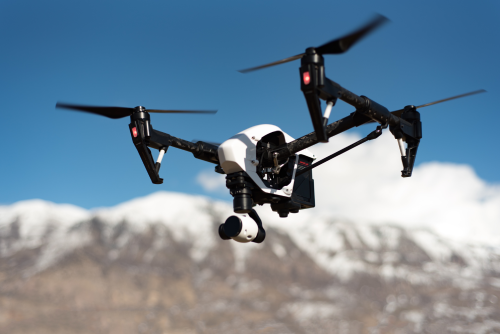
The DJI Phantom 3 Advanced is a legacy consumer/prosumer camera drone from DJI’s well-known Phantom line. It was built for hobbyists and semi-serious aerial shooters who wanted stable GPS-assisted flight and a stabilized camera without stepping up to the top Phantom 3 variant. It still matters today mainly as a used-market option, a training platform, and a useful reference point in the evolution of DJI camera drones.
Quick Summary Box
- Drone Name: DJI Phantom 3 Advanced
- Brand: DJI
- Model: Phantom 3 Advanced
- Category: Consumer/prosumer multirotor camera drone
- Best For: Used-market aerial photo and video, training, hobby flying
- Price Range: Not publicly confirmed in supplied data; used-market pricing varies widely by condition, accessories, and battery health
- Launch Year: 2015
- Availability: Discontinued; typically found used or refurbished
- Current Status: Legacy/discontinued
- Overall Rating: Not rated due to limited confirmed data
- Our Verdict: A capable legacy DJI camera platform if bought cheaply and in good condition, but age, battery risk, limited support, and outdated safety features are major buying factors
Introduction
The Phantom 3 Advanced sits in DJI’s legacy Phantom family, a product line that helped define the modern camera-drone market. Made by DJI in China and aimed at the consumer/prosumer segment, it was designed to give users stabilized aerial imaging, a dedicated controller, and a more serious flying experience than toy-grade drones. In 2026, it is mostly relevant for buyers comparing older DJI models, researchers documenting drone development, and hobbyists considering a low-cost used aircraft.
What makes this drone historically important is not just its spec sheet, but the moment it arrived in the market. By the mid-2010s, DJI was turning drones from niche RC projects into mainstream flying cameras. The Phantom line offered something that, at the time, felt remarkably polished: GPS hovering, a built-in camera on a proper 3-axis gimbal, a mobile-app flight interface, and a controller that gave users a genuine sense of operating a real aircraft rather than a gadget. The Phantom 3 Advanced was part of that transition.
Today, the Phantom 3 Advanced is no longer a cutting-edge tool. It is large, discontinued, and far behind newer models in convenience and safety. Yet it still has relevance for three reasons. First, it can sometimes be found on the used market at relatively approachable prices. Second, its larger size and classic controls can make it a useful learning platform for people who want to understand older GPS-assisted quadcopters. Third, it serves as a very clear reference point when comparing where DJI started versus where its camera drones are now.
For anyone shopping this model in 2026, the key is perspective. You are not buying current technology. You are buying an older platform that may still be useful if the condition is good, the batteries are healthy, and your expectations are realistic.
Overview
What kind of drone is it?
The Phantom 3 Advanced is a non-folding multirotor quadcopter built primarily for aerial photography and video. Historically, it sat in the middle of the Phantom 3 lineup, above the more entry-level Phantom 3 Standard and below the higher-spec Phantom 3 Professional.
That middle position is important. DJI did not market the Advanced as a stripped-down beginner toy, nor as the most premium Phantom 3. Instead, it was meant to deliver much of the “real DJI aerial camera” experience at a lower step than the flagship. For many users at the time, that meant getting the better transmission system and strong flight stability while accepting a camera resolution ceiling below the Professional model.
Who should buy it?
This drone is most relevant for buyers shopping the used market, schools or clubs wanting a larger training drone, and hobbyists who prefer the classic Phantom form factor. It can also appeal to collectors and DJI ecosystem followers who want a clear snapshot of mid-2010s camera-drone design.
A buyer considering the Phantom 3 Advanced now should usually fit one of a few profiles:
- someone who wants the lowest-cost entry into a true stabilized DJI camera platform,
- someone specifically interested in older Phantom aircraft,
- someone teaching or learning basic GPS drone handling on a larger airframe,
- or someone who needs a non-racing quadcopter for casual daylight flying and simple aerial footage.
It is much less compelling for travelers, commercial operators with compliance concerns, or creators who expect current imaging quality.
What makes it different?
The main reason the Phantom 3 Advanced stood out was balance. It paired a capable stabilized camera with DJI’s stronger Lightbridge transmission system, giving it a more premium flight-and-link experience than lower-tier options of its time. Today, the more important difference is that it is a legacy model: still usable, but far behind current drones in portability, safety automation, and long-term supportability.
That “balanced” identity still defines the model. In the Phantom 3 family, it was the version many buyers saw as the practical sweet spot. It captured much of the confidence associated with DJI’s better transmission tech, while stopping short of the Professional’s top video resolution. In 2026, however, the meaning of “balanced” changes. The real balance question is no longer Advanced versus Professional; it is whether the aircraft’s condition, battery quality, and software usability make it worth choosing over a newer used drone.
Key Features
- Legacy DJI Phantom-series quadcopter airframe
- Consumer/prosumer positioning for aerial imaging and hobby flying
- Integrated 12 MP camera
- Up to 2.7K video capture
- 3-axis mechanical gimbal for stabilized footage
- Official flight time up to 23 minutes
- DJI Lightbridge HD transmission system
- Official transmission range up to 5 km under ideal conditions
- GPS + GLONASS satellite positioning
- Vision Positioning System for low-altitude stabilization
- Dedicated DJI remote controller with mobile device support
- DJI GO app support
- Return-to-Home and assisted flight features
- No obstacle avoidance
- Non-folding design with fixed landing gear
- Discontinued status, so batteries and spare parts require extra scrutiny
- Larger visual footprint than many modern compact drones, which can help line-of-sight flying
- Integrated camera-and-gimbal approach rather than modular payload flexibility
- Well-known legacy DJI platform with extensive community documentation and archived user knowledge
Full Specifications Table
| Field | Details |
|---|---|
| Brand | DJI |
| Model | Phantom 3 Advanced |
| Drone Type | Multirotor quadcopter |
| Country of Origin | China |
| Manufacturer | DJI |
| Year Introduced | 2015 |
| Status | Legacy/discontinued |
| Use Case | Consumer/prosumer aerial photography, video, hobby flying |
| Weight | Approx. 1.28 kg |
| Dimensions (folded/unfolded) | Non-folding airframe; fixed landing gear; exact folded/unfolded dimensions not publicly confirmed in supplied data |
| Max Takeoff Weight | Not publicly confirmed in supplied data |
| Battery Type | 4S LiPo Intelligent Flight Battery |
| Battery Capacity | 4480 mAh |
| Flight Time | Up to 23 minutes |
| Charging Time | Not publicly confirmed in supplied data |
| Max Range | Up to 5 km under ideal official conditions |
| Transmission System | DJI Lightbridge HD |
| Top Speed | Up to 57.6 km/h |
| Wind Resistance | Not publicly confirmed in supplied data |
| Navigation System | GPS + GLONASS; Vision Positioning System |
| Obstacle Avoidance | None |
| Camera Resolution | 12 MP stills |
| Video Resolution | Up to 2.7K |
| Frame Rates | Up to 30 fps at 2.7K; up to 60 fps at 1080p |
| Sensor Size | 1/2.3-inch |
| Gimbal | 3-axis mechanical gimbal |
| Zoom | None optical |
| Storage | microSD card |
| Controller Type | Dedicated DJI remote controller with mobile device mount |
| App Support | DJI GO |
| Autonomous Modes | Return-to-Home; additional app-assisted modes may depend on firmware and app version |
| Payload Capacity | Not publicly confirmed in supplied data; integrated camera platform rather than modular payload carrier |
| Operating Temperature | 0°C to 40°C |
| Water Resistance | Not weatherproof; no official IP rating publicly confirmed in supplied data |
| Noise Level | Not publicly confirmed in supplied data |
| Remote ID Support | Not publicly confirmed in supplied data; legacy platform likely predates native Remote ID requirements |
| Geo-fencing | DJI geofencing ecosystem support; current functionality on legacy firmware should be verified |
| Certifications | Not publicly confirmed in supplied data |
| MSRP / Launch Price | Not publicly confirmed in supplied data |
| Current Price | Not publicly confirmed in supplied data; varies on the used market |
Design and Build Quality
The Phantom 3 Advanced uses DJI’s classic Phantom-era layout: a rigid, non-folding body with four fixed arms, a camera mounted below the nose on a gimbal, and fixed landing gear. That design looks dated next to modern folding drones, but it has a few practical strengths. The aircraft is easy to see in the air, the stance is stable on the ground, and the gimbal has decent clearance during normal takeoffs and landings.
This is a drone that looks exactly like what many people still picture when they hear the word “drone.” The glossy white shell, broad landing legs, and under-slung camera became iconic. There is a usability benefit to that larger shape: it is easier to orient visually than many small gray folding drones, especially at moderate distance and in bright daylight. Newer drones are often far more portable, but some pilots still prefer the visibility and physical presence of the Phantom design.
Build quality on the Phantom line was one reason DJI became so dominant in the camera-drone market. The airframe is consumer-grade rather than ruggedized, but it was designed as a real flying camera platform, not a toy. In practical terms, that means better fit and finish than cheap hobby drones of the same era, though it still should not be mistaken for a weatherproof or industrial aircraft.
The shell and landing gear layout are also reasonably straightforward from an ownership perspective. Nothing about the aircraft feels especially exotic. That simplicity helped make the Phantom family popular with users and repair shops alike. On a legacy platform, however, simple does not always mean easy. Age introduces issues such as plastic fatigue, hidden crash damage, loose motor mounts, or gimbal vibration that may not be obvious in a quick visual check.
Portability is one of the biggest drawbacks today. The Phantom 3 Advanced does not fold, so transport is less convenient, and safe storage matters more because the gimbal and landing gear are exposed. Serviceability is also now a legacy concern: props and some spare parts may still be available through third-party channels, but long-term parts support is not guaranteed.
The exposed gimbal deserves special mention. It is one of the drone’s best features when flying, but also one of the most delicate areas when transporting or buying used. Anyone evaluating a unit should check for:
- smooth startup and self-test behavior,
- level horizon during hover,
- no excessive vibration in footage,
- intact gimbal dampers and mounts,
- and no signs of ribbon cable damage or impact stress.
The remote controller is also part of the build story. Compared with toy-grade transmitters, DJI’s dedicated Phantom controller felt serious and well thought out. It was designed to hold a phone or tablet, provide direct flight inputs, and integrate cleanly with the app-driven camera experience. For current buyers, controller condition matters almost as much as aircraft condition. Worn antennas, charging issues, damaged ports, or unreliable device connection can dramatically reduce usability.
Flight Performance
Official figures commonly associated with the Phantom 3 Advanced include up to 23 minutes of endurance, up to 5 km of transmission range in ideal conditions, and a top speed of up to 57.6 km/h. Those are still respectable numbers for a legacy camera drone, but real-world performance depends heavily on battery health, wind, temperature, firmware state, and how hard the aircraft is being flown.
The flight character is best understood as stable and camera-oriented rather than aggressive. The Phantom platform was built to hover confidently, track predictably, and support smooth aerial footage. Compared with smaller modern drones, a larger airframe like this can feel more planted outdoors, especially in light to moderate wind, though the exact wind resistance figure is not publicly confirmed in the supplied data.
That feeling of stability was one of the Phantom 3 Advanced’s main selling points. For a new pilot in 2015, lifting off and seeing the aircraft lock into a steady hover was a major part of the appeal. Even today, a well-functioning Phantom 3 Advanced can still provide a reassuring flying experience in open conditions. The aircraft is not tiny, and it does not feel flimsy. It behaves like a platform designed to carry a camera, not just to stay airborne.
Takeoff and hover behavior are where legacy DJI drones often still impress. With good satellite lock and a healthy calibration state, the Phantom 3 Advanced can hold position in a way that was a huge leap over older hobby-grade quadcopters. GPS + GLONASS support and low-altitude vision positioning contribute to that confidence. In outdoor daylight, this gives users a relatively calm learning environment for practicing smooth stick inputs, straight-line passes, basic orbits, and framing shots.
The larger body does come with tradeoffs. Prop wash is stronger than on smaller ultralight drones, noise is more noticeable, and you need more space to operate comfortably. It is not a drone for tight indoor maneuvering, backyard clutter, or flying near obstacles without care. The absence of obstacle avoidance means the aircraft will not intelligently stop itself if you misjudge distance from a tree, wall, pole, or roofline.
A major historical strength of the Advanced variant was its Lightbridge link. That gave it a more serious control and video experience than lower-end Wi‑Fi-based platforms. Even so, this is still a legacy aircraft with no obstacle avoidance, so safe flying requires clear airspace, conservative pilot judgment, and more manual situational awareness than many current drones demand.
The Lightbridge advantage matters because transmission quality can affect confidence just as much as raw flight performance. Stronger signal behavior and more reliable live view were major reasons some buyers preferred the Advanced over the Standard. In practice, that often translated into a better sense of control and less frustration during camera work. On an older used drone, though, ideal range figures should be treated as historical reference rather than expectation. Local interference, controller condition, firmware variations, and antenna health can all reduce performance substantially.
Battery age is now one of the biggest flight-performance variables. A Phantom 3 Advanced with tired batteries may show shorter flight times, unexpected voltage drops under load, or inconsistent remaining-time estimates. That changes how safely and comfortably you can fly it. A healthy aircraft with compromised batteries is not really a healthy package. Buyers should assume that official endurance numbers were measured under favorable conditions with fresher batteries than many units have now.
Indoor flight is generally not where this model makes the most sense. Its size, prop wash, and lack of obstacle sensing make it far better suited to open outdoor environments. Large fields, empty coastal areas, broad scenic sites, and clear practice zones are much better matches than garages, gymnasiums, or residential spaces with narrow clearances.
Camera / Payload Performance
The Phantom 3 Advanced is fundamentally a camera drone, not a payload carrier. Officially associated camera specs include a 1/2.3-inch sensor, 12 MP still capture, and video up to 2.7K, stabilized by a 3-axis mechanical gimbal. For its era, that was a strong package, and even now it remains usable for basic aerial content.
In daylight, the camera can still be good enough for hobby video, travel clips, scenic footage, and general learning. The gimbal is the real value piece here: it helps the aircraft produce smoother footage than unstabilized or electronically stabilized budget drones. That said, image quality is clearly dated by modern standards. Low-light capability is limited, dynamic range is modest, and users expecting current 4K or larger-sensor performance should look elsewhere.
The gimbal is what makes this aircraft still interesting to budget-conscious buyers. Stabilization is not a minor convenience; it is the difference between footage that looks intentional and footage that looks like rough hobby flight. A proper 3-axis mechanical gimbal reduces tilt, roll, and vibration in a way that still matters, even when the sensor itself is older. For simple daylight landscapes and social-media-style edits, stabilized 2.7K capture can remain perfectly serviceable.
At the same time, expectations should stay realistic. This is not a modern imaging system with high dynamic range, strong low-light performance, advanced color profiles, or broad post-production flexibility. Bright daylight tends to be the best environment. Midday landscapes, water, coastlines, farmland, and clear scenic shots are where the Phantom 3 Advanced still has the best chance to deliver satisfying results. Sunset, dusk, shadows, high-contrast city scenes, and low-light work reveal the age of the sensor much more quickly.
Stills performance follows the same pattern. A 12 MP image can still be useful for basic documentation, casual real-estate overviews, hobby printing, or web publishing. But it is not the kind of platform buyers should choose for demanding commercial photography where clients expect modern sharpness, broad editing latitude, and consistent performance across changing conditions.
Frame-rate flexibility is also modest by current standards. Up to 30 fps at 2.7K and up to 60 fps at 1080p still cover the basics. For a hobby user, that means you can capture standard-resolution footage and some slower-motion-friendly Full HD work. For a creator building a more modern workflow centered on 4K delivery and heavy grading, it is a clear limitation.
There is effectively no serious modular payload story. This is an integrated camera platform, and payload capacity is not publicly confirmed in the supplied data. If your workflow needs interchangeable cameras, zoom payloads, thermal imaging, RTK mapping sensors, or inspection-specific hardware, the Phantom 3 Advanced is not the right tool.
Even accessories should be approached with caution. Some owners may add aftermarket landing extensions, filters, or carrying solutions, but anything that affects weight, balance, or gimbal operation should be treated carefully. Legacy drones are less forgiving of improvised modifications, especially when the batteries themselves may already be aging.
Smart Features and Software
DJI’s Phantom ecosystem was built around assisted flight, app integration, and camera control rather than pure manual or FPV-style flying. The Phantom 3 Advanced supports DJI GO, and the expected experience includes live view, flight telemetry, camera settings, Return-to-Home, and firmware management.
GPS and GLONASS satellite positioning, along with vision-based stabilization at lower altitude, helped make the platform approachable for mainstream users. That said, buyers should separate basic flight assistance from modern automation. This model does not offer the kind of obstacle sensing and advanced autonomy now common on newer DJI aircraft.
That distinction matters a lot in 2026. On paper, a legacy DJI drone can still sound “smart” because it has app connectivity, live video, satellite hovering, and automated Return-to-Home. In practice, the user experience is much closer to an assisted camera platform than to the highly automated drones many buyers now expect. The aircraft can help you maintain position and recover in some scenarios, but it does not deliver the broader safety net of modern obstacle-aware systems.
Return-to-Home remains one of the most useful features on an older drone like this, but it is not magic. Users still need to set an appropriate return altitude, understand local obstacles, verify home point behavior, and maintain awareness of battery condition. Because there is no obstacle sensing, an automatic return path can still be unsafe if the route crosses trees, structures, cables, or terrain changes.
One important reality in 2026 is software age. Legacy DJI drones can be affected by mobile device compatibility, firmware version differences, regional settings, and changes in the broader app ecosystem. If you are considering a used Phantom 3 Advanced, verify that the aircraft, remote controller, app version, mobile device, and batteries all work together before treating it as a dependable platform.
This is often the section that decides whether a used Phantom 3 Advanced is a bargain or a headache. A physically clean aircraft means little if it is difficult to connect, update, or fly reliably with your current phone or tablet. Buyers should test:
- whether the app launches and connects correctly,
- whether live video is stable,
- whether camera settings can be changed,
- whether maps and telemetry display properly,
- whether firmware versions are compatible,
- and whether the controller and aircraft bind reliably.
A legacy platform can still work well, but software friction is one of the most common reasons people abandon older drones. For some buyers, especially those comfortable with older devices and archived support material, this is manageable. For others, it becomes an unnecessary time sink.
Use Cases
The Phantom 3 Advanced makes the most sense in simple, camera-focused roles where modern enterprise features are not required.
- Hobby flying and line-of-sight practice on a full-size GPS drone
- Basic aerial photography
- Stabilized aerial video in daylight conditions
- Learning drone camera operation before moving to newer systems
- Education, clubs, and flight familiarization
- Real-estate or scenic capture in straightforward environments, where legally permitted
- DJI product history, collection, or comparison research
These use cases all have one thing in common: they do not depend on the Phantom 3 Advanced being state of the art. The drone still works best when asked to do straightforward jobs in open conditions. If the goal is to practice smooth takeoffs, hover control, framing, and basic aerial movement, it can still be a useful platform.
For education and club use, the Phantom 3 Advanced offers another practical advantage: it makes drone operations visible. Students can clearly see the landing gear, camera orientation, and general aircraft movement. The larger size can make demonstrations easier than with a tiny folding drone, assuming the instructor also addresses the extra safety space required.
For simple real-estate or scenic work, legality and client expectations become the deciding factors. Technically, the drone can still capture wide establishing shots in good light. But many commercial users will quickly run into limits around compliance, battery confidence, image expectations, and backup reliability. As a result, the Phantom 3 Advanced is better described as “capable for basic simple tasks” than “a reliable modern commercial solution.”
Pros and Cons
Pros
- Proven Phantom-series flight platform with stable GPS-assisted behavior
- Integrated 3-axis gimbal still adds real value for smooth footage
- Up to 2.7K video and 12 MP stills remain usable for basic content
- Lightbridge transmission gives it a stronger legacy link profile than lower-tier Wi‑Fi models
- Large Phantom airframe is easy to see in the sky
- Strong community awareness and plenty of legacy discussion around setup and repairs
- Useful as a training or familiarization platform for larger GPS camera drones
- Can be good value if purchased cheaply with healthy batteries and a clean gimbal
Cons
- Discontinued model with aging batteries and uncertain long-term parts support
- No obstacle avoidance
- Bulky non-folding airframe is inconvenient by modern standards
- Camera quality is dated versus newer DJI drones
- Native Remote ID support is not publicly confirmed in supplied data
- Legacy app and device compatibility can be frustrating
- Repairing a cheap used unit may not be economically sensible
- Transmission, endurance, and reliability depend heavily on condition rather than launch-day specs
- Poor fit for buyers who need compact travel convenience or low-maintenance ownership
Comparison With Other Models
| Model | Price | Flight Time | Camera or Payload | Range | Weight | Best For | Winner |
|---|---|---|---|---|---|---|---|
| DJI Phantom 3 Advanced | Not publicly confirmed in supplied data; used-market variable | Up to 23 min | 12 MP, up to 2.7K, 3-axis gimbal | Up to 5 km | Approx. 1.28 kg | Balanced legacy Phantom buyer | Best midpoint in Phantom 3 family |
| DJI Phantom 3 Professional | Not publicly confirmed in supplied data; used-market variable | Up to 23 min | 12 MP, up to 4K, 3-axis gimbal | Up to 5 km | Approx. 1.28 kg | Buyers wanting the highest video spec in Phantom 3 line | Professional for video resolution |
| DJI Phantom 4 | Not publicly confirmed in supplied data; typically higher if in good condition | Up to 28 min | 12 MP, up to 4K, newer safety and flight stack | Up to 5 km | Approx. 1.38 kg | Buyers wanting a newer DJI legacy platform | Phantom 4 overall |
| DJI Phantom 3 Standard | Not publicly confirmed in supplied data; often lower on used market | Not publicly confirmed in supplied data | 12 MP, up to 2.7K, value-focused setup | Shorter-range consumer link than Advanced | Not publicly confirmed in supplied data | Lowest-cost Phantom 3 entry | Advanced for transmission quality |
On paper, the Phantom 3 Advanced still looks like a sensible middle-ground option. In practice, used-market condition now matters more than small spec differences. A healthier battery set, cleaner gimbal, and reliable controller can matter more than choosing between adjacent Phantom models.
That point cannot be overstated. Once drones become legacy products, spec-sheet logic weakens. A pristine Phantom 3 Advanced with multiple healthy batteries can be a better purchase than a rough Phantom 3 Professional with damaged gimbal parts and unstable app behavior. The hierarchy that mattered at launch is no longer the only thing that matters.
Phantom 3 Advanced vs a close competitor
Against the Phantom 3 Professional, the choice is mainly about camera headroom. If 4K capture matters and both aircraft are in similar condition at similar pricing, the Professional is usually the better buy. If the Advanced unit is clearly better maintained, though, condition can be more important than the spec-sheet gap.
The Advanced can still make sense if the price gap is meaningful and your final output does not demand 4K. Many hobby users editing for casual sharing, simple archiving, or Full HD delivery will not gain enough from a worse-condition Professional to justify choosing it.
Phantom 3 Advanced vs an alternative in the same segment
Against the Phantom 4, the Phantom 3 Advanced is mostly a budget play. The Phantom 4 is generally the more modern and easier-to-live-with DJI option in the older full-size camera-drone class. If the total cost difference is small, most buyers will be better served by the newer platform.
That is especially true for buyers who value updated flight behavior, somewhat better long-term usability, and a less compromised feature set. The Phantom 3 Advanced only wins this comparison when cost is the central priority or when a specific unit is much better maintained.
Phantom 3 Advanced vs an older or previous-generation option
If you are comparing the Phantom 3 Advanced with older Phantom 2-series options, the Advanced is usually the more practical reference point. It belongs to a more mature generation of DJI camera drones, with a more integrated flight-and-camera experience. Even then, once platforms get this old, battery health and spare-part access matter more than launch-era marketing differences.
For collectors and historians, earlier models may hold more novelty. For actual flying, the Phantom 3 Advanced generally represents the point where DJI’s consumer camera-drone experience became much more coherent and approachable.
Manufacturer Details
DJI is both the brand and the manufacturer in this case. The company, formally known as SZ DJI Technology Co., Ltd., is based in Shenzhen, China and is widely regarded as the most influential civilian drone maker of the last decade-plus. DJI’s major product families have included Phantom, Mavic, Mini, Air, Inspire, Matrice, Agras, and other consumer and enterprise systems.
DJI built its reputation on combining flight control, stabilization, cameras, and software into accessible end-to-end products. The Phantom line was especially important because it helped move aerial imaging from a niche hobby into the mainstream consumer/prosumer market.
The Phantom 3 series arrived during a period when DJI was consolidating its leadership. The company was not just selling drones; it was shaping user expectations. Features such as stable hover, live app-based telemetry, reliable gimbal stabilization, and integrated camera systems became normal largely because DJI made them feel normal. The Phantom 3 Advanced is part of that story. It may now be outdated, but it belongs to the product generation that helped standardize what consumer drone flying should feel like.
Support and Service Providers
Support for a legacy aircraft like the Phantom 3 Advanced is very different from support for a current DJI release.
- Official support materials, manuals, and archived resources may still be available through DJI channels
- Direct repair priority for discontinued models may be limited
- Authorized service availability varies by region and should be verified before purchase
- Third-party repair shops are often more relevant for legacy Phantom units
- Spare parts availability can be inconsistent, especially for gimbals, shells, ESCs, and genuine batteries
- Community forums and user groups remain useful for troubleshooting, but unofficial guidance should be treated carefully
The biggest service issue is usually battery health. With a used Phantom 3 Advanced, battery condition can matter as much as the aircraft itself. Buyers should verify charge behavior, balance status, cycle count if available, and any signs of swelling or abnormal heating.
It is also worth thinking beyond “can it be repaired?” to “is it worth repairing?” Legacy drones often cross a threshold where labor plus parts quickly exceed the value of the aircraft. A cracked shell, faulty gimbal, dead battery set, and controller issue can turn a cheap used purchase into a poor investment.
A sensible pre-purchase inspection checklist should include:
- shell cracks near motors or landing gear mounts,
- motor smoothness and bearing noise,
- battery swelling or cell imbalance,
- clean gimbal startup and horizon stability,
- intact camera feed and app connection,
- compass and IMU behavior during calibration,
- and consistent hover without drift or severe vibration.
If a seller cannot demonstrate basic stable operation, buyers should assume risk rather than assume an easy fix.
Where to Buy
Because the Phantom 3 Advanced is discontinued, most purchases now happen outside normal new-product retail channels.
Common buying paths include:
- Reputable used-drone marketplaces
- Local drone shops handling trade-ins or refurbishments
- General secondhand marketplaces
- Hobby groups and community sales
- Occasional older stock from specialist dealers
Before buying, verify what is included in the package. A missing controller, weak battery set, damaged gimbal, or incorrect charger can change the real value of the deal very quickly. It is also wise to confirm basic functionality, app connection, firmware status, and stable hover behavior before committing to a purchase.
If possible, prioritize local demonstration over blind shipment. Seeing the aircraft boot, connect, acquire satellites, lift off, and hold a stable hover is far more informative than reading a seller description. Photos can hide shell repairs, lens issues, or battery swelling.
Bundles also need close evaluation. A package with multiple batteries sounds attractive, but only if those batteries are healthy. Likewise, a hard case, spare props, and accessories add convenience, but they do not compensate for poor core condition. On a legacy drone, the aircraft, controller, charger, and at least one dependable battery form the real value center.
Price and Cost Breakdown
Launch pricing is not publicly confirmed in the supplied data, and current pricing varies heavily because this is now a used-market product. The headline purchase price is only part of the ownership story.
Main cost factors include:
- Aircraft condition
- Controller inclusion
- Number of batteries included
- Battery health and remaining useful life
- Charger and cable availability
- Propellers and spare props
- Gimbal condition and calibration
- Carry case or accessories
- Need for repairs after purchase
For many buyers, replacement batteries are the real financial trap. A cheap airframe with weak batteries can become poor value very fast. Potential owners should also budget for props, storage media, possible repair work, and any local compliance accessories that may now be required for legal operation.
Software costs are usually less important than hardware costs on a legacy consumer DJI platform, but mobile compatibility can still create hidden expense if you need a specific older phone or tablet setup.
A realistic buying mindset is this: do not shop only by listing price. Shop by usable package value. A slightly more expensive Phantom 3 Advanced that includes a working controller, proven charger, and healthy batteries may be far cheaper in real terms than a bargain shell that needs immediate parts replacement.
It is also wise to factor in opportunity cost. If the price of restoring and operating an older Phantom approaches the price of a newer used folding DJI drone, the newer option may be the better long-term purchase even if its initial price is higher. Maintenance confidence, software compatibility, and legal simplicity often matter more than saving a small amount up front.
Regulations and Compliance
The Phantom 3 Advanced is a camera-equipped drone in roughly the 1.28 kg class, so it falls well above the ultra-light threshold used in many jurisdictions. In many countries, that means registration, operator rules, and stricter operating limits are likely to apply.
Key points to verify locally:
- Registration requirements for the aircraft
- Pilot certification or licensing rules for commercial use
- Remote ID or broadcast-ID requirements
- Altitude limits and airspace restrictions
- Distance-from-people and distance-from-property rules
- Privacy and camera-use laws
- Visual line-of-sight requirements
- Lithium battery transport and storage rules
Native Remote ID support is not publicly confirmed in the supplied data, and this model predates many modern drone compliance frameworks. Buyers should not assume it is ready for current rules without checking local law and the aircraft’s actual setup. DJI geofencing may also affect operations depending on region, firmware, and current ecosystem support.
This section is especially important because older drones can create a false sense of simplicity. A drone may be inexpensive to buy and technically able to fly, yet still be inconvenient or restricted under current rules. Depending on jurisdiction, compliance may require registration, labeling, operator testing, or external broadcast modules. If your local rules have moved forward and the aircraft has not, that gap becomes part of the ownership burden.
Weight also matters in practical operations. At roughly 1.28 kg, the Phantom 3 Advanced is not in the “small harmless gadget” category under most rule sets. Safety expectations are higher, operating limits may be tighter, and public perception may be more sensitive than with tiny sub-250 g drones.
Who Should Buy This Drone?
Best for
- Used-market buyers who want a classic DJI camera drone at a low entry price
- Hobbyists learning aerial imaging on a larger GPS-assisted aircraft
- Schools, clubs, and trainers needing a basic full-size practice drone
- Buyers comparing Phantom 3 variants
- Collectors and researchers interested in DJI’s legacy product evolution
These buyers will get the most from the Phantom 3 Advanced because they understand what it is: a legacy flying camera with educational, nostalgic, or budget value. If you enjoy older technology, like the Phantom form factor, and are prepared to inspect condition carefully, this drone can still be satisfying.
Not ideal for
- Travelers who want a compact folding drone
- Buyers expecting modern obstacle sensing and automation
- Creators who need stronger low-light image quality or modern 4K flexibility
- Enterprise users needing RTK, mapping workflows, or modular payloads
- Operators who want simple out-of-box compliance with current regulations
- Anyone unable to verify battery health, app compatibility, and spare-part access
For these users, the Phantom 3 Advanced is usually more compromise than opportunity. Newer drones are easier to pack, easier to support, easier to operate safely, and often easier to keep compliant.
Final Verdict
The DJI Phantom 3 Advanced still has value, but that value is now very specific. Its biggest strengths are stable Phantom-series flight behavior, a real 3-axis gimbal, and a historically strong DJI control-and-video link for a mid-tier legacy model. Its biggest drawbacks are just as clear: it is bulky, discontinued, missing modern obstacle avoidance, and dependent on aging batteries and an older software environment.
In 2026, this is not the default recommendation for most buyers. It is a niche but still worthwhile option for used-market shoppers who understand legacy-drone risks and can verify condition carefully. If you find a clean Phantom 3 Advanced at the right price, it can still be a satisfying classic aerial camera drone; if not, a newer platform will usually be easier, safer, and cheaper to live with long term.
The best way to think about the Phantom 3 Advanced is as a conditional purchase rather than a general recommendation. If it is cheap, complete, tested, and healthy, it can still deliver enjoyable flying and respectable daylight footage. If any of those conditions are missing, its age becomes the main story. That is the central truth of legacy DJI hardware: the platform itself may still be capable, but ownership quality depends far more on condition than on the original brochure.
