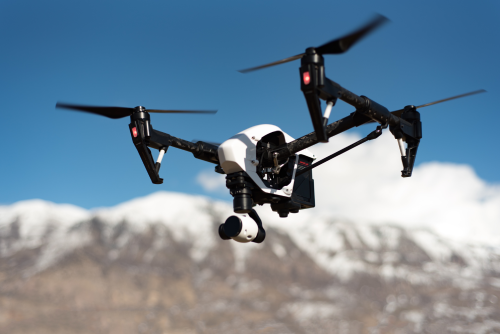
DJI Phantom 3 Standard is a legacy consumer/prosumer multirotor from DJI’s famous Phantom family, aimed at hobby pilots and entry-level aerial imaging users who wanted a stabilized camera drone in a ready-to-fly package. Although it is now discontinued, it still matters because many units remain active on the used market and because it helped define the mainstream camera-drone category. In 2026, the real question is less about whether it was good for its time and more about whether its age, support status, and legacy software ecosystem still make sense for your needs.
Quick Summary Box
- Drone Name: DJI Phantom 3 Standard
- Brand: DJI
- Model: Phantom 3 Standard
- Category: Consumer/prosumer multirotor camera drone
- Best For: Used-market hobby flying, basic stabilized aerial video, training on a classic DJI platform
- Price Range: Approx. US$799 at launch; current used-market pricing varies and is not publicly confirmed in supplied data
- Launch Year: 2015
- Availability: Discontinued; mainly available through used and resale channels
- Current Status: Legacy/discontinued
- Overall Rating: Not rated due to limited confirmed data
- Our Verdict: A historically important and beginner-friendly Phantom with a stabilized camera and simple flying experience, but its legacy status, aging batteries, bulk, and uncertain long-term app/support compatibility make it a niche purchase today
Introduction
The Phantom 3 Standard sits in DJI’s consumer/prosumer range and represents the more accessible end of the older Phantom 3 lineup. DJI, both the brand and the manufacturer in this case, is a China-based drone company that helped popularize ready-to-fly aerial camera platforms worldwide.
For readers comparing older DJI models, the Phantom 3 Standard is relevant because it offers the classic Phantom flight experience: a fixed-body quadcopter, integrated camera, gimbal stabilization, and GPS-assisted flying. It came from a period when buying a drone no longer meant assembling a kit, tuning a controller, and strapping on a third-party camera. Instead, the Phantom line moved the market toward a simpler idea: open the box, charge batteries, attach propellers, and fly a stabilized camera platform with relatively little setup friction.
That historical context matters because the Phantom 3 Standard was not just another quadcopter. It was part of the wave of products that normalized consumer aerial imaging. For many users, it was the first drone that felt approachable rather than technical. It made functions such as hover stabilization, automated Return-to-Home, and app-based camera control feel mainstream.
What buyers need to weigh now is not just capability, but also platform age, spare-parts availability, and whether a legacy DJI product is still practical in current regulations and mobile-device ecosystems. A Phantom 3 Standard can still fly, film, and teach good piloting habits, but ownership in 2026 is very different from ownership in 2015. The experience is now shaped by battery health, firmware history, app compatibility, regulatory compliance, and whether the used unit in front of you has been treated well over the years.
Overview
What kind of drone is it?
The DJI Phantom 3 Standard is a multirotor camera drone in the consumer/prosumer class. It is a non-folding quadcopter with fixed landing gear, an integrated stabilized camera, and GPS-assisted flight functions designed to make aerial filming easier for regular users rather than expert pilots only.
In practical terms, that means it belongs to an earlier generation of “camera-first” drones. It was not built as an FPV racing platform, not designed for heavy payload lifting, and not intended as an enterprise mapping tool. Its purpose was straightforward: give ordinary users a dependable way to capture aerial stills and video with much better stability than toy-grade drones or action-camera improvisations.
Its form factor also reflects the design language of its era. Unlike newer foldable drones that prioritize compact transport, the Phantom 3 Standard uses a fixed-body shell with permanently extended arms. That makes it less convenient in a backpack, but it also gives it a very recognizable profile and a more substantial presence in the air.
Who should buy it?
This model makes the most sense for:
- budget-conscious buyers shopping the used market
- hobbyists who want a classic Phantom airframe
- users learning basic aerial photography and stabilized flight
- collectors or long-time DJI users looking for a spare or nostalgic platform
- educators or clubs that want to demonstrate how mainstream camera drones evolved
It is much less attractive for buyers who need modern compliance features, guaranteed long-term support, compact travel size, or current-generation imaging quality.
A useful way to think about the Phantom 3 Standard is as a purpose-led used purchase rather than a general recommendation. If you specifically want a full-size Phantom, enjoy legacy tech, understand battery and software risks, and can buy one cheaply in verified good condition, it can still be satisfying. If you simply want the easiest, smartest, most travel-friendly camera drone for casual flying, there are newer choices that make much more sense.
What makes it different?
What set the Phantom 3 Standard apart in its original market was accessibility. It brought a stabilized camera drone experience into a lower price tier than some of DJI’s higher Phantom variants. It is also widely known for using a Wi-Fi-based control/video system rather than the longer-range Lightbridge link used by more advanced Phantom models, which helped keep price lower but also made it the more limited option in the lineup.
That positioning is still central to how the drone should be understood today. The Standard was not the “best” Phantom 3 in absolute terms. It was the more affordable one, built around the idea that many buyers wanted DJI’s ecosystem and the Phantom experience without paying for a higher-tier transmission system. In the used market, that original compromise still follows the product: it can be good value, but only if the buyer accepts that it was always the more basic sibling.
Key Features
- Legacy DJI Phantom-series quadcopter design
- Consumer/prosumer positioning for hobby flying and entry aerial imaging
- Integrated 12 MP class camera with up to 2.7K video recording
- 3-axis mechanical gimbal for stabilized footage
- GPS-assisted flight and hover stabilization
- Return-to-Home support
- Vision positioning support for low-altitude stabilization
- Up to 25 minutes quoted flight time under original published specifications
- Up to 1 km quoted control/transmission range under original published specifications
- Fixed landing gear and non-folding airframe
- DJI GO app support in the original product ecosystem
- Discontinued product, now mainly a used-market buy
Those headline features tell the story of why the Phantom 3 Standard mattered. Even now, the combination of a proper 3-axis gimbal, GPS stabilization, and an integrated camera makes it very different from bargain-bin drones. A cheap legacy DJI drone can still feel much more “real” than a new but toy-grade competitor, especially in terms of hover quality and video smoothness.
At the same time, the features list is also a reminder of what is missing by current standards. There is no obstacle avoidance, no compact folding design, no modern low-latency digital ecosystem on the level of current DJI consumer drones, and no guarantee that every smart mode or app function will work as smoothly on contemporary devices as it did when new.
Full Specifications Table
| Specification | Details |
|---|---|
| Brand | DJI |
| Model | Phantom 3 Standard |
| Drone Type | Multirotor quadcopter camera drone |
| Country of Origin | China |
| Manufacturer | DJI |
| Year Introduced | 2015 |
| Status | Legacy/discontinued |
| Use Case | Consumer/prosumer aerial photography, hobby flying, training |
| Weight | Approx. 1.216 kg |
| Dimensions (folded/unfolded) | Not foldable; official-era diagonal size commonly listed at 350 mm |
| Max Takeoff Weight | Not publicly confirmed in supplied data |
| Battery Type | Intelligent Flight Battery, 4S LiPo |
| Battery Capacity | 4480 mAh |
| Flight Time | Up to 25 minutes |
| Charging Time | Not publicly confirmed in supplied data |
| Max Range | Up to 1 km |
| Transmission System | DJI Wi-Fi-based control/video link with range extender |
| Top Speed | Up to 57.6 km/h |
| Wind Resistance | Not publicly confirmed in supplied data |
| Navigation System | GPS-assisted flight; low-altitude vision positioning support |
| Obstacle Avoidance | None publicly advertised for this model |
| Camera Resolution | 12 MP class camera |
| Video Resolution | Up to 2.7K |
| Frame Rates | Up to 30 fps at 2.7K; up to 60 fps at 1080p |
| Sensor Size | 1/2.3-inch |
| Gimbal | 3-axis mechanical gimbal |
| Zoom | None as a core camera feature |
| Storage | microSD card |
| Controller Type | Dedicated handheld remote controller with mobile-device integration |
| App Support | DJI GO |
| Autonomous Modes | Return-to-Home and DJI GO-era intelligent flight modes; verify current app compatibility |
| Payload Capacity | Not designed as an external-payload platform |
| Operating Temperature | 0°C to 40°C |
| Water Resistance | None publicly advertised |
| Noise Level | Not publicly confirmed in supplied data |
| Remote ID Support | Not publicly confirmed in supplied data; legacy model predates many current built-in Remote ID requirements |
| Geo-fencing | DJI ecosystem geofencing/no-fly-zone features were associated with the platform; current behavior should be verified |
| Certifications | Not publicly confirmed in supplied data |
| MSRP / Launch Price | Approx. US$799 at launch |
| Current Price | Used-market only; varies widely by condition, region, and battery health |
On paper, those specifications still look respectable for a 2015 consumer drone. The issue is not that the Phantom 3 Standard lacks all capability. The issue is that every figure now needs to be interpreted through the lens of age. A quoted 25-minute flight time on a fresh original battery in ideal conditions is not the same as real-world performance from a decade-old battery with unknown storage history. A quoted 1 km range in a clean environment also does not guarantee a similarly dependable experience in modern, interference-heavy locations.
For used buyers, the specification sheet should be treated as a starting point rather than a promise. Condition matters more than brochure numbers.
Design and Build Quality
The Phantom 3 Standard uses the classic DJI Phantom layout: a rigid white shell, fixed landing gear, permanently extended arms, and a forward-mounted camera on a suspended gimbal. Compared with modern folding drones, it is physically bulky, but that larger footprint also makes it easy to see in the air and straightforward to handle on the ground.
From a build perspective, the design is more field-visible than travel-friendly. The landing gear gives the camera enough clearance during takeoff and landing, and the battery slides into the rear fuselage in typical Phantom fashion. This style of drone was built around quick setup rather than maximum portability. In the field, that means less folding and unfolding, fewer moving arm joints, and a very familiar preflight process. You place it down, power it on, wait for system readiness, and go.
The shell design also contributes to one of the Phantom’s enduring strengths: visibility. Even by today’s standards, a full-size white Phantom is easier to maintain visual orientation on than many compact gray foldable drones, especially for new pilots flying in open daylight conditions. That does not replace proper piloting skill, but it does make basic line-of-sight flying less stressful.
In practical terms:
- portability is weaker than on modern foldable drones
- visual orientation in the sky is usually easier because of the larger airframe
- fixed landing gear simplifies ground handling
- older plastic shells, gimbals, and battery systems should be checked carefully on used units
There are also legacy-specific build concerns. A used Phantom 3 Standard may have hidden wear even if it looks clean at first glance. Stress marks near motor mounts, hairline cracks in the shell, repaired landing gear, worn dampers in the gimbal mount, oxidized connectors, or corrosion from poor storage can all affect value and reliability. The camera ribbon cable area deserves particular caution, because gimbal assemblies on older aircraft can be vulnerable to wear, impact damage, or amateur repair work.
Serviceability today is mixed. During the Phantom line’s active years, propellers, landing gear, shells, and some replacement parts were widely available. In 2026, however, genuine parts availability can be uneven, and third-party or used components may vary in quality. That matters because the Phantom 3 Standard is not a drone you buy purely on cosmetics. Mechanical condition is much more important than whether the shell looks polished.
Flight Performance
The Phantom 3 Standard was designed to be a stable camera platform first and an aggressive sport flyer second. Its GPS-assisted flight behavior made it approachable for newer pilots, and that remains one of its biggest strengths on the used market.
Official-era published figures commonly list:
- up to 25 minutes of flight time
- up to 57.6 km/h top speed
- up to 1 km range
Those numbers should be treated as best-case claims rather than guaranteed real-world results, especially on an older aircraft where battery condition can have a major impact. Real flight time on used batteries can be significantly lower depending on cycle count, temperature, cell health, and how conservatively you fly.
In flight, the Phantom 3 Standard is best understood as:
- stable and forgiving for outdoor use
- suitable for smooth, deliberate camera moves
- less advanced than newer DJI drones in sensing and automation
- more limited in transmission confidence than Phantom variants using Lightbridge
One of the reasons the Phantom series became so popular is that it reduced the drama of hovering. Where older hobby multirotors often demanded constant pilot correction, the Phantom 3 Standard was built to stay put more confidently when GPS reception and conditions were favorable. For beginners, that can feel transformative. It buys time to think, frame a shot, and practice control inputs without feeling that the aircraft is always trying to drift away.
That said, the experience is still more manual than on many newer DJI products. There is less protective intelligence and less situational assistance. If you misjudge a tree line, power line, roof edge, or lateral drift in wind, the drone will not save you through active obstacle sensing. The platform rewards conservative piloting and open-space flying.
Because it lacks obstacle avoidance, pilots need to rely more on line of sight, space awareness, and conservative routing. Indoors, the aircraft’s size, prop wash, and overall design make it much less convenient than smaller drones. Outdoors in open areas, it is likely to feel more at home.
Wind handling is not fully confirmed in the supplied data, but as analysis, larger Phantom airframes often feel more planted than ultra-light mini drones in modest wind. That said, age, motor condition, and propeller quality matter a lot on a legacy platform. Fresh, balanced propellers and healthy motors can make the difference between a reassuring aircraft and one that feels rough, noisy, or less precise than it should.
There is also a psychological aspect to flying the Phantom 3 Standard today. Because it is a larger, heavier legacy drone, pilots tend to fly it more deliberately. It is not the kind of aircraft most people casually toss into a small bag for a quick urban walk. That can actually be a benefit for learning, because it encourages more disciplined preflight checks, better site selection, and more respect for battery management.
Camera / Payload Performance
The Phantom 3 Standard is a camera-led drone, not a payload carrier. Its integrated camera and 3-axis gimbal were the core of the product, and that remains the main reason anyone would still buy it.
Key camera points commonly associated with this model:
- 12 MP class stills
- 1/2.3-inch sensor
- up to 2.7K video
- 3-axis mechanical stabilization
For daylight hobby content, that setup can still produce usable footage. Stabilization is the real value here: even if the image specs are dated by 2026 standards, gimbal-smoothed video is still much better than unstabilized footage from cheap toy drones. A properly functioning Phantom 3 Standard can still capture scenic clips, travel memories, roofline overviews, and open-landscape footage that looks smooth and watchable.
The camera is best evaluated in context. It is not competing with modern larger-sensor drones, advanced computational imaging, or high-bitrate professional workflows. It is competing with the expectations you bring to a legacy aircraft. If your goal is learning how to execute pans, reveals, pull-backs, and simple orbit shots, the Phantom 3 Standard still teaches those fundamentals well.
The limitations are clear, though:
- 2.7K is behind modern 4K and above expectations
- the 1/2.3-inch sensor is limited in low light
- there is no interchangeable camera system
- there is no meaningful external payload workflow
Dynamic range and low-light performance are where age shows quickly. In bright daylight, especially in balanced scenes, results can still be pleasant. In high-contrast sunsets, dense shadows, cloudy winter light, or more demanding exposure situations, you are far more likely to see clipped highlights, crushed shadows, and overall less flexibility in post-processing compared with modern drones.
Still photography is adequate for casual use, basic social sharing, and reference imagery, but not especially competitive for high-end commercial deliverables in 2026. Video remains the stronger reason to own it, largely because the gimbal provides a stable platform and because good camera movement can still outweigh aging sensor specs in casual content.
For casual scenic flying, basic documentation, and learning camera movement, the platform still has relevance. For commercial users needing modern deliverables, stronger dynamic range, or current codec expectations, it is no longer competitive.
Smart Features and Software
The Phantom 3 Standard belongs to an earlier DJI software era centered around the DJI GO app. That ecosystem gave users access to flight status, camera settings, live view, battery information, and core flight functions such as Return-to-Home.
This model is also widely associated with DJI’s early intelligent flight features, including app-dependent modes such as:
- Return-to-Home
- Waypoints
- Point of Interest
- Follow Me
At the time, these features helped move consumer drones beyond basic manual control. They made aerial filming feel more accessible and made semi-automated shots available to people who had never programmed a flight controller before. That was a major part of DJI’s appeal.
The important caveat in 2026 is compatibility. A legacy aircraft can still be technically capable while being less convenient to use because:
- app support may not be optimized for current phones or tablets
- firmware and account workflows may differ from current DJI products
- map, login, geofencing, and device support can change over time
- troubleshooting may rely more on community knowledge than active product development
This is one of the biggest practical differences between owning a modern drone and owning a Phantom 3 Standard. The hardware may still function, but the software layer can become the real friction point. A current phone OS update, device-connection issue, app-installation hurdle, or sign-in change can turn a simple afternoon flight into a troubleshooting session. For enthusiasts who enjoy legacy tech, that is manageable. For beginners who expect seamless plug-and-play behavior, it can be frustrating.
So while the Phantom 3 Standard was smart for its era, it should not be mistaken for a current AI-enabled consumer drone. It does not offer the modern obstacle-sensing intelligence, subject tracking maturity, or software polish found in newer DJI lines.
If you are buying one in 2026, it is wise to test the full workflow before committing to ownership:
- aircraft powers on and initializes normally
- controller links properly
- live view appears correctly on your intended mobile device
- camera settings can be adjusted
- the app does not crash during basic use
- Return-to-Home and GPS lock function as expected
- firmware versions do not create obvious compatibility issues
The less confidence you have in that software chain, the less attractive the aircraft becomes.
Use Cases
The most realistic uses for the Phantom 3 Standard today are the ones that match its age, camera level, and support situation.
- Hobby flying in open outdoor areas
- Learning the basics of GPS-assisted camera-drone operation
- Casual aerial photography and stabilized daylight video
- Training on a classic DJI multirotor workflow
- Backup use for existing Phantom owners
- Collector or nostalgia value for older DJI platforms
- Educational demonstrations of early mainstream camera-drone design
These uses all share one thing: they do not demand the drone to behave like a current flagship. If you want a pleasant aircraft for recreational weekend flights in a wide-open field, the Phantom 3 Standard can still meet that need. If you want to explain to students how consumer drones evolved from large fixed-body designs to compact foldables, it is also a very useful reference point.
It is far less suitable for serious commercial mapping, high-end content creation, modern inspection programs, or compliance-sensitive enterprise work. Those areas typically require stronger support certainty, better cameras, more reliable current software, and often clearer regulatory alignment.
There is also a specific training value to the Phantom 3 Standard. Because it lacks modern obstacle avoidance and hyper-assist features, it can teach core habits more directly:
- judging space manually
- planning a safe return path
- watching battery state carefully
- managing orientation and line of sight
- choosing launch and landing surfaces carefully
- learning smooth stick inputs for cinematic motion
That said, “training” should not be confused with “cheap beginner mistake platform.” It is still a 1.2 kg class aircraft with spinning props and enough mass to cause damage. Responsible instruction and safe flying practices remain essential.
Pros and Cons
Pros
- Integrated camera and 3-axis gimbal make it a complete out-of-the-box aerial imaging platform
- GPS-assisted flight behavior is beginner-friendlier than manual or unstabilized aircraft
- Classic Phantom airframe is visually easy to track and stable in open outdoor use
- Original published flight time was respectable for its class and era
- Strong historical user base means community knowledge is still easier to find than for obscure legacy drones
- Used-market pricing can sometimes make it an affordable way into stabilized aerial video
- Large body and fixed gear can feel easier to handle on the ground than very compact foldables
- Good learning platform for manual judgment and traditional camera-drone workflow
Cons
- Discontinued status creates real risk around batteries, repairs, and app compatibility
- Non-folding design is bulky compared with modern travel-friendly drones
- 2.7K camera and 1/2.3-inch sensor are dated by 2026 standards
- No obstacle avoidance
- Wi-Fi-based transmission is a weaker proposition than higher-tier Phantom links
- Built-in Remote ID support is not publicly confirmed and should not be assumed
- Used units may suffer from battery aging, gimbal wear, or crash history
- Official support and genuine spare-part availability may be limited compared with current products
- Total ownership cost can rise quickly if extra batteries or repairs are needed
The balance here is straightforward: the pros are real, but they are strongest when the entry price is low and the buyer is fully aware of what they are getting into. The cons become more serious if the seller is asking too much, if battery health is poor, or if the buyer expects a modern DJI experience.
Comparison With Other Models
| Model | Price | Flight Time | Camera or Payload | Range | Weight | Best For | Winner |
|---|---|---|---|---|---|---|---|
| DJI Phantom 3 Standard | Approx. US$799 at launch; used-market variable | Up to 25 min | 12 MP / up to 2.7K, 3-axis gimbal | Up to 1 km | Approx. 1.216 kg | Budget-minded buyers wanting a classic Phantom | Best only if bought cheaply and knowingly |
| DJI Phantom 3 Advanced | Approx. US$999 at launch; used-market variable | Up to 23 min | 12 MP / up to 2.7K, 3-axis gimbal | Up to 5 km | Approx. 1.28 kg | Buyers who want a stronger transmission system | Phantom 3 Advanced |
| DJI Mini 2 | Approx. US$449 at launch; market price varies | Up to 31 min | 12 MP / 4K | Up to 10 km | Under 0.249 kg | Most mainstream users wanting a more modern small drone | DJI Mini 2 |
| DJI Phantom 2 Vision+ | Approx. US$1,299 at launch; used-market variable | Up to 25 min | 14 MP / 1080p | Up to 0.7 km | Approx. 1.242 kg | Collectors and older DJI ecosystem users | Phantom 3 Standard |
Phantom 3 Standard vs a close competitor
Against the Phantom 3 Advanced, the Standard was the lower-cost entry point, but the Advanced is the stronger aircraft for buyers who care about transmission quality and broader overall confidence. If both are available in similar condition and price, the Advanced is usually the safer enthusiast pick.
That is because the comparison is not just about raw specs on paper. Transmission quality affects the whole flying experience. A better link can mean more confidence in framing, better live view stability, and fewer compromises in how and where you fly. If you are already accepting the age and bulk of a Phantom platform, stepping up to the more capable sibling often makes more sense than choosing the Standard purely because it once sat lower in the lineup.
Phantom 3 Standard vs an alternative in the same segment
Compared with a later small consumer drone like the DJI Mini 2, the Phantom 3 Standard mainly wins on classic full-size Phantom handling and nostalgia. The Mini 2 is the more practical buy for most people because it is lighter, more portable, more modern, and stronger on camera resolution and transmission.
This is the comparison that matters most for most buyers in 2026. A used Phantom 3 Standard is not just competing against other old Phantoms. It is competing against newer compact drones that are easier to carry, easier to power, often easier to keep compliant, and generally more efficient to live with. Unless you specifically want the Phantom experience, newer small drones usually win.
Phantom 3 Standard vs an older or previous-generation option
Compared with the Phantom 2 Vision+, the Phantom 3 Standard is the more sensible legacy choice. It offers a better overall camera-drone experience and belongs to a more mature generation of DJI consumer flight systems.
If you are deciding between legacy platforms for collecting or casual flying, the Phantom 3 Standard sits in a better place historically and practically. It is old, but not as old-school as the models that came before it. That makes it a more usable representative of DJI’s mid-2010s consumer drone era.
The big picture is simple: the Phantom 3 Standard only makes sense when price is attractive and the buyer specifically wants this older Phantom style. For most general buyers, newer alternatives are easier to recommend.
Manufacturer Details
DJI is both the brand and the manufacturer of the Phantom 3 Standard. The company is headquartered in China and is widely recognized as one of the most influential drone makers in the world. DJI built its reputation by dominating the consumer and prosumer camera-drone market, then expanding into enterprise, agricultural, cinema, and professional imaging systems.
DJI’s major product families have included:
- Phantom
- Mavic
- Mini
- Inspire
- Matrice
- Agras
- Avata and FPV lines
- Ronin stabilization systems
In market reputation terms, DJI is generally associated with strong flight control, accessible user experience, and broad ecosystem maturity. The Phantom 3 Standard came from the period when DJI was helping standardize what a ready-to-fly camera drone should look like for mainstream buyers.
That background cuts both ways for a legacy purchase. On one hand, DJI’s long market presence means documentation, user forums, archived videos, and community knowledge are far easier to find than for many discontinued brands. On the other hand, DJI’s innovation pace also means older products can feel more decisively left behind as the ecosystem moves forward. The Phantom 3 Standard benefits from having been made by a major company, but it does not benefit from being a current priority in that company’s lineup.
Support and Service Providers
Support is one of the biggest caution points with the Phantom 3 Standard. Because it is a legacy/discontinued model, buyers should not assume current-level service treatment.
Potential support paths include:
- official DJI support channels for legacy documentation or limited guidance
- authorized repair partners, where still available
- used-parts sellers and independent repair shops
- owner communities, forums, and tutorial archives
Before buying, verify:
- whether the model is still accepted by any regional repair centers
- battery availability and authenticity
- controller and charger condition
- gimbal and camera function
- firmware and app setup practicality on your intended mobile device
Any original warranty context is largely irrelevant for most 2026 purchases, since most units on the market will be long out of standard warranty coverage.
The practical support question is less “Can I contact DJI?” and more “Can I keep this specific aircraft usable?” That depends on parts and diagnosis. Items such as shell pieces, propellers, landing gear, and chargers may still be obtainable through secondary channels. More specialized issues like a damaged gimbal assembly, flight controller fault, or problematic battery set can quickly turn a cheap purchase into a poor one.
Independent repair shops may help, but quality can vary. Some technicians know the Phantom line well. Others may only offer limited support or prefer not to work on older platforms. If you are not comfortable with basic troubleshooting yourself, the value proposition of the Phantom 3 Standard becomes less favorable.
Where to Buy
Because the Phantom 3 Standard is discontinued, it is no longer a normal current-retail purchase. Most buyers will find it through:
- used drone marketplaces
- camera gear resellers with secondhand inventory
- local classifieds
- hobby communities
- refurbishers or liquidation channels
Occasionally, a dealer may still list old stock, but that should not be assumed. In most cases, this is a condition-dependent used purchase.
When shopping, prioritize:
- verified battery health
- gimbal calibration and camera condition
- a working controller and charger
- clean arms, motors, and landing gear
- proof that the aircraft powers on, links properly, and is not missing key components
It is also smart to ask more detailed seller questions than you might for a simple camera accessory. Useful questions include:
- How many batteries are included, and how long do they still last in practice?
- Have any batteries shown cell warnings, swelling, or rapid voltage drop?
- Has the drone ever crashed, hard-landed, or had shell or gimbal repairs?
- Does the camera horizon stay level?
- Are there any app connection issues with the controller?
- Has the drone been stored fully charged for long periods?
- Are original accessories included, or are some parts third-party replacements?
If buying locally, a live demonstration is worth a lot. Seeing the aircraft acquire GPS, start the motors, hover stably, and produce a working live view tells you more than polished photos in a listing ever will.
Price and Cost Breakdown
The Phantom 3 Standard launched at about US$799, which helped position it as a more accessible Phantom model at the time. Today, however, current pricing is highly variable and depends more on condition than on any standardized market rate.
Your real budget should include more than the purchase price:
- Airframe cost: used-market only, highly variable
- Battery cost: often one of the biggest hidden expenses on a legacy drone
- Charger/controller condition: essential, and replacement can reduce any apparent bargain
- Propellers and wear items: inexpensive individually, but important for safe operation
- Gimbal/camera repair risk: potentially costly relative to the drone’s resale value
- Case and accessories: useful, but only if the core aircraft is healthy
The biggest ownership risk is battery age. Even if the airframe looks clean, old batteries can undermine flight time, reliability, and overall value. For that reason, a cheap Phantom 3 Standard is not always a cheap drone to own.
This deserves emphasis because it is where many used-drone purchases go wrong. Buyers see a low asking price and assume they are getting a bargain, but then discover:
- the included batteries have poor endurance
- one or more batteries fail self-checks
- a replacement charger is needed
- the gimbal requires repair
- the app workflow is troublesome on their phone
- extra accessories do not compensate for a weak core aircraft
A better way to judge value is to think in terms of ready-to-fly reliability, not sticker price. A moderately priced unit with healthy batteries, stable hover behavior, a good camera, and a fully working controller is usually a better deal than a very cheap bundle of questionable parts.
Regulations and Compliance
The Phantom 3 Standard is a larger legacy drone, and its approximate 1.216 kg weight places it above the very light classes that often get simpler treatment under some national rules. In many jurisdictions, that means registration is likely required.
Important compliance points to verify locally:
- registration requirements
- pilot competency or licensing rules
- recreational versus commercial operation rules
- altitude and airspace restrictions
- privacy and filming laws
- line-of-sight requirements
- location-based restrictions around airports and sensitive sites
Remote ID is especially important to check. This model predates many modern built-in Remote ID requirements, so buyers should not assume native compliance. Verify current local rules before flying.
Also remember:
- legacy geofencing does not equal legal compliance
- commercial use may require additional approvals or credentials
- used imported aircraft may have region-specific firmware history or settings
This is one of the clearest reasons the Phantom 3 Standard is no longer a universal recommendation. Compliance has become a bigger part of drone ownership than it was when this model launched. A drone that was simple to enjoy casually in 2015 may require more administrative effort in 2026, especially if its onboard features do not automatically align with current expectations.
Always verify the law in your country, state, and local area before operating any drone.
Who Should Buy This Drone?
Best for
- Hobbyists who want a classic DJI Phantom flying experience
- Used-market buyers who understand legacy-platform risks
- Pilots learning basic camera-drone operation in open areas
- Existing Phantom owners looking for a spare or donor platform
- Collectors interested in DJI’s earlier mainstream camera drones
- Clubs or educators demonstrating older DJI consumer hardware
Not ideal for
- First-time buyers who want the easiest modern plug-and-play experience
- Travelers who need a compact foldable drone
- Commercial operators needing current support, compliance confidence, or modern image standards
- Users who want obstacle avoidance, newer AI features, or stronger transmission systems
- Buyers unwilling to deal with battery age, parts sourcing, or app compatibility checks
The key dividing line is not skill level alone. It is tolerance for legacy ownership. A careful beginner with realistic expectations could use a Phantom 3 Standard successfully in open spaces. But a beginner who wants everything to “just work” with a modern phone, current app experience, and modern safety features is better served elsewhere.
Final Verdict
The DJI Phantom 3 Standard remains an important legacy model because it brought stabilized aerial camera flying to a broader audience and helped make the Phantom line iconic. Its biggest strengths are straightforward flying behavior, an integrated gimbal camera, and the familiar full-size Phantom platform that many hobbyists still enjoy.
It is still capable of doing real drone work in the broadest sense: hovering steadily, capturing smooth daylight footage, teaching basic piloting technique, and delivering the traditional Phantom experience that helped define the consumer market. In that respect, it has not become meaningless just because it is old.
Its biggest drawbacks are just as clear: it is discontinued, bulky, dated on camera specs, missing modern sensing features, and increasingly dependent on used batteries, legacy software, and uncertain parts support. In 2026, this is not the smart default purchase for most buyers.
Who should seriously consider it? Someone who finds a well-kept used unit at the right price, understands the maintenance and compatibility risks, and specifically wants a classic Phantom rather than the best modern value. Everyone else will usually be better served by a newer DJI model or another current-generation consumer drone.
So the final answer is nuanced but simple: the Phantom 3 Standard is no longer a broadly recommended camera drone, yet it is still a meaningful and sometimes enjoyable legacy platform. Buy it for what it is—a classic, capable, aging Phantom—not for what the modern drone market has already moved beyond.
