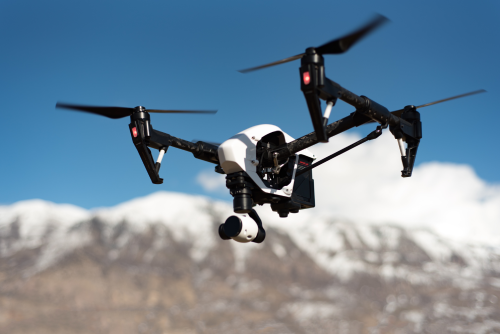
The EHang GhostDrone 2.0 is a legacy consumer multirotor from Chinese drone maker EHang. It is most relevant today for readers researching discontinued drones, used-market buyers, and enthusiasts comparing older consumer platforms with newer, better-supported models. Because the supplied confirmed data is limited, this page focuses on what is known, what can be reasonably inferred, and what you should verify before buying one second-hand.
Quick Summary Box
- Drone Name: EHang GhostDrone 2.0
- Brand: EHang
- Model: GhostDrone 2.0
- Category: Consumer multirotor
- Best For: Legacy-drone researchers, collectors, cautious used-market buyers
- Price Range: Not publicly confirmed in supplied data
- Launch Year: Not publicly confirmed in supplied data
- Availability: Legacy/discontinued; present-day retail availability is not publicly confirmed in supplied data
- Current Status: Legacy/discontinued
- Overall Rating: Not rated due to limited confirmed data
- Our Verdict: Worth considering only as a verified used or collector purchase, not as a primary modern drone buy
Introduction
The EHang GhostDrone 2.0 sits in the consumer drone category and comes from EHang, a Chinese manufacturer with a broader reputation for innovative unmanned and autonomous aircraft. For most readers in 2026, the key question is not whether it was once interesting, but whether it still makes sense to buy or operate now that it is a discontinued legacy platform. That makes support, battery condition, software compatibility, and parts availability just as important as the original specs.
This is an important framing point. When a drone is current, buyers often begin with headline specifications such as flight time, camera resolution, obstacle sensing, and price. With a discontinued model, those specs matter less than survivability. A legacy drone can look attractive on paper or in old marketing materials, but if the battery ecosystem is dead, the app no longer works, and replacement parts have vanished, the aircraft may be useful only as a shelf piece or electronics project.
The GhostDrone 2.0 therefore occupies a very specific niche in the market today. It is not primarily a recommendation for people who simply want to start flying. Instead, it fits readers who are curious about older consumer UAV design, people comparing historical drone eras, and buyers who may have found a local second-hand listing and want to understand the risk level before handing over money. In that context, an honest guide is more useful than a spec-heavy one. Where the supplied data is thin, the best approach is to say so clearly and then explain what practical checks a buyer should perform.
Overview
What kind of drone is it?
The GhostDrone 2.0 is a consumer-focused multirotor drone. That means it belongs to the class of aircraft built around vertical takeoff and landing, hover stability, and relatively accessible operation compared with fixed-wing platforms. The supplied record confirms its consumer positioning, Chinese origin, EHang branding, and discontinued status.
In plain terms, this places it in the same broad family as the mass-market hobby and camera drones that helped define the mid-2010s consumer UAV boom. Multirotors became popular because they could take off almost anywhere, hold position more easily than traditional RC aircraft, and support aerial photography without requiring the pilot skills associated with helicopters or fixed-wing models. Even when exact features differ, the format itself signals a focus on convenience, portability to the field, and generally approachable flying.
That said, “consumer multirotor” is a wide category. Some consumer drones were toy-grade, some were serious photo tools, and others sat in between. Because detailed specifications are not confirmed in the supplied data, the GhostDrone 2.0 should be treated as a general consumer platform rather than a clearly documented camera flagship or specialist aircraft.
Who should buy it?
This is mainly a drone for:
- People researching older consumer UAV designs
- Used-market buyers who find a complete, verified unit at a low-risk price
- EHang brand followers or collectors of legacy drone hardware
- Journalists and analysts comparing early consumer drone strategies
It is much less attractive for a buyer who wants a current, fully supported camera drone with clearly documented performance and compliance features.
That distinction matters. A person buying a drone to learn photography, produce travel footage, inspect property, or fly weekly for fun is usually better served by a newer platform with active support, easy battery replacement, and a large knowledge base. A person buying the GhostDrone 2.0 should ideally know why they want this specific model. Good reasons include historical interest, collection value, brand curiosity, comparative testing, or access to a very cheap complete kit from a trustworthy seller. “It was available and looked cool” is not quite enough when the platform may involve software or battery uncertainty.
What makes it different?
What makes the GhostDrone 2.0 notable is less about its current competitiveness and more about its place in EHang’s earlier consumer-drone efforts. It represents a period when multiple brands were trying to define the consumer multirotor experience before today’s market consolidation around a smaller number of major retail drone ecosystems. In practical terms, its biggest differentiator today is that it is an EHang legacy product rather than a mainstream current-generation purchase.
There is also a broader industry angle here. Earlier consumer drones often reflected experimentation in control schemes, app design, bundled camera concepts, and user onboarding. Some brands emphasized simplicity, others emphasized imaging, and others aimed to stand out through bold design or software ideas. That gives older platforms like the GhostDrone 2.0 a kind of historical value even when they no longer make sense as day-to-day tools. For enthusiasts, this can be part of the appeal: the drone is a snapshot of a formative period in consumer UAV design.
Key Features
- Consumer multirotor layout for vertical takeoff, landing, and stable hover
- EHang-branded legacy platform from a well-known Chinese drone and autonomous aircraft company
- Consumer market segment rather than enterprise, industrial, or defense use
- Discontinued status, which strongly affects support, parts, and buyer risk
- Likely general-purpose recreational role rather than heavy payload or specialized industrial work
- Used-market purchase profile, where battery health, app compatibility, and included accessories matter heavily
- Exact camera, gimbal, and autonomy package not publicly confirmed in supplied data
- Exact endurance, range, speed, and weight not publicly confirmed in supplied data
Those bullets summarize the most important reality of the GhostDrone 2.0 in 2026: this is a platform defined as much by what must be checked as by what can be confidently listed. On a current drone, an official product page solves most questions. On a legacy drone, the feature set can vary by bundle, region, firmware state, and what the seller still has in the box. That is why the purchase profile itself becomes a feature category. Completeness matters. Documentation matters. Proof of operation matters.
Full Specifications Table
Because hard public details are limited in the supplied record, the table below is best read as a separation between confirmed basics and unverified fields that should be checked directly with a seller, manual, archived product material, or an owner community.
| Field | Details |
|---|---|
| Brand | EHang |
| Model | GhostDrone 2.0 |
| Drone Type | Multirotor |
| Country of Origin | China |
| Manufacturer | EHang |
| Year Introduced | Not publicly confirmed in supplied data |
| Status | Legacy/discontinued |
| Use Case | Consumer |
| Weight | Not publicly confirmed in supplied data |
| Dimensions (folded/unfolded) | Not publicly confirmed in supplied data |
| Max Takeoff Weight | Not publicly confirmed in supplied data |
| Battery Type | Not publicly confirmed in supplied data |
| Battery Capacity | Not publicly confirmed in supplied data |
| Flight Time | Not publicly confirmed in supplied data |
| Charging Time | Not publicly confirmed in supplied data |
| Max Range | Not publicly confirmed in supplied data |
| Transmission System | Not publicly confirmed in supplied data |
| Top Speed | Not publicly confirmed in supplied data |
| Wind Resistance | Not publicly confirmed in supplied data |
| Navigation System | Not publicly confirmed in supplied data |
| Obstacle Avoidance | Not publicly confirmed in supplied data |
| Camera Resolution | Not publicly confirmed in supplied data |
| Video Resolution | Not publicly confirmed in supplied data |
| Frame Rates | Not publicly confirmed in supplied data |
| Sensor Size | Not publicly confirmed in supplied data |
| Gimbal | Not publicly confirmed in supplied data |
| Zoom | Not publicly confirmed in supplied data |
| Storage | Not publicly confirmed in supplied data |
| Controller Type | Not publicly confirmed in supplied data |
| App Support | Not publicly confirmed in supplied data |
| Autonomous Modes | Not publicly confirmed in supplied data |
| Payload Capacity | Not publicly confirmed in supplied data |
| Operating Temperature | Not publicly confirmed in supplied data |
| Water Resistance | Not publicly confirmed in supplied data |
| Noise Level | Not publicly confirmed in supplied data |
| Remote ID Support | Not publicly confirmed in supplied data |
| Geo-fencing | Not publicly confirmed in supplied data |
| Certifications | Not publicly confirmed in supplied data |
| MSRP / Launch Price | Not publicly confirmed in supplied data |
| Current Price | Not publicly confirmed in supplied data |
A blank or unconfirmed field does not necessarily mean the drone lacked that feature. It means the feature is not verified in the supplied data used for this article. For buyers, that distinction is essential. Legacy product research often suffers from a mix of old marketing claims, region-specific bundles, and seller descriptions that are incomplete or simply wrong. Verify everything that matters to your intended use.
Design and Build Quality
The supplied data does not confirm the GhostDrone 2.0’s materials, dimensions, folded size, landing gear design, or exact frame architecture. That means any judgment on shell quality or structural durability must be cautious.
Based on its classification as a legacy consumer multirotor, the likely design priorities were ease of use, stable hovering, and approachable setup rather than rugged industrial survivability. In that class, buyers usually expect a lightweight airframe, replaceable propellers, and a layout intended for casual field use rather than harsh-weather deployment.
What matters more in 2026 is condition rather than original design intent. On a discontinued consumer drone, build quality is only half the story. The real-world ownership experience depends on whether the arms, motor mounts, battery bay, landing structure, and connectors have aged well. Even a well-designed airframe becomes a risky buy if shell plastics are brittle, batteries are swollen, or the charger and controller are incomplete.
A careful inspection should go beyond obvious cosmetic scratches. Look for stress whitening in plastic parts, hairline cracks near arm joints or motor mounts, stripped screw heads, wobble in the landing structure, and corrosion on contacts. Spin each motor by hand, if possible and safe to do, to check for roughness or grinding that might suggest bearing wear or debris damage. Inspect the battery compartment for bent pins, discoloration, or signs of excessive heat. On older drones, vibration-related issues can also develop over time, especially if the aircraft has been crashed, transported loosely, or stored poorly.
Used sellers often describe drones as “working” when they mean only that the aircraft powers on. That is not the same as being airworthy. A truly healthy unit should have a solid shell, intact mounting points, reliable connectors, and a power system that does not show signs of swelling, cracking, or improvised repair. If the aircraft includes a camera or gimbal assembly, check for looseness, missing dampers, broken ribbon cables, or uneven alignment. Small physical issues on a discontinued platform can become major ownership headaches if replacement parts are rare.
From a collector angle, cosmetic originality may matter too. An aircraft with intact original accessories, matching charger, original packaging, and unmodified electronics often has more value than a heavily repaired example assembled from mixed parts. From a practical flying angle, however, structural condition matters more than appearance.
Flight Performance
There are no confirmed figures in the supplied record for endurance, range, ceiling, or maximum speed, so the GhostDrone 2.0 cannot be judged as a hard-spec performer from this dataset alone.
What can be said is that a consumer multirotor generally aims for straightforward takeoff and landing, steady hover behavior, and easier low-speed control than fixed-wing drones. That makes the type inherently beginner-friendlier than many aircraft categories, at least in principle. However, that should not be confused with modern flight confidence. Older consumer drones can feel much less refined than today’s best aircraft in GPS hold quality, wind handling, controller link robustness, and return-to-home behavior.
As analysis rather than confirmed fact, buyers should assume the GhostDrone 2.0 will likely feel more dated than a well-supported modern drone, especially in three areas:
- Battery-limited practicality, since aging packs often reduce usable flight time
- Signal confidence, if the original control or video system is older and less resilient
- Wind tolerance, which may be less forgiving than current higher-end consumer drones
Indoor suitability is also not confirmed. Unless a specific unit and feature set are verified, this is better treated as an outdoor recreational platform used in open, legal, low-risk flying areas.
There is another issue unique to aging drones: unit-to-unit variation. A new aircraft from the factory generally behaves like other examples of the same model. A second-hand legacy aircraft may not. Two GhostDrone 2.0 units could deliver very different real flight experiences depending on battery age, motor condition, firmware state, propeller quality, and whether they suffered previous crashes. That means any broad statement about performance must be tempered by the reality of aging hardware.
If you are evaluating one in person, ask for a cautious demonstration in an open area. A proper test is more revealing than a seller saying “it flew fine last year.” Look for stable takeoff, consistent hover without excessive drift, predictable response to stick inputs, and clean landing behavior. Listen for unusual motor noise or oscillation. Watch for GPS wandering, sudden descent behavior, app disconnects, or delayed input response. These are red flags on any used drone, but they matter even more when the platform has uncertain support.
Battery behavior deserves special emphasis. Legacy lithium packs can show a normal voltage reading and still sag badly under load. A drone that hovers for a minute in a yard is not necessarily proving healthy endurance. Ideally, a seller should be able to show the battery charging properly, powering the aircraft consistently, and completing a short test flight without abnormal warnings. If spare batteries are included, that is helpful only if they are still safe and functional.
Camera / Payload Performance
The supplied record does not confirm the exact camera system, gimbal configuration, sensor size, video specifications, or payload support for the GhostDrone 2.0. That is a major limitation for buyers who are trying to judge it as an aerial imaging platform.
Because of that, you should not assume:
- Integrated camera inclusion
- 4K recording
- Mechanical gimbal stabilization
- Interchangeable payload support
- Zoom capability
- Strong low-light performance
If you are shopping the used market, the camera side of the purchase needs to be checked unit by unit. A discontinued drone may be sold as:
- Airframe only
- Airframe with a damaged or missing camera
- A complete kit with charger and controller
- A bundle that relies on older app or display hardware
For creators, this uncertainty matters a lot. A legacy drone with an incomplete or unsupported camera stack can quickly become less useful than a lower-cost modern entry-level drone with a fully working stabilized camera.
The difference between “camera included” and “camera usable” is especially important. An older drone may technically have an imaging module attached, but that does not guarantee good results. You need to know whether stabilization still works, whether the lens is clean and undamaged, whether the video feed is reliable, whether footage can still be recorded to accessible media, and whether modern editing workflows can handle the files without extra effort. If the camera depends on an outdated app for framing, settings, or firmware activation, the practical value of that camera may be limited even if the hardware itself powers on.
For buyers who care about photography or videography, request proof. Ask for recent sample clips, still images, and a live demonstration of any gimbal movement or video transmission. Check for jello, horizon tilt, dropped frames, or rolling shutter artifacts in footage. Ask what storage method the camera uses and whether files can be retrieved easily. If the seller cannot provide this, treat the camera as unverified rather than assuming it is functional.
As a general buying principle, the less certain the camera package is, the more the GhostDrone 2.0 shifts away from being a content tool and toward being a hobby, collector, or restoration platform.
Smart Features and Software
The supplied data does not publicly confirm the GhostDrone 2.0’s software platform or smart-flight features. That means readers should not assume the presence of return to home, follow me, waypoints, subject tracking, obstacle sensing, mapping tools, SDK support, or advanced app automation.
What is important with legacy consumer drones is software survivability. Even if the aircraft originally supported app-based workflows or automated functions, that does not guarantee smooth operation on current phones or tablets. Before buying, verify:
- Whether the companion app is still available
- Whether login or activation is required
- Whether the app works on current iOS or Android versions
- Whether firmware updates are still accessible
- Whether the drone can be safely flown if cloud or app services are no longer maintained
Remote ID support is also not publicly confirmed in the supplied data. Since this is a discontinued platform, compliance with newer rule sets should be treated as an open question until verified.
Software is often where older drones become either charming or frustrating. Some legacy aircraft remain surprisingly usable because the app still installs, the firmware is stable, and core flying functions work offline. Others become difficult to recommend because app stores removed the software, operating-system updates broke compatibility, account systems stopped working, or features depended on servers that are no longer maintained. In those cases, the aircraft may still physically function, but the ownership experience becomes awkward or unreliable.
That is why a serious buyer should ask more than “Does the app exist?” Ask whether it has been tested recently on a current device. Ask whether it requires location permissions, online login, or an account verification step before flight. Ask whether the aircraft can arm and take off without the app if a dedicated controller is present, assuming a controller exists for the specific bundle. Ask whether updates are necessary or whether updating could actually create more problems if legacy servers are gone.
If archived APK files, sideloading, or older tablets are required, that may still be acceptable for a collector or enthusiast, but it should be considered part of the cost and complexity of ownership. A used GhostDrone 2.0 is much easier to justify when the seller can show a functioning software chain rather than simply including a box and charger.
Use Cases
Given the limited confirmed specs, the most realistic use cases are narrow and practical:
- Casual hobby flying in open areas where legal and safe
- Basic aerial photo or video use if the specific unit includes a working camera package
- Legacy drone collecting and restoration
- Research into older consumer drone ecosystems
- Side-by-side comparison testing against newer consumer multirotors
- Educational discussion of how early consumer platforms differ from current models
It is not a strong default recommendation for high-reliability commercial work, modern content creation, or regulated professional workflows unless a buyer has thoroughly validated the exact aircraft.
Each of the use cases above depends on expectations. For casual flying, the GhostDrone 2.0 may still provide value if the unit is complete, airworthy, and inexpensive enough that occasional use makes sense. For collecting, originality and completeness can matter even more than current flight performance. For educational use, it can serve as a conversation piece about how quickly the drone market evolved in software, user experience, and regulation.
The weakest use case is mission-critical work. If you need a drone for inspections, real-estate video, social media production, training, or repeatable photography, uncertainty becomes a deal-breaker. A tool with unverified camera performance and limited parts access is difficult to rely on professionally. The same applies to buyers who want a “set it and forget it” aircraft. The GhostDrone 2.0 may appeal to hobbyists who enjoy troubleshooting and research, but it is less suitable for people who want frictionless ownership.
Pros and Cons
Pros
- Recognizable EHang heritage with historical interest in the consumer drone space
- Multirotor format typically supports easier hover control and simpler takeoff/landing than fixed-wing alternatives
- Consumer positioning suggests it was intended for general-purpose recreational use rather than a niche specialist role
- Potentially affordable on the used market if found as a complete and working kit
- Useful reference model for collectors, reviewers, and researchers studying older drone platforms
- Possible restoration appeal for hobbyists who enjoy bringing older electronics back into usable condition
- Brand-specific collector value for buyers interested in EHang’s evolution from consumer products to broader autonomous aircraft initiatives
Cons
- Legacy/discontinued status creates immediate risk around support and long-term usability
- Core specs are not publicly confirmed in the supplied data, including flight time, speed, range, and weight
- Camera and gimbal details are not confirmed, which limits buyer confidence for content creation
- Battery, charger, controller, and app compatibility may be difficult to verify or replace
- Likely behind modern drones in safety features, autonomy, compliance support, and image quality
- Not an ideal first-choice buy for anyone who needs dependable current-gen support
- Potential software friction if legacy apps or activation services are no longer maintained
- High unit-to-unit variability in condition, making one listing much riskier than another
The pros and cons balance is therefore unusual. For the right buyer, the GhostDrone 2.0 may be interesting precisely because it is old, unusual, and no longer mainstream. For the average buyer, those same factors are the reason to walk away.
Comparison With Other Models
| Model | Price | Flight Time | Camera or Payload | Range | Weight | Best For | Winner |
|---|---|---|---|---|---|---|---|
| EHang GhostDrone 2.0 | Not publicly confirmed in supplied data; used-market dependent | Not publicly confirmed in supplied data | Not publicly confirmed in supplied data | Not publicly confirmed in supplied data | Not publicly confirmed in supplied data | EHang collectors, legacy-drone research, cautious bargain hunters | Niche only |
| DJI Phantom 4 | Used-market dependent | Better-documented legacy consumer performance | Integrated stabilized camera system | Better-documented consumer range | Well-known legacy camera-drone class | Most buyers wanting a proven older camera drone | Phantom 4 for most buyers |
| Yuneec Typhoon H | Used-market dependent | Competitive legacy prosumer-class endurance | Camera-focused hexacopter platform | Moderate, well-documented legacy range | Larger and heavier class | Buyers wanting a larger legacy aerial platform | Typhoon H if size and platform stability matter |
| Original EHang GhostDrone | Used-market dependent | Older-generation, varies by unit | Bundle-dependent | Varies by unit | Not publicly confirmed here | Brand collectors and historical comparison | GhostDrone 2.0 within the EHang family |
GhostDrone 2.0 vs a close competitor
Against the DJI Phantom 4, the GhostDrone 2.0 is at an information disadvantage. The Phantom 4 is a better-documented legacy buy with clearer expectations around camera capability, flight behavior, and current community knowledge. For most buyers who simply want an older but still understandable camera drone, the DJI option is easier to evaluate.
That does not automatically make the Phantom 4 “better” in every abstract sense, but it does make it easier to buy responsibly. Documentation, spare parts, user forums, repair videos, used-market familiarity, and known camera behavior all reduce risk. The GhostDrone 2.0 has a steeper due-diligence requirement because each uncertain detail increases the chance of disappointment after purchase.
GhostDrone 2.0 vs an alternative in the same segment
Compared with the Yuneec Typhoon H, the GhostDrone 2.0 looks more like a historical or niche purchase than a mainstream legacy-platform choice. The Yuneec alternative tends to appeal to buyers who want a better-known aerial imaging platform and a more visible service/community trail. The EHang still has brand interest, but it requires more caution and more unit-specific verification.
The broader lesson is that some discontinued drones remain practical because the aftermarket stayed alive. Others fade into a thinner enthusiast niche. Based on the limited confirmed data, the GhostDrone 2.0 appears closer to the second category for most buyers in 2026.
GhostDrone 2.0 vs an older or previous-generation option
Compared with the original GhostDrone line, the GhostDrone 2.0 is the more sensible pick if you specifically want an EHang legacy consumer drone. That said, public documentation and second-hand listings can vary by region and package, so buyers should confirm exactly which generation, bundle, accessories, and software dependencies are included before buying.
This matters because older naming conventions and resale listings can be messy. Sellers may use the terms loosely, mix accessories between generations, or omit key differences. If you are buying for collection accuracy or compatibility reasons, get photos of the exact aircraft, serial labels if available, batteries, controller, charger, and camera components before making any decision.
Manufacturer Details
EHang is both the brand and the manufacturer here, so there is no separate brand-owner distinction to explain. The company is based in China and is widely recognized for its work in drones and autonomous aerial vehicle development. It is better known today for larger autonomous air mobility programs than for consumer multirotors, which makes the GhostDrone 2.0 part of its earlier consumer-facing chapter.
EHang’s reputation in the broader drone market is innovation-led rather than centered on today’s mainstream retail camera-drone dominance. That matters because brand credibility and current consumer support are not the same thing. A respected manufacturer can still have limited practical backing for a discontinued product line.
For buyers, this creates a useful distinction between corporate significance and ownership convenience. EHang is not an obscure name in unmanned aviation, but that does not automatically translate into active support for a legacy consumer aircraft. In fact, when a company shifts focus to other sectors, older product lines can become harder to maintain from a consumer perspective even if the brand itself remains notable. That is one reason the GhostDrone 2.0 should be viewed as part of EHang’s product history rather than as a current expression of its priorities.
Support and Service Providers
Support for a legacy consumer drone should be assumed to be limited unless proven otherwise. Buyers should verify the following through official support channels and the seller before committing:
- Whether the manufacturer still provides any direct support information
- Whether spare propellers, batteries, chargers, and structural parts are still available
- Whether any regional repair partners still recognize the platform
- Whether firmware files, manuals, and app downloads remain accessible
For most second-hand buyers, support may come less from formal service centers and more from:
- Legacy drone forums and user communities
- Collector groups
- Electronics repair technicians familiar with older multirotors
- General RC hobby shops for basic prop, connector, or motor-related help
Warranty coverage is not publicly confirmed in the supplied data and should not be assumed on any used unit.
In practical terms, support availability can determine whether a cheap purchase is wise or wasteful. A drone with a cracked prop hub, damaged charger, or questionable battery may be easy to restore if parts are common. It may be impossible if the components are proprietary and no longer sold. That is why support research should happen before purchase, not after. Search for manuals, firmware archives, user groups, and recent discussion threads. If the only available information is years old and spare parts are absent, assume ownership will be self-supported.
If you do find community support, save everything locally: manuals, firmware files, archived app installers, calibration guides, and troubleshooting notes. Legacy device ecosystems can disappear over time, and a working file archive can be as valuable as a spare battery.
Where to Buy
Because the GhostDrone 2.0 is discontinued, buyers should not expect broad modern retail availability. Most real purchase opportunities are likely to come from:
- Used marketplaces
- Local classified listings
- Hobbyist resale groups
- Collector resellers
- Old-stock sellers offering legacy inventory
If a seller claims the drone is new old stock, confirm:
- Battery manufacture date and storage condition
- Inclusion of controller, charger, props, and any camera module
- App availability and phone compatibility
- Basic power-on and binding status
- Physical condition of motors, shell, connectors, and landing components
For this model, where you buy matters almost as much as what you buy.
Local pickup is often safer than blind shipping for older drones. It gives you a chance to inspect the aircraft, verify included accessories, and possibly see a live power-on or short hover test. If shipping is the only option, ask for detailed photos and video proof taken recently, not recycled marketing shots. Request clear images of the battery contacts, charger label, propellers, underside, camera assembly, and any signs of repair. A trustworthy seller should understand why these details matter on a discontinued platform.
Be especially cautious of listings that are vague in exactly the areas that matter most: “untested,” “powers on but no charger,” “looks complete,” or “camera not checked.” Those phrases usually mean you are taking on all the risk.
Price and Cost Breakdown
There is no confirmed launch price or current price in the supplied data, so buyers should treat any listing as unit-specific rather than assuming a standard market value.
Before budgeting, verify these ownership costs:
- Airframe cost: The headline purchase price may look attractive, but it means little if key parts are missing.
- Battery replacement cost: Old lithium packs are often the biggest hidden expense and the biggest reliability risk.
- Controller and charger cost: Replacing proprietary accessories can be harder than replacing the drone itself.
- Camera-related cost: If the aircraft needs a missing or damaged imaging module, total ownership cost can jump quickly.
- Repair cost: Parts scarcity may make small repairs disproportionately expensive.
- Compliance cost: If local law requires additional identification or registration steps, that adds cost too.
- Device compatibility cost: Some legacy drones may effectively require an older phone or tablet to run their app correctly.
In short, a cheap used GhostDrone 2.0 can still be an expensive ownership project.
A practical rule for discontinued drones is to value complete, verified kits far above incomplete bargains. A low asking price is attractive only if the drone actually works or can be restored without heroic effort. Once you add a battery, charger, missing props, possible camera issues, and the time spent hunting firmware or apps, the economics can turn bad quickly. In many cases, spending more on a complete tested unit is the cheaper move overall.
Collectors may calculate value differently. Original packaging, intact documentation, and matching accessories can justify a higher price if the goal is preservation rather than regular flight. But for practical flyers, value should be measured in total operational cost, not initial listing price.
Regulations and Compliance
Regulatory treatment depends on your country, the aircraft’s actual takeoff weight, and how you intend to use it. Since weight and Remote ID support are not publicly confirmed in the supplied data, do not assume this drone automatically fits current recreational or commercial rules.
Practical points to verify before flight:
- Whether the drone must be registered in your jurisdiction
- Whether the pilot needs a recreational test, operator certificate, or commercial authorization
- Whether Remote ID or an equivalent requirement applies
- Whether local no-fly zones, altitude limits, and airspace restrictions affect your launch area
- Whether privacy law limits camera use in public or residential spaces
Legacy drones can be especially tricky because they may predate current compliance frameworks. Even if the aircraft still flies well, that does not mean it automatically meets today’s legal expectations.
This is one of the biggest gaps between historical capability and present-day practicality. A drone that was straightforward to use when released may now sit in a very different legal environment. Registration thresholds, identification requirements, operational categories, insurance expectations, and airspace awareness tools have all become more structured in many regions. If the GhostDrone 2.0 lacks a built-in compliance feature now expected for routine use, that does not necessarily make it illegal everywhere, but it does mean you need to do more homework.
The right approach is simple: check your local rules before buying, not after. That includes recreational versus commercial distinctions, weight-based obligations, and whether any external add-ons are permitted or required for identification. If your goal is hassle-free flying, regulatory uncertainty is another reason a modern platform may be the better choice.
Who Should Buy This Drone?
Best for
- Buyers researching EHang’s earlier consumer drone lineup
- Collectors of legacy multirotor hardware
- Careful second-hand buyers who can inspect and verify a complete working unit
- Journalists, reviewers, and analysts comparing older drones with modern models
- Hobbyists who value historical interest over cutting-edge capability
These buyers share one trait: they are willing to accept uncertainty in exchange for niche value. For them, the GhostDrone 2.0 can be interesting as a physical artifact, a comparison platform, or a low-cost curiosity that broadens understanding of consumer drone history.
Not ideal for
- First-time buyers who want dependable modern support
- Creators who need confirmed camera quality and stabilization
- Professionals who need predictable spare parts and service access
- Pilots who want clear published specs before purchase
- Anyone needing guaranteed regulatory fit with modern requirements
For these buyers, the downsides outweigh the intrigue. If you need reliable results rather than a project, the GhostDrone 2.0 asks too many extra questions before it can be trusted.
Final Verdict
The EHang GhostDrone 2.0 is best viewed in 2026 as a legacy consumer multirotor with historical and collector interest, not as a front-line recommendation for most buyers. Its biggest strengths are its EHang heritage, approachable consumer-drone class, and potential appeal as a used-market curiosity or restoration project. Its biggest drawbacks are much more important: discontinued status, limited confirmed public specs, uncertain camera configuration, and likely challenges around batteries, software, and parts.
If you are an enthusiast, researcher, or collector and you find a complete, verified unit at the right price, the GhostDrone 2.0 may still be worth a look. In that scenario, the appeal is not that it beats modern drones. It is that it offers a window into an earlier consumer UAV era and may still provide some enjoyment as a lightly used hobby aircraft or preservation piece.
If you want a practical everyday drone, a dependable camera platform, or a low-risk first purchase, you should almost certainly choose a better-documented and better-supported alternative. That is the clearest conclusion this model supports today. The GhostDrone 2.0 is interesting. It may even be fun. But for most buyers, interest and value are not the same thing.
