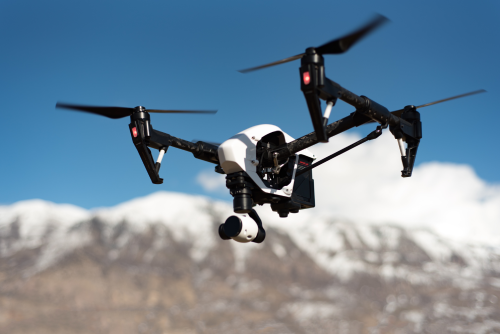
Parrot ANAFI is a foldable multirotor camera drone from French manufacturer Parrot, aimed at users who want a portable platform for both consumer and light professional work. In the supplied manufacturer-based record, it is listed as an active model in the consumer/professional segment. That makes it relevant for buyers comparing compact aerial imaging drones, but it also means you should verify the exact package and specification set before purchasing.
Quick Summary Box
- Drone Name: Parrot ANAFI
- Brand: Parrot
- Model: ANAFI
- Category: consumer/professional
- Best For: Portable aerial imaging, travel-friendly flying, and light professional documentation
- Price Range: Not publicly confirmed in supplied data
- Launch Year: Not publicly confirmed in supplied data
- Availability: Not publicly confirmed in supplied data
- Current Status: Active
- Overall Rating: Not rated due to limited confirmed data
- Our Verdict: A compact foldable camera drone with clear portability appeal, but buyers should verify exact specs, software support, pricing, and regional service before committing.
This quick view captures the safe headline: the Parrot ANAFI appears to be a practical compact imaging drone with crossover appeal for hobbyists and lighter commercial users. However, because the supplied record does not confirm many of the hard numbers that buyers usually rely on, the best way to treat this model is as a promising platform that still requires due diligence.
Introduction
The Parrot ANAFI sits in a useful crossover space: it is positioned as a consumer/professional drone, but the supplied data confirms it as a foldable camera platform rather than a heavy industrial aircraft. That usually appeals to creators, travelers, small business users, and teams that value portability over large payload capacity.
Readers should care about this model because Parrot remains one of the most recognizable drone manufacturers from France, and the ANAFI name carries weight in compact camera-drone discussions. At the same time, this page stays conservative: where the supplied record does not confirm a figure or feature, that uncertainty is stated clearly.
That conservative approach matters. In the drone market, buyers are often forced to sort through outdated listings, old reviews, region-specific bundles, and family names that include multiple variants. A product line may have several versions that look similar but differ in software support, accessories, camera capabilities, or intended use. Because of that, a careful buyer should not assume that every ANAFI listing is equivalent.
Portable drones are also judged differently from larger aircraft. People shopping in this category are often balancing several priorities at once:
- They want a drone small enough to carry regularly rather than occasionally
- They want image quality that is good enough for real use, not just casual novelty
- They want setup time to be short, especially when traveling or working on location
- They may want a platform that feels more serious than a toy, but less demanding than an enterprise system
That is the space where the Parrot ANAFI appears most relevant. It is not presented here as a fully verified leader on specs, because the supplied record does not support that claim. Instead, it should be viewed as a compact aerial camera option whose strongest confirmed selling point is its portable foldable format and its positioning beyond entry-level hobby use.
Overview
What kind of drone is it?
The ANAFI is a multirotor drone with a foldable camera-drone design. Based on the supplied record, it belongs in the consumer/professional segment, which suggests a product aimed at both enthusiastic individual users and lighter commercial workflows.
Because it is a multirotor, the core airframe logic is straightforward: vertical takeoff and landing, stable hover, controlled framing, and easier deployment than a fixed-wing platform. The strongest confirmed design trait is portability through folding.
That classification tells you a lot even before you know the exact technical figures. Multirotor drones are generally chosen for precision, convenience, and camera control rather than maximum endurance. They are the default choice for jobs where you need to stop in place, reposition easily, and capture a shot from a specific angle. If you are thinking about travel footage, roof and property overviews, landscape clips, inspection-style visuals, or light field documentation, that is exactly the kind of work multirotors are usually built for.
The foldable aspect matters just as much. A foldable drone tends to fit more naturally into backpacks, shoulder bags, and smaller cases. It is also more likely to be carried to locations where a bulkier aircraft might be left behind. In practice, a portable drone often gets used more often, simply because it is easier to bring along.
Who should buy it?
The most likely audience includes:
- Buyers who want a compact camera drone
- Travel and outdoor content creators
- Small businesses needing aerial visuals
- Users who prefer a Parrot-branded option instead of the most common market alternatives
- Light professional operators who need portability first and should verify exact workflow features second
That audience can be expanded a little further. For example, the ANAFI may also interest journalists, educators, field researchers, and freelance visual creators who need a drone that is easy to transport and quick to deploy. A small production team may not need an industrial aircraft if the job is simply to add a few establishing aerial shots, document a site, or capture visuals for marketing materials.
The key buying principle is simple: if your first requirement is packability and camera use, this model makes sense to investigate. If your first requirement is payload flexibility, hard environmental tolerance, or deeply documented enterprise functions, you should verify carefully before assuming the ANAFI is the right fit.
What makes it different?
What stands out most from the supplied data is the combination of three things:
- Parrot branding and French origin
- Foldable camera-drone format
- Consumer/professional positioning
That combination matters because many buyers want a drone that feels more capable than a basic hobby model, while still being easier to transport than a larger enterprise aircraft. The main caveat is that the supplied record does not confirm many of the headline numbers shoppers usually expect, such as flight time, range, top speed, or camera resolution.
Another point of difference is brand choice itself. Many drone shoppers compare almost everything against the most dominant mainstream brands. For some buyers, that is fine. For others, an alternative ecosystem is part of the appeal. Some simply prefer Parrot based on prior experience, regional familiarity, software preference, or company reputation. Others are intentionally looking for a non-default option in the compact camera-drone category.
So while the supplied data does not let this article claim category-leading performance, it does support the idea that the ANAFI occupies a distinct niche: a portable, camera-first drone from an established European manufacturer with a foot in both enthusiast and light professional use.
Key Features
- Foldable camera-drone design for easier transport and storage
- Multirotor airframe suited to hovering, framing shots, and controlled low-speed maneuvering
- Positioned for both consumer and professional users
- Built by Parrot, a well-known French drone manufacturer
- Active model status in the supplied data
- Likely well suited to mobile and rapid-deployment use cases due to its foldable format
- Camera-led design focus, based on the supplied note identifying it as a foldable camera drone
- Portable alternative for buyers who do not want a large industrial airframe
- Potential appeal as a non-mainstream-brand option in the compact imaging category
- Exact battery, camera, range, speed, obstacle sensing, and autonomy features are not publicly confirmed in supplied data
These features are more meaningful when you translate them into real-world buying value:
- Foldability usually means less friction in everyday use. A drone that packs quickly is more likely to be carried on hikes, trips, and jobs.
- Multirotor behavior means the aircraft should be suitable for controlled hovering and camera composition, which is critical for most aerial imaging tasks.
- Consumer/professional positioning suggests broader ambition than a pure hobby toy, even if the exact workflow features still need verification.
- Active status is encouraging because it is better than seeing a clearly discontinued or unsupported listing, though buyers should still confirm regional support and bundle details.
- Camera-first identity helps define expectations. This appears to be an imaging platform first, not a lifting platform for specialized third-party payloads.
In other words, the ANAFI’s appeal is easy to understand conceptually even when the supplied dataset is thin on exact measurements. It is trying to be a capable aerial camera tool you can take with you, rather than a large, complex aircraft you need to plan around.
Full Specifications Table
| Field | Details |
|---|---|
| Brand | Parrot |
| Model | ANAFI |
| Drone Type | Multirotor |
| Country of Origin | France |
| Manufacturer | Parrot |
| Year Introduced | Not publicly confirmed in supplied data |
| Status | Active |
| Use Case | consumer/professional |
| Weight | Not publicly confirmed in supplied data |
| Dimensions (folded/unfolded) | Not publicly confirmed in supplied data |
| Max Takeoff Weight | Not publicly confirmed in supplied data |
| Battery Type | Not publicly confirmed in supplied data |
| Battery Capacity | Not publicly confirmed in supplied data |
| Flight Time | Not publicly confirmed in supplied data |
| Charging Time | Not publicly confirmed in supplied data |
| Max Range | Not publicly confirmed in supplied data |
| Transmission System | Not publicly confirmed in supplied data |
| Top Speed | Not publicly confirmed in supplied data |
| Wind Resistance | Not publicly confirmed in supplied data |
| Navigation System | Not publicly confirmed in supplied data |
| Obstacle Avoidance | Not publicly confirmed in supplied data |
| Camera Resolution | Not publicly confirmed in supplied data |
| Video Resolution | Not publicly confirmed in supplied data |
| Frame Rates | Not publicly confirmed in supplied data |
| Sensor Size | Not publicly confirmed in supplied data |
| Gimbal | Not publicly confirmed in supplied data |
| Zoom | Not publicly confirmed in supplied data |
| Storage | Not publicly confirmed in supplied data |
| Controller Type | Not publicly confirmed in supplied data |
| App Support | Not publicly confirmed in supplied data |
| Autonomous Modes | Not publicly confirmed in supplied data |
| Payload Capacity | Not publicly confirmed in supplied data |
| Operating Temperature | Not publicly confirmed in supplied data |
| Water Resistance | Not publicly confirmed in supplied data |
| Noise Level | Not publicly confirmed in supplied data |
| Remote ID Support | Not publicly confirmed in supplied data |
| Geo-fencing | Not publicly confirmed in supplied data |
| Certifications | Not publicly confirmed in supplied data |
| MSRP / Launch Price | Not publicly confirmed in supplied data |
| Current Price | Not publicly confirmed in supplied data |
The table above may look sparse, but it serves an important purpose: it clearly separates confirmed facts from unknowns. That is especially useful when researching drones that may appear in multiple retail channels, used listings, and family-level product comparisons. A buyer who sees a long list of missing data should treat that as a prompt to verify directly with the seller, manufacturer documentation, or trusted current listings.
Design and Build Quality
The clearest confirmed design takeaway is that the Parrot ANAFI is foldable. That matters more than it may seem on paper, because a foldable multirotor is usually easier to pack, travel with, and deploy quickly in the field than a rigid-frame drone. For buyers who move between locations often, portability can be as important as raw camera or flight numbers.
As a multirotor camera drone in the consumer/professional segment, the ANAFI is likely optimized for convenience and transport rather than heavy-duty payload carrying. That is analysis, not a confirmed specification. Buyers looking for rugged weather-sealed construction, dedicated landing gear, or industrial service access should verify the exact product documentation for their target unit.
Foldable design usually has several practical implications:
- Travel convenience: It takes up less space in luggage or day packs.
- Faster setup: Arms can be unfolded quickly on location.
- Lower carrying friction: Users are more willing to bring a compact drone on routine trips.
- Field flexibility: Easier to move between shooting spots, trailheads, job sites, or urban locations.
But portability is not the same thing as ruggedness. A drone can be compact and elegant while still requiring careful handling. That is why serious buyers should think beyond appearance and ask practical questions such as:
- Does the folding mechanism feel solid over repeated use?
- How easy is it to inspect arms, motors, and props before flight?
- Are replacement props and batteries easy to find?
- How protected is the camera assembly in transport?
- Does the package include a proper case or only minimal storage?
What is not confirmed in the supplied data includes:
- Airframe materials
- Folded and unfolded dimensions
- Total weight
- Propeller format
- Landing gear details
- Weather protection level
- Serviceability and spare-part structure
So, the safe conclusion is this: the ANAFI appears attractive on portability grounds, but a serious buyer should still confirm physical durability, field handling, and repairability before purchase.
If you are purchasing used, design and build quality become even more important. A foldable drone can hide wear in hinges, arm joints, prop mounts, or camera supports. Ask for close photos, verify the body is not twisted or cracked, and check whether the folding arms lock and unfold consistently. Cosmetic marks may be harmless, but structural stress or camera alignment issues are more serious.
Flight Performance
The supplied record does not confirm endurance, range, top speed, or service ceiling, so any hard flight-performance judgment would be misleading. Still, the airframe category tells us a few reasonable things. As a multirotor, the ANAFI should be oriented toward stable hovering, controlled camera positioning, and easy point-to-point repositioning rather than long-endurance fixed-wing coverage.
Based on its foldable camera-drone role, the likely flight character is:
- Quick to deploy
- Easier to transport than larger drones
- Better suited to controlled aerial imaging than heavy-payload work
- Probably more comfortable outdoors in open space than in cluttered indoor settings
That last point is analysis. Indoor use with any camera drone should be approached carefully unless the operator has confirmed positioning sensors, obstacle sensing, and enough clearance.
Flight performance is not only about speed. For most users in this category, more important questions include:
- How stable is the aircraft when hovering for photos or video?
- How predictable is it during slow cinematic movement?
- How well does it hold position when the wind changes?
- How much confidence does the control link inspire at normal legal distances?
- How much real-world battery reserve remains after safe return planning?
Wind handling is also a major buyer question, but the supplied data does not confirm wind-resistance figures. In general, smaller foldable drones can be more affected by gusts than larger professional aircraft, so buyers planning coastal, mountain, or exposed-site use should verify published wind limits before relying on this model for mission-critical work.
There is also a difference between possible performance and usable performance. A drone may technically offer good speed or range on paper, but if your use case involves filming at moderate distance, hovering near a structure, or returning with a comfortable battery margin, what matters is stable and predictable control rather than extreme figures.
Buyers should also think about launch conditions. Compact drones are popular for travel and outdoor use, but those environments often create challenges:
- Beaches can introduce sand and wind.
- Trails and mountain viewpoints can create turbulence.
- Urban rooftops can generate unpredictable gusts.
- Cold weather can affect battery behavior.
- Bright light or glare can make screen visibility harder if the controller depends on a phone.
Since the supplied record does not confirm the ANAFI’s exact tolerance in these areas, it is best to treat it as a portable imaging aircraft that should be matched carefully to operating conditions. That is not a weakness unique to this model; it is simply part of responsible drone buying.
Camera / Payload Performance
The note in the supplied record identifies the ANAFI as a foldable camera drone, so imaging is clearly central to the product. That means the biggest buying questions will usually be camera resolution, sensor size, gimbal behavior, stabilization quality, and video frame-rate options.
Those key details are not publicly confirmed in supplied data, so this page does not invent them. As a result, the fairest assessment is that the ANAFI should be treated first as a portable imaging platform, but not as a confirmed heavy-payload or modular-payload aircraft.
For practical buyers, here is what to verify before purchase:
- Photo resolution
- Video resolution and frame rates
- Sensor size and low-light suitability
- Gimbal stabilization type and movement range
- Zoom capability, if any
- Internal storage or removable media support
- Whether the exact package supports specialized workflows beyond standard imaging
If your main goal is travel video, light commercial photo work, or compact aerial documentation, the camera-led design is a positive. If you need thermal, mapping-grade, zoom-heavy, or interchangeable-payload capability, do not assume it is included without checking the exact ANAFI package.
It is also worth thinking about image use, not just image capture. Different users care about different outputs:
- Travel creators may prioritize smooth video, compact packing, and quick launch.
- Real-estate users may need sharp stills and stable wide establishing shots.
- Journalists or researchers may value portability, repeatability, and basic documentation reliability.
- Small businesses may simply need drone visuals that look good enough for websites, social media, and presentations.
In all of those cases, the camera system’s practical value depends on more than megapixels. A strong buyer checklist should include:
- How stable are video clips during turns or braking?
- Can the camera provide enough flexibility for different framing styles?
- Is the footage easy to integrate into your editing workflow?
- Does the package support the storage media you prefer?
- How reliable is the gimbal or stabilization system during transport and repeated use?
Payload expectations should also remain realistic. The supplied record frames the ANAFI as a camera drone, not as a platform designed around external tools or major add-ons. That is perfectly fine for most buyers, since many people in this class simply want an aircraft that captures aerial stills and video efficiently. But if your workflow requires specialized sensors, high-precision survey output, or modular mission equipment, verify compatibility before assuming professional labeling alone guarantees those functions.
Smart Features and Software
The supplied record does not confirm the ANAFI’s software stack, autonomous modes, controller type, or app support. That means common buyer questions around waypoint missions, automated shots, return-to-home behavior, subject tracking, SDK availability, and fleet workflow support all need direct verification.
Before buying, confirm whether the exact ANAFI setup you are considering includes or supports:
- GPS-assisted positioning
- Return-to-home functions
- Automated camera moves
- Waypoint or route planning
- Follow or tracking features
- Mobile app control
- Firmware update support
- Professional workflow integration
- SDK or API access for advanced users
- Flight logs and media management tools
Parrot as a manufacturer has a long association with app-connected drone use, but the exact feature set of this model should be checked through official documentation for the precise unit or bundle you plan to fly.
Software support is often underestimated during purchase research. Many shoppers focus on the aircraft, the battery, and the camera, but the long-term ownership experience is shaped heavily by software. A good app and firmware ecosystem can make a drone easier to set up, safer to operate, and more useful over time. Poor or uncertain software support can create friction even if the hardware is good.
Here are the questions that matter most:
- Is the companion app still actively maintained?
- Does the app work reliably on your current phone or tablet?
- Are firmware updates easy to install?
- Can you export media and logs easily if you use the drone for work?
- Are there known regional restrictions or compatibility gaps?
- If you rely on automated flight features, are they documented clearly?
For light professional users, software depth can be a deciding factor. A compact drone may be physically ideal, but if you need repeatable route planning, consistent project archiving, or integration into a broader workflow, vague software support can become a real issue. On the other hand, if your needs are simple—manual flying, stable aerial video, and occasional image capture—the software demands may be lower.
The safe takeaway is not that the ANAFI lacks smart features. It is that the supplied record does not confirm them, so buyers should validate them directly rather than relying on assumptions or old marketing material.
Use Cases
Given the confirmed foldable camera-drone identity and consumer/professional positioning, the most realistic use cases include:
- Travel aerial photography and video
- Real-estate overview imaging
- Outdoor recreation and hobby flying
- Small business marketing content
- Site documentation for light professional work
- Training on a portable camera-drone workflow
- General-purpose aerial visuals where rapid deployment matters
- Field capture for journalists or researchers who need portability
If your use case depends on mapping accuracy, thermal imaging, advanced automation, or specialized enterprise sensors, verify that your exact ANAFI configuration supports those needs rather than assuming the base model does.
A little more detail on these use cases helps clarify where the ANAFI fits best:
Travel aerial photography and video
A foldable drone is especially attractive when every gram of luggage matters. Travelers often want a drone that can be packed quickly, launched without a big setup routine, and used for short sessions at scenic stops. The ANAFI’s portable format aligns naturally with that kind of trip-based flying.
Real-estate overview imaging
Property marketers and agents often need exterior perspective shots rather than highly specialized flight performance. A portable camera drone can be enough for roofline views, approach shots, lot context, and neighborhood perspective, assuming local rules and safe operating conditions are respected.
Outdoor recreation and hobby flying
Some pilots simply want a capable compact drone for leisure use in parks, open land, or vacation settings. In this role, portability, convenience, and image quality are often more important than industrial features.
Small business marketing content
A restaurant, resort, event venue, farm, or outdoor brand may not need a large commercial drone setup. A compact camera platform can provide useful overhead visuals for websites, social media, and short promotional edits.
Site documentation for light professional work
Consultants, contractors, researchers, and project teams sometimes need visual progress records rather than certified survey output. A portable drone can support this kind of light documentation if the workflow and regulations fit.
Training on a portable camera-drone workflow
Pilots moving up from basic hobby flying may prefer a drone that feels more capable and more work-oriented without jumping immediately into heavier systems.
The common theme is mobility. The ANAFI appears most attractive when the job benefits from a drone that can travel easily, deploy quickly, and focus on imaging rather than specialized mission payloads.
Pros and Cons
Pros
- Foldable design is a clear portability advantage
- Multirotor layout is naturally good for hovering and controlled framing
- Consumer/professional positioning makes it relevant to a wide range of buyers
- Made by Parrot, an established drone manufacturer from France
- Camera-drone focus makes it easier to evaluate as an imaging platform than as a niche utility aircraft
- Active status in the supplied data is more encouraging than an explicitly retired listing
These strengths add up to a coherent buyer story. The ANAFI is appealing because it seems built around practical use rather than novelty. It is easy to understand why someone would want it: it promises portability, aerial imaging utility, and a recognized manufacturer identity.
Cons
- Many headline specs are not publicly confirmed in supplied data
- Exact camera capability is not confirmed here
- Flight time, range, speed, and wind performance are not confirmed here
- Obstacle avoidance and autonomous features are not confirmed here
- Current pricing and retail availability are not confirmed here
- Buyers must be careful not to confuse this model with other ANAFI-family variants
The weaknesses are mostly about purchase clarity rather than a proven hardware failure. That distinction matters. The ANAFI may still be a strong fit for the right buyer, but the research burden is higher because too many important details remain unconfirmed in the supplied record. If you need an easy, one-glance comparison against today’s most transparently documented compact drones, this lack of confirmed detail becomes a practical drawback.
Comparison With Other Models
Reliable one-to-one comparison is limited because the supplied ANAFI record does not confirm several core figures. The table below is therefore a shopping-orientation view, not a strict spec-sheet shootout.
| Model | Price | Flight Time | Camera or Payload | Range | Weight | Best For | Winner |
|---|---|---|---|---|---|---|---|
| Parrot ANAFI | Not publicly confirmed in supplied data | Not publicly confirmed in supplied data | Foldable camera drone | Not publicly confirmed in supplied data | Not publicly confirmed in supplied data | Buyers who want a portable Parrot platform | Best if Parrot branding and workflow preference matter most |
| DJI Mini 4 Pro | Premium mini-drone pricing | Published by manufacturer; strong for the class | Creator-focused stabilized camera | Published by manufacturer; strong consumer-class link performance | Sub-250 g class in common configurations | Travel creators and mainstream consumer buyers | Best on current feature visibility and broad market support |
| Autel EVO Nano+ | Mid-to-premium compact-drone pricing | Published by manufacturer; competitive compact class | Compact camera drone | Published by manufacturer | Sub-250 g class | Buyers wanting a compact non-DJI alternative | Best if very light travel portability is the top priority |
| Parrot Bebop 2 | Often found used rather than new | Older-generation consumer class | Simpler older integrated camera approach | Older-generation consumer class | Lightweight consumer class | Budget shoppers comparing legacy Parrot options | Best only as a lower-cost legacy alternative |
ANAFI vs a close competitor
Against a close mainstream competitor like the DJI Mini 4 Pro, the ANAFI’s biggest challenge is documentation clarity. DJI’s current products are typically easier to compare using fresh published specs, bundle options, and well-defined market positioning. ANAFI can still appeal to buyers who specifically want Parrot, but the exact package needs verification before a fair verdict is possible.
This matters because shopping confidence is part of product value. A buyer comparing compact drones often wants easy answers on weight class, obstacle sensing, camera specs, app features, and battery bundles. When one product is thoroughly documented and another requires more confirmation, the second product has to win on brand preference, ecosystem fit, or a particular design benefit.
ANAFI vs an alternative in the same segment
Compared with a compact alternative like the Autel EVO Nano+, ANAFI’s case is strongest if you want a Parrot-led ecosystem or simply prefer the brand. The Autel route may be easier for shoppers whose first filter is ultra-light travel portability and current-spec transparency. The deciding factor is not just airframe size, but how much confirmed software and support detail you can obtain before purchase.
In other words, this is not only about flight characteristics or camera output. It is also about how much certainty you need before spending money. Some buyers are comfortable doing deeper research to get the brand they want. Others want a fast, confidence-rich purchase process.
ANAFI vs an older or previous-generation option
Compared with an older Parrot option like the Bebop 2, the ANAFI is the more modern choice in concept thanks to its foldable camera-drone positioning. Even without a fully confirmed spec list here, ANAFI is the better starting point for buyers who want a more portable and more current-feeling platform. The older option mainly makes sense if cost is the only priority and you are comfortable with legacy support risk.
That comparison also highlights the importance of buying for workflow age, not just price. A cheaper legacy drone may look appealing upfront, but if app support, battery sourcing, or media quality no longer match your needs, the savings can disappear quickly.
Manufacturer Details
Parrot is both the brand and the manufacturer in this case, so there is no separate OEM-brand split to explain. The company is based in France and is one of the better-known European names in the drone market.
Parrot built its reputation across consumer and professional drone categories, giving it visibility well beyond hobby-only circles. That matters because some buyers actively look for alternatives to the most dominant consumer brands, and Parrot often appears in that shortlist.
In market terms, Parrot’s reputation is tied to:
- Portable camera drones
- Professional-capable compact systems
- A recognizable European brand identity
- Longstanding presence in drone discussions and comparisons
Brand reputation does not replace product verification, but it does shape buyer trust. A recognized manufacturer is more likely to have documentation archives, community discussion, accessory ecosystems, and at least some long-tail support footprint compared with an unknown low-cost brand. For many buyers, that reduces perceived risk.
Parrot’s identity may also appeal to customers who prefer established aviation-adjacent technology companies over anonymous marketplace hardware. Even when exact specs need confirmation, the manufacturer name itself gives the ANAFI more credibility than a generic no-name foldable drone.
Support and Service Providers
Support quality can matter as much as the drone itself, especially for a camera platform that may be used professionally. Buyers should start with Parrot’s official support resources, firmware channels, documentation, and any region-specific repair guidance.
Before purchasing, verify:
- Whether the exact ANAFI model is still supported in your region
- Battery and propeller availability
- Controller and charging accessory availability
- Repair turnaround options
- Whether official or approved service centers are available locally
- Firmware and app maintenance status
Community forums, pilot groups, and third-party repair shops may also help, but quality varies. If your workflow is commercial, do not rely on unofficial support alone.
This becomes especially important for used purchases. A secondhand drone can look like a bargain until you discover that batteries are scarce, the controller is missing, or the original charging setup is expensive to replace. Service planning should include more than warranty questions. Think about the full support chain:
- Can you still get consumables?
- Are replacement arms, motors, or camera parts realistic to source?
- If the app requires activation or account access, can that be transferred cleanly?
- Are firmware files and manuals easy to obtain?
For business users, downtime matters. If the drone is part of paid work, support is not a minor detail. Even a relatively affordable aircraft becomes costly if a simple accessory failure puts it out of action for weeks.
Where to Buy
The safest buying route is usually:
- Official brand store
- Authorized drone dealers
- Regional camera or electronics retailers
- Professional drone resellers
- Local distributors where Parrot has channel coverage
You may also find listings on large marketplaces or the used market, but buyers should be more cautious there. Confirm battery health, included accessories, controller compatibility, serial legitimacy, and any signs of crash damage before buying secondhand.
When buying from any non-official source, ask a few basic questions:
- Is the listing for the exact ANAFI model you think it is?
- Does it include the controller, or is it aircraft-only?
- How many batteries are included, and what is their age?
- Are propellers original or mixed replacements?
- Has the drone ever been crashed or repaired?
- Is the charger included and region-compatible?
- Can the seller provide a powered-on demonstration or recent flight proof?
Used drones can be perfectly worthwhile purchases, but only if you evaluate them like real equipment rather than simple consumer gadgets. A drone is a system, not just an airframe. Missing accessories, aging batteries, and uncertain firmware history can change the value dramatically.
Price and Cost Breakdown
Price is not publicly confirmed in supplied data, so any exact figure here would be unreliable. That means buyers should budget around the full ownership package rather than the aircraft alone.
Key cost items to verify include:
- Drone-only price versus bundle price
- Number of included batteries
- Controller inclusion
- Charger and cable inclusion
- Spare propellers
- Carry case or travel bag
- Replacement battery cost
- Repair and parts cost
- Insurance or accidental-damage coverage
- Any paid software or workflow subscription tied to your intended use
If you are buying used, battery condition can change the real cost dramatically. A low purchase price can stop being a bargain if replacement batteries and spare parts are hard to source.
A better way to think about cost is to separate it into three layers:
1. Entry cost
This is what you pay just to get flying: aircraft, controller, basic battery setup, and charger.
2. Practical operating cost
This includes extra batteries, spare props, a case, travel storage, replacement cables, and possibly a better mobile device if the controller depends on one.
3. Risk and continuity cost
This covers repair exposure, insurance, battery replacement, downtime, and accessory availability over time.
For a casual hobbyist, the first layer may be enough. For a frequent traveler, the second layer matters more. For a business user, the third layer can become the biggest deciding factor. A drone that is cheap to buy but expensive to maintain is not necessarily a good value.
Regulations and Compliance
Drone rules depend on country, region, and exact aircraft configuration, so no universal compliance claim should be assumed. For the ANAFI, several regulatory questions remain open because weight, Remote ID support, and certification details are not publicly confirmed in supplied data.
Practical points to check before flight:
- Whether your local authority requires drone registration
- Whether the actual takeoff weight changes the legal category
- Whether Remote ID is required in your area
- Whether commercial use needs pilot certification or operational approval
- Local rules on flying near people, roads, airports, or controlled airspace
- Privacy and data-protection laws when recording video or photos
- Battery transport rules for air travel
- Whether geofencing or other software restrictions apply
For professional users, it is especially important to verify the legal status of the exact drone-plus-battery configuration you intend to operate.
Portable drones are often bought for travel, and that adds another regulatory layer. A drone that is easy to carry is also more likely to cross borders or regional jurisdictions. That means you may need to check:
- Airline battery restrictions
- National drone registration rules
- Park and protected-area bans
- Rules for urban flights
- Requirements for visual line of sight
- Rules on flights over people or property
Do not assume portability means simplicity. In many places, the law depends on the specific aircraft category, how and where you fly, and whether the operation is recreational or commercial. Since the supplied data does not confirm key compliance fields, buyers should verify the current legal position themselves before use.
Who Should Buy This Drone?
Best for
- Buyers who want a foldable Parrot camera drone
- Users who prioritize portability and quick deployment
- Hobbyists moving into more serious aerial imaging
- Small businesses needing compact visual-capture capability
- Travelers and journalists who value packability
- Buyers specifically interested in a French-manufactured drone brand
A few buyer profiles fit especially well here:
- The travel creator: wants a drone that can live in a backpack and capture scenery without carrying a large kit.
- The small business owner: needs occasional aerial visuals for marketing but does not want enterprise complexity.
- The mobile professional: values a compact drone for light site documentation or general visual records.
- The brand-specific buyer: prefers Parrot and is willing to verify the exact package before purchasing.
Not ideal for
- Buyers who need fully transparent confirmed specs before purchase
- Operators needing known heavy-payload support
- Users who require clearly confirmed obstacle avoidance and autonomy features
- Teams needing weather-hardened industrial hardware
- Budget shoppers who cannot risk accessory or parts uncertainty
- Anyone likely to confuse the base ANAFI with other ANAFI-family variants
This second list is important. The ANAFI is not a bad choice simply because it is not right for every buyer. It is just a choice that benefits from informed shopping. If your workflow depends on clear spec certainty, known support pathways, and fully documented current features, a better-documented alternative may be easier to justify.
Final Verdict
Parrot ANAFI stands out most as a portable foldable camera drone from an established French manufacturer, and that alone gives it genuine appeal for travel, hobby, and light professional imaging. Its biggest strengths are its compact multirotor format, broad buyer fit, and Parrot brand identity. Its biggest drawback is simple: too many key buying details are not publicly confirmed in the supplied data to treat it as a no-questions-asked recommendation.
If you want a compact Parrot platform and are willing to verify the exact specification sheet, software support, accessories, price, and service coverage, the ANAFI is still worth serious consideration. If you need a purchase decision based on fully transparent current specs and clearly documented feature depth, compare it carefully against better-documented alternatives before you buy.
The most balanced conclusion is this: the Parrot ANAFI looks like a drone with real practical appeal, especially for buyers who care about portability and want a camera-focused aircraft from a known manufacturer. It is easy to see why it remains relevant in compact drone conversations. But relevance is not the same as automatic recommendation. To buy well, you should confirm the exact variant, verify support status, check accessories and batteries, review current app compatibility, and make sure the package matches your intended use.
Do that homework, and the ANAFI may prove to be a smart portable aerial imaging choice. Skip that homework, and you risk buying on name recognition alone.
