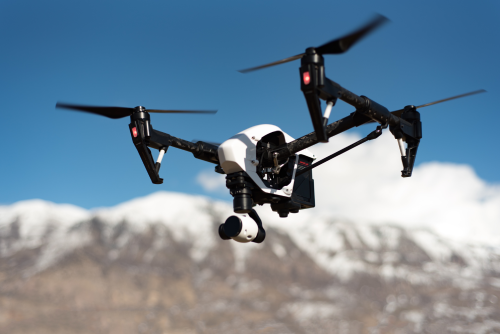
Parrot ANAFI USA is an active multirotor drone from French manufacturer Parrot, aimed at the consumer/professional end of the market with clear enterprise relevance. It matters because Parrot remains one of the best-known European drone brands, and the ANAFI USA is a model name many buyers still encounter when comparing compact professional aerial platforms. Based on the supplied official-source record, this page focuses on what is confirmed, what can be reasonably inferred, and what should be verified before buying.
Quick Summary Box
- Drone Name: Parrot ANAFI USA
- Brand: Parrot
- Model: ANAFI USA
- Category: consumer/professional
- Best For: Professional users, enterprise evaluators, and buyers comparing active Parrot multirotors
- Price Range: Not publicly confirmed in supplied data
- Launch Year: Not publicly confirmed in supplied data
- Availability: Not publicly confirmed in supplied data
- Current Status: active
- Overall Rating: Not rated due to limited confirmed data
- Our Verdict: A relevant Parrot professional platform with official presence, but buyers should verify the exact camera package, pricing, compliance, and support terms before committing.
Introduction
The Parrot ANAFI USA is listed in the supplied record as an active multirotor from Parrot, with France identified as the country of origin and consumer/professional as its market segment. That places it in a part of the market where portability, hover capability, and faster field deployment matter more than the long endurance of fixed-wing systems. Readers should care because Parrot is an established drone manufacturer, and ANAFI USA remains a useful reference point for people comparing professional drone options from a non-entry-level brand.
For many buyers, the importance of this model goes beyond the aircraft alone. Parrot occupies a distinct place in the drone industry as a European manufacturer with both consumer heritage and enterprise relevance. That matters to organizations that are not only comparing cameras and flight times, but also considering procurement policy, regional sourcing preference, software ecosystem, data handling expectations, and long-term vendor confidence. In other words, ANAFI USA is often part of a wider buying conversation about brand trust, operational fit, and ecosystem direction.
This article therefore takes a deliberately careful approach. It does not fill gaps with unverified marketing claims or recycled unofficial specifications. Instead, it separates confirmed facts from likely class-based expectations. Where the official-source record is limited, the page says so clearly. That makes the profile especially useful for serious buyers who would rather start from a reliable baseline than from a polished but uncertain spec sheet.
Overview
What kind of drone is it?
ANAFI USA is a multirotor drone from Parrot. In practical terms, that means vertical takeoff and landing, hover-based operation, and suitability for close-up aerial work where a pilot may need to stop, inspect, or reposition precisely. The supplied note also points to Parrot’s enterprise-facing drone presence, so this is best understood as more than a casual hobby model.
That multirotor classification is important because it shapes the way the drone is used in the field. A multirotor is typically chosen when the operator needs to launch from a small area, maintain a stable visual perspective, and work around structures or terrain with finer positional control. These are the strengths that make compact professional drones valuable for inspections, public-safety overwatch, construction documentation, journalism, and site observation. A buyer considering ANAFI USA is usually not looking for a large agricultural sprayer or a long-range fixed-wing mapping craft. Instead, they are looking at a more deployable aerial tool intended for targeted missions and practical professional use.
Who should buy it?
This model is most relevant to:
- Professional users comparing compact aerial imaging platforms
- Inspection and site-documentation teams
- Enterprise or public-sector buyers evaluating Parrot hardware
- Researchers and journalists tracking active professional drone models
- Advanced users who want a branded, officially listed Parrot multirotor rather than a toy-grade product
It may also appeal to procurement teams that need to compare several branded professional systems before standardizing on one fleet. In those cases, even a shortlisting exercise can justify a closer look at ANAFI USA, especially if the organization wants an option outside the most dominant market brands. Likewise, consultants, trainers, and fleet managers may find the model relevant simply because it is still part of the active product conversation around Parrot.
On the other hand, this is probably not the ideal first drone for a casual beginner whose main goal is low-cost recreational flying. The buyer profile here is more serious: someone who expects structured support, cares about compliance, and may need repeatable mission outcomes rather than just enjoyable flight.
What makes it different?
What stands out here is the combination of:
- Parrot brand recognition
- French origin
- Active status in the supplied record
- Positioning between consumer accessibility and professional intent
That combination gives ANAFI USA a practical identity in the market. It is not presented here as an obscure niche aircraft from an unknown startup, and it is not framed as a generic toy drone either. It sits in a space where brand credibility matters, but where portability and operational simplicity can still be major priorities.
Despite the model name, the supplied data identifies both the brand and manufacturer as Parrot, France. The bigger difference versus many product pages is that the currently supplied dataset does not confirm many hard specs, so this model needs more buyer verification than a fully transparent spec-sheet purchase. In real buying terms, that means ANAFI USA may be a very sensible option for the right workflow, but it should be evaluated as a platform and package, not just as a name.
Key Features
- Active Parrot drone model according to the supplied official-source record
- Multirotor airframe for vertical takeoff, landing, and stationary hover
- Consumer/professional market positioning
- Manufactured by Parrot, a well-established French drone company
- Likely suited to portable professional aerial work rather than heavy-lift operations
- Relevant to enterprise-style workflows where deployment speed and positioning accuracy matter
- Official manufacturer-site presence, which supports its legitimacy as a current reference model
- Important caveat: key figures such as flight time, range, speed, weight, and camera details are not publicly confirmed in the supplied data
Those features tell an experienced buyer a few things immediately. First, ANAFI USA belongs to a class of drones where responsiveness, setup speed, and close-range control are likely to matter more than raw lifting power. Second, its relevance is reinforced by the fact that it is not simply a legacy model without official traceability. Third, the lack of complete public confirmation in the supplied record means due diligence is part of the ownership path. This is not necessarily a negative, but it does change the buying process. Rather than assuming every reseller description matches current reality, buyers should confirm the exact bundle, firmware environment, and support path they will actually receive.
Full Specifications Table
| Specification | Details |
|---|---|
| Brand | Parrot |
| Model | ANAFI USA |
| Drone Type | multirotor |
| Country of Origin | France |
| Manufacturer | Parrot |
| Year Introduced | Not publicly confirmed in supplied data |
| Status | active |
| Use Case | consumer/professional |
| Weight | Not publicly confirmed in supplied data |
| Dimensions (folded/unfolded) | Not publicly confirmed in supplied data |
| Max Takeoff Weight | Not publicly confirmed in supplied data |
| Battery Type | Not publicly confirmed in supplied data |
| Battery Capacity | Not publicly confirmed in supplied data |
| Flight Time | Not publicly confirmed in supplied data |
| Charging Time | Not publicly confirmed in supplied data |
| Max Range | Not publicly confirmed in supplied data |
| Transmission System | Not publicly confirmed in supplied data |
| Top Speed | Not publicly confirmed in supplied data |
| Wind Resistance | Not publicly confirmed in supplied data |
| Navigation System | Not publicly confirmed in supplied data |
| Obstacle Avoidance | Not publicly confirmed in supplied data |
| Camera Resolution | Not publicly confirmed in supplied data |
| Video Resolution | Not publicly confirmed in supplied data |
| Frame Rates | Not publicly confirmed in supplied data |
| Sensor Size | Not publicly confirmed in supplied data |
| Gimbal | Not publicly confirmed in supplied data |
| Zoom | Not publicly confirmed in supplied data |
| Storage | Not publicly confirmed in supplied data |
| Controller Type | Not publicly confirmed in supplied data |
| App Support | Not publicly confirmed in supplied data |
| Autonomous Modes | Not publicly confirmed in supplied data |
| Payload Capacity | Not publicly confirmed in supplied data |
| Operating Temperature | Not publicly confirmed in supplied data |
| Water Resistance | Not publicly confirmed in supplied data |
| Noise Level | Not publicly confirmed in supplied data |
| Remote ID Support | Not publicly confirmed in supplied data |
| Geo-fencing | Not publicly confirmed in supplied data |
| Certifications | Not publicly confirmed in supplied data |
| MSRP / Launch Price | Not publicly confirmed in supplied data |
| Current Price | Not publicly confirmed in supplied data |
This table looks sparse, but that sparsity is itself useful information. It tells prospective buyers that this page is not pretending to know more than the provided source confirms. For a professional purchase, that is better than relying on outdated listings, copied reseller text, or mixed regional specifications that may no longer match current inventory.
If you are building an internal comparison sheet, this is the stage where ANAFI USA should move from “awareness” to “verification.” In other words, once the model enters your shortlist, the next step is to pull current official documentation or obtain a written quote from an authorized dealer that confirms the actual specification set for your region and intended use.
Design and Build Quality
The supplied data confirms the airframe type and market segment, but not the exact dimensions, materials, or folding geometry. So the safest way to assess ANAFI USA is by its class: a professional-leaning multirotor designed around vertical takeoff, stable hover, and easier launch from constrained spaces.
That usually makes this kind of platform more field-friendly than fixed-wing drones, especially for inspection, documentation, and short-deployment tasks. A compact professional multirotor often succeeds not because it is the biggest or the most powerful aircraft in a catalog, but because it reduces friction. It can be unpacked quickly, launched from a smaller footprint, repositioned easily, and recovered without complex landing space requirements. For many professional teams, that matters more than maximum range on paper.
What is not confirmed here are the details buyers often care most about in daily ownership, including:
- Whether the airframe is folding or rigid
- Exact transport size
- Landing gear configuration
- Propeller quick-swap design
- Weather resistance
- Ease of replacing damaged parts in the field
Those details influence real operational value. A drone that folds compactly may fit into a smaller deployment kit and travel more easily between job sites. A drone with straightforward prop replacement and accessible spare parts may reduce downtime after minor incidents. A drone with better weather tolerance may preserve schedules for inspection teams working under tighter deadlines. None of that can be safely assumed here without current product confirmation.
If ruggedness, rain tolerance, or transport-case footprint matter to your operation, those should be verified directly through the current official product materials or an authorized seller. The same goes for practical ownership questions such as battery insertion design, field charging convenience, controller ergonomics, and whether the system feels optimized for one-person deployment. For many enterprise users, these “small” design factors end up affecting efficiency just as much as raw camera quality.
Flight Performance
Hard flight-performance numbers are not included in the supplied record, so endurance, top speed, range, and ceiling should all be treated as unconfirmed until you verify them through current official documentation. That matters because mission planning depends heavily on those figures.
From an airframe-analysis standpoint, multirotors generally deliver:
- Better hover precision than fixed-wing aircraft
- Better close-range positioning for inspections and observation
- Easier takeoff and landing from tight areas
- Shorter endurance than larger-winged platforms, as a rule of class rather than a confirmed ANAFI USA figure
Those class-based characteristics help frame expectations, but they should not be mistaken for aircraft-specific specifications. For example, “compact multirotor” tells you something about operational style, but not enough to estimate a safe mission envelope. A roof inspection, utility survey, police overwatch task, or construction progress capture mission may each place different demands on battery life, wind tolerance, and control-link stability. Without validated figures, the responsible approach is to avoid assuming operational margins.
Signal confidence, wind handling, and overall stability are harder to judge here because the transmission system, weight, and propulsion specifics are not publicly confirmed in the supplied data. Indoor use also cannot be recommended or dismissed with confidence, because obstacle sensing and vision-positioning details are not confirmed on this page.
A practical buyer should therefore ask several questions before approving the platform for operational use:
- What is the realistic flight time in the mission profile you actually run, not just in ideal conditions?
- How many batteries are needed to complete a standard workday?
- Is the drone intended for calm-weather imaging only, or can it handle moderate field conditions with confidence?
- How does link reliability perform in built-up areas, around structures, or in RF-congested environments?
- Are there built-in automated safety behaviors that fit your operating procedures?
These questions matter because a drone can be attractive in theory but inefficient in practice if it needs too many battery swaps, struggles in common wind conditions, or requires more setup than expected. In short, ANAFI USA likely fits the normal strengths of a compact professional multirotor, but serious operators should not assume mission endurance or weather tolerance without checking the live spec sheet.
Camera / Payload Performance
The ANAFI USA name is strongly associated in the broader market with professional imaging, but the supplied dataset does not confirm the current camera resolution, video resolution, zoom capability, thermal capability, sensor size, or gimbal specification. For accuracy, those should all be treated as buyer-verification items.
That leads to a practical conclusion: this is a drone to evaluate by exact bundle and sensor configuration, not by model name alone. Before purchase, image-focused buyers should confirm:
- Actual photo resolution
- Maximum video resolution and frame rates
- Gimbal stabilization details
- Zoom behavior, if any
- Low-light performance
- Whether thermal or specialty sensing is included in the specific package
- File formats and workflow compatibility
This matters because professional buyers rarely purchase a drone in the abstract. They purchase a tool for a defined output. A construction firm may need consistent progress photos. An inspector may need to look closely at elevated surfaces from a safe stand-off distance. A public-safety team may care more about situational awareness than cinematic footage. A media team may need editable video files that fit a fast newsroom workflow. Each of those users should evaluate the aircraft through the lens of the actual deliverables required.
Payload capacity is also not publicly confirmed in the supplied data, so there is no basis here to call it a modular heavy-payload platform. Until verified otherwise, it is safest to view ANAFI USA as an integrated professional aerial imaging drone rather than a general-purpose payload carrier.
That distinction is important. Some enterprise drones are chosen because they can swap sensors, mount accessories, or support broader payload ecosystems. Others are chosen because they are compact, self-contained, and efficient at doing one category of aerial work well. Based on the information provided here, ANAFI USA should be considered in the second category unless the current official package clearly states otherwise.
Buyers should also think beyond headline resolution. Real image usefulness depends on stabilization, lens behavior, color consistency, detail retention, low-light handling, metadata, and export compatibility. If your workflow involves thermal interpretation, photogrammetry, legal evidence capture, insurance reporting, or engineering review, ask for sample files from the exact package being sold. That will usually tell you more than a headline number alone.
Smart Features and Software
Because this is an active professional Parrot multirotor, buyers should expect some form of controller-and-software ecosystem around flight control, firmware updates, media handling, and operational setup. Beyond that, the supplied record does not confirm the specific feature list.
The following items should all be verified directly before purchase:
- Return-to-home behavior
- Waypoint or mission-planning tools
- Follow or tracking modes
- Mapping workflows
- SDK or API availability
- Fleet or cloud management tools
- Controller compatibility
- Mobile app support
- Flight logging and export options
- Geofencing controls
- Remote identification support
For enterprise buyers, software fit can matter as much as the aircraft itself. If your team depends on structured inspections, repeatable routes, secure data handling, or fleet management, do not assume parity with competing platforms without a current software review.
This point is often underestimated during shopping. A drone may look excellent on paper, but if its software workflow does not match how your team plans missions, stores logs, updates firmware, shares data, or integrates with reporting systems, the aircraft can become a poor operational fit. Conversely, a platform with merely adequate headline numbers can be the better choice if it integrates cleanly into an existing workflow.
Questions worth asking include:
- Can operators plan repeatable missions without third-party workarounds?
- Are captured files easy to export into your existing reporting or asset-management systems?
- Does the control app support the level of field simplicity your team needs?
- Is there documentation suitable for training new pilots and maintaining operational consistency?
- Are firmware updates easy to manage across multiple units?
If your use case involves public-sector procurement, corporate security policies, or regulated environments, software transparency may be especially important. In those contexts, data handling, user permissions, account structure, and update practices can influence the purchasing decision just as much as flight performance.
Use Cases
Based on the confirmed segment and airframe type, the most realistic use cases for ANAFI USA are:
- Professional aerial observation and documentation
- Site and infrastructure inspection
- Construction progress capture
- Roof, facade, and asset checks from stand-off distances
- Public-safety or emergency-scene awareness where legally permitted
- Journalism and research capture in professional environments
- Training and evaluation within a professional multirotor workflow
- Comparison shopping for organizations assessing active Parrot platforms
These are realistic use cases because they align with what a compact professional multirotor generally does best: get airborne quickly, hold position reliably, and capture useful visual information from angles that are difficult or unsafe to reach from the ground.
For inspections, the value is obvious. Instead of scaffolding, ladders, or lift equipment for every first-look assessment, a drone can provide fast visual access to roofs, exterior walls, towers, or other elevated surfaces. For construction teams, the benefit is often repeatability: the ability to document progress from similar vantage points over time. For journalists and researchers, the appeal may be controlled aerial perspective with a manageable field kit. For public-safety teams, when lawful and properly authorized, a compact drone can extend situational awareness without requiring a larger aviation response.
If you need thermal work, advanced mapping, or specialized payload missions, verify the exact package first rather than assuming those capabilities are included. This is especially important for agencies and businesses writing requirements into tenders or procurement documents. A model name alone is not enough. The exact kit, software version, included accessories, and support terms all matter.
Pros and Cons
Pros
- Active status in the supplied record suggests ongoing relevance
- Built by Parrot, an established French drone manufacturer
- Multirotor format is naturally well-suited to hover, close observation, and quick deployment
- Consumer/professional positioning makes it relevant to both advanced users and enterprise buyers
- Useful shortlist option for teams evaluating Parrot-based drone ecosystems
These advantages make ANAFI USA worth attention even before a full spec confirmation. Brand credibility reduces some of the uncertainty that comes with unknown or lightly supported hardware. The active status also matters because buyers generally prefer a platform that still appears in the current manufacturer ecosystem rather than a purely legacy option. Finally, the compact professional multirotor format is inherently practical for many common field tasks.
Cons
- Major numeric specs are not publicly confirmed in the supplied data
- Camera and payload details are not fully confirmed here
- Price, launch year, and availability are not publicly confirmed in the supplied data
- Compliance details such as Remote ID support and certifications need separate verification
- Hard to compare fairly against rivals without confirming the exact current bundle and software set
These drawbacks do not automatically make ANAFI USA a weak choice, but they do mean the burden of verification is higher than average. If your procurement process needs immediate, fully published transparency on every metric, this page alone will not provide enough certainty. That pushes the decision toward direct manufacturer consultation, dealer quoting, or live-document review.
Comparison With Other Models
Because the supplied ANAFI USA record is sparse, the comparison below is strategic rather than a full spec-for-spec shootout.
| Model | Market Position | Price Guidance | What You Need to Verify First | Best For | Winner |
|---|---|---|---|---|---|
| Parrot ANAFI USA | Active Parrot consumer/professional multirotor | Not publicly confirmed in supplied data | Camera package, endurance, compliance, dealer support | Buyers already considering Parrot professional hardware | Best if Parrot ecosystem fit matters most |
| DJI Mavic 3 Enterprise | Compact enterprise multirotor reference | Verify current dealer pricing | Compliance, software fit, local support | Buyers wanting a mainstream compact enterprise option | Often stronger on market visibility |
| Parrot ANAFI Ai | Parrot professional alternative | Verify current official pricing | Connectivity, software workflow, sensor differences | Buyers comparing within the Parrot range | Better if its current workflow tools better match your needs |
| Older Parrot ANAFI family models | Legacy compact alternatives | Used and legacy pricing varies | Spare parts, battery health, firmware support | Budget-focused buyers comfortable with legacy risk | Only if low cost matters more than support confidence |
ANAFI USA vs a close competitor
Against a close market reference like DJI Mavic 3 Enterprise, the ANAFI USA decision is likely to come down to ecosystem preference, procurement route, support confidence, and the exact sensor package offered in your region. Since the supplied ANAFI USA record does not confirm hard specs, this is not the kind of model to choose from a headline number alone.
In practical terms, buyers comparing these two categories of compact professional drones usually care about five things:
- Workflow fit – Which platform better supports the way your team actually plans, flies, logs, and exports missions?
- Support availability – Which brand or dealer can provide quicker help, repairs, accessories, and replacement units in your area?
- Procurement compatibility – Which option aligns better with your organization’s vendor rules, sourcing preferences, or public-sector requirements?
- Sensor confidence – Which package clearly delivers the imaging capabilities you need without ambiguity?
- Training burden – Which system is easier to standardize across pilots with different levels of experience?
A widely visible competitor may have the advantage of a larger installed base, more third-party discussion, and broader dealer familiarity. ANAFI USA, however, may remain attractive if Parrot-specific ecosystem fit, procurement considerations, or organizational preference are major factors.
ANAFI USA vs an alternative in the same segment
Within Parrot’s own ecosystem, ANAFI Ai is a relevant alternative to consider. Buyers comparing the two should focus on current workflow alignment, connectivity requirements, software stack, controller setup, and whether the current Parrot offering better matches inspection or documentation needs.
Internal brand comparisons can actually be more revealing than cross-brand ones. That is because the same manufacturer may offer two products that look similar at a glance but differ meaningfully in deployment style, communications approach, integration depth, or software roadmap. If you are already comfortable with Parrot as a supplier, the right question is not simply “Which one is newer?” but “Which one best fits our mission profile and support expectations right now?”
ANAFI USA vs an older or previous-generation option
Compared with older ANAFI-family models, ANAFI USA should generally be the safer choice when active-status confidence and current support matter. Older Parrot drones may still be attractive on price, but they usually bring higher risk around battery condition, firmware longevity, and spare-part availability.
This matters especially for professional users. Saving money on a legacy airframe can make sense for casual experimentation, training, or non-critical use. But once the drone becomes part of revenue-generating work, compliance reporting, or operational readiness, support risk becomes more expensive than the upfront savings. Aging batteries, uncertain repair options, and unsupported apps can quickly erase any purchase discount.
Manufacturer Details
Parrot is both the brand and the manufacturer in this case. The company is based in France and is widely known as a long-standing European technology and drone maker. Parrot was founded in 1994 and has developed a reputation through consumer, prosumer, and professional UAV products, along with related software and accessories.
In the drone market, Parrot is especially notable for compact aerial platforms and for maintaining relevance outside the entry-level toy space. For buyers who pay attention to supply chain, regional manufacturing identity, or ecosystem diversity, Parrot’s French origin is a meaningful part of the brand story.
That origin can matter for more than branding. Some organizations want supplier diversity rather than dependence on a single dominant market source. Others may care about regional business relationships, procurement frameworks, or a preference for European technology providers. Still others simply value buying from a company with a long industry presence rather than a newer brand with uncertain longevity.
None of this guarantees that ANAFI USA is the right drone for every buyer. But it does explain why the model stays relevant in professional discussions even when shoppers are also considering better-known enterprise references from elsewhere. The manufacturer’s identity is part of the evaluation, not just a label on the airframe.
Support and Service Providers
Support quality can be just as important as airframe quality for a professional drone. For ANAFI USA, buyers should expect to rely first on Parrot’s official support resources for manuals, firmware, setup guidance, and product documentation.
What you should verify before purchase:
- Regional warranty terms
- Authorized repair availability
- Spare battery and propeller availability
- Turnaround time for service
- Whether enterprise onboarding or training is offered
- Local distributor support coverage
- Long-term parts availability
These checks are especially important for business buyers. A drone used commercially is not just an equipment purchase; it is an operational dependency. If a unit goes down during a project, the real cost may include missed deadlines, delayed inspections, interrupted reporting, or staff downtime. That is why support quality deserves the same attention as camera capability.
Community forums and user groups may also help with practical ownership questions, but professional users should prioritize official support channels and authorized service coverage. Informal advice can be useful for field tips and workflow ideas, yet it should not replace warranty-backed guidance, especially where compliance, repair eligibility, or firmware behavior is involved.
If possible, ask prospective sellers direct service questions before buying:
- Who handles warranty claims in your region?
- Are replacement units available during repair?
- How quickly can batteries and consumables be sourced?
- Are there certified partners for inspection, maintenance, or calibration if needed?
- What documentation is included for onboarding new operators?
Good answers to those questions can dramatically reduce ownership risk.
Where to Buy
ANAFI USA is best purchased through trusted channels, especially if you need support after the sale. The safest options are typically:
- Official brand store or official sales channel
- Authorized Parrot dealers
- Regional professional drone distributors
- Enterprise procurement partners or integrators
Some markets may also show third-party marketplace listings, but professional buyers should be cautious there. For a model in this segment, authenticity, battery condition, firmware eligibility, and after-sales support matter more than a small upfront discount.
Regional availability is not publicly confirmed in the supplied data, so confirm whether the exact ANAFI USA package is still offered in your country before budgeting around it. This is particularly important if your organization has strict procurement cycles. You do not want to build a project plan around a model that turns out to be unavailable locally, available only through gray-market stock, or sold in a package that differs from your expectations.
For serious buyers, an authorized dealer can add value beyond the transaction itself. A good dealer may help clarify package contents, support lead times, software questions, compliance requirements, and accessory planning. That kind of pre-sale guidance is often more useful than saving a small amount through an unknown marketplace seller.
Price and Cost Breakdown
No launch MSRP or current selling price is publicly confirmed in the supplied data for this page. That means cost planning should be based on a full quote rather than assumptions.
Before buying, verify the total ownership cost of:
- Drone and controller package
- Included camera or sensor configuration
- Extra batteries
- Charger or multi-battery charging hub
- Spare propellers and maintenance parts
- Carry case or transport solution
- Software or service subscriptions, if any
- Insurance or commercial coverage
- Training and operator onboarding
- Repair turnaround and replacement policy
For professional users, the cheapest quote is not always the lowest real cost. Support quality, parts access, and workflow compatibility can easily matter more than sticker price.
A practical cost review should look at three layers:
- Purchase cost – the aircraft, controller, accessories, and any included service.
- Operating cost – batteries, spares, charging logistics, software, insurance, and training.
- Downtime cost – what happens financially if the drone is unavailable during active projects.
This third layer is often overlooked. A lower-priced platform with poor parts availability or slow service can become more expensive than a higher-priced platform with strong dealer backing and predictable repairs. That is especially true for companies using the drone weekly or daily.
It is also wise to confirm what is actually included. A professional package may or may not include the accessories needed for practical field deployment. If extra batteries, a rugged case, or specialized software are sold separately, the real first-year cost may be significantly higher than the headline purchase figure.
Regulations and Compliance
Drone regulations vary by country, region, and mission type, so ANAFI USA buyers should verify legal requirements before operating. Since weight is not publicly confirmed in the supplied data, you should not assume which registration class applies.
Key points to check:
- Whether the drone must be registered in your jurisdiction
- Whether commercial or professional pilots need certification
- Whether your mission requires operational authorization
- Whether Remote ID support is required and supported
- Whether geofencing behavior aligns with local operating needs
- Privacy and data-protection rules for camera use
- Site-specific restrictions near airports, public events, or sensitive facilities
Public-sector, enterprise, and infrastructure operators may also face internal policy requirements beyond standard aviation law. Always verify the current legal status locally rather than assuming universal compliance.
This section deserves special emphasis because professional buyers often operate under multiple layers of obligation. The first layer is national or regional aviation law. The second may be client requirements, insurance conditions, or employer policy. The third may involve data governance, privacy handling, or evidence-management procedures depending on the mission. A drone can be technically capable and still be unsuitable if it does not fit those compliance layers.
For example, a public agency may need explicit clarity on identification features, auditability, and procurement-approved supply routes. A contractor working on critical infrastructure may face security rules that go beyond ordinary consumer use. A media team may need to comply not only with flight rules but also with editorial policies and site permissions. All of those considerations should be checked before the drone is deployed operationally.
Who Should Buy This Drone?
Best for
- Buyers already evaluating Parrot professional drone options
- Professional operators who need a compact multirotor with hover-based utility
- Inspection and documentation teams comparing established brands
- Organizations that value a French-manufactured drone brand
- Researchers and journalists tracking active professional UAV platforms
These are the buyers most likely to benefit from what ANAFI USA clearly offers: a credible Parrot-branded professional multirotor that remains relevant enough to warrant active comparison. It is particularly sensible for those who are comfortable doing a verification step before purchase and who care about brand ecosystem as well as airframe type.
Not ideal for
- Buyers who need fully transparent published specs before shortlisting
- Heavy-lift users needing clearly defined payload capacity
- Casual hobby buyers shopping mainly on price
- Operators who specifically require confirmed thermal, zoom, or mapping features without further verification
- Anyone in a region where authorized support or official sales coverage is unclear
In other words, ANAFI USA suits informed buyers better than impulse buyers. If your process depends on complete certainty from the first product-page visit, you may prefer models with a more fully published live specification set. If, however, you are already in the habit of validating package details through official channels, this model can still be a strong candidate.
Final Verdict
Parrot ANAFI USA remains a relevant name in the professional drone conversation, but this profile is necessarily conservative because the supplied official-source data confirms less than many buyers will want. What is clear is that it is an active French-built multirotor from an established manufacturer, aimed at consumer/professional use with obvious enterprise appeal.
Its biggest strengths are brand credibility, active status, and the practical advantages of a multirotor platform for close aerial work. Those qualities alone make it worth attention for inspections, documentation, evaluation, and professional field use where portability and controlled positioning matter. The Parrot name also gives it broader significance for buyers looking at ecosystem diversity, European manufacturing identity, or alternatives to the most commonly cited enterprise platforms.
Its biggest drawbacks are the lack of confirmed public data here on endurance, camera configuration, compliance features, and pricing. That means ANAFI USA is not the kind of drone to buy casually based on a model name you recognize. It is a platform that deserves a proper verification step: confirm the exact package, support route, software environment, regulatory fit, and total cost before committing.
If you are seriously considering a Parrot-based professional drone, ANAFI USA deserves a place on the shortlist. If you need easy apples-to-apples comparison with fully transparent numbers, verify the exact current package through official or authorized channels before making any buying decision. For the right buyer, that extra diligence may be entirely worthwhile.
