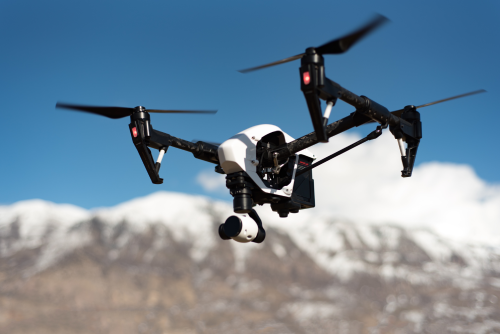
Parrot Bluegrass is a legacy multirotor drone built around agriculture and inspection work rather than casual flying or pure content creation. It is most relevant to professional users, researchers, and existing Parrot ecosystem owners who need a field-focused platform and understand the risks of buying discontinued hardware. Even with limited publicly confirmed specifications in the supplied data, Bluegrass still matters as part of Parrot’s push into practical drone workflows beyond hobby use.
Quick Summary Box
- Drone Name: Parrot Bluegrass
- Brand: Parrot
- Model: Bluegrass
- Category: consumer/professional
- Best For: Legacy agriculture and inspection users who can verify the exact payload and support situation before purchase
- Price Range: Not publicly confirmed in supplied data
- Launch Year: Not publicly confirmed in supplied data
- Availability: Limited due to legacy/discontinued status; likely secondary-market or leftover enterprise stock only
- Current Status: legacy/discontinued
- Overall Rating: Not rated due to limited confirmed data
- Our Verdict: A niche legacy Parrot platform that makes the most sense for existing workflows, not for most first-time buyers
Introduction
The Parrot Bluegrass sits in an interesting part of the drone market. It is a France-origin Parrot multirotor aimed at consumer/professional users, but its real identity is closer to a task-oriented platform for agriculture and inspection than a general-purpose camera drone.
Readers should care about Bluegrass for two reasons. First, Parrot remains one of the better-known European drone makers, so legacy models still come up in fleet refresh decisions, research projects, and used-market searches. Second, Bluegrass represents a practical type of drone platform: one designed around mission value and data collection rather than entertainment.
That distinction matters more than it may seem at first glance. A lot of drone buying advice is written for people comparing photo quality, portability, and ease of social-media use. Bluegrass belongs to a different conversation. Here, the more important questions are things like whether the aircraft still fits an existing field workflow, whether the payload is complete, whether the required software still runs, and whether replacing batteries or repair parts is realistic.
In other words, Bluegrass is worth discussing not because it is the newest or easiest drone to buy, but because it reflects a stage of the drone industry where manufacturers were trying to turn compact aircraft into practical data tools. That makes it historically relevant and still potentially useful in a narrow set of situations today.
Overview
What kind of drone is it?
Bluegrass is a multirotor drone from Parrot, a French manufacturer with a long history in civilian drones. Based on the supplied record, it was positioned for agriculture and inspection work and is now classified as legacy/discontinued.
That means it should be thought of as a specialist work drone rather than a current mainstream retail product. Its segment suggests a platform intended for controlled, low-altitude flights where hovering, repeatability, and targeted area capture matter more than long-distance cruising.
It also means Bluegrass should not be judged by the same standards as a travel drone or a modern creator-focused folding quadcopter. Its reason for existing was not primarily to make flying fun or to capture cinematic holiday footage. It was built around practical field outcomes. For agriculture, that may mean crop observation, condition monitoring, or repeat visits to specific plots. For inspection, it may mean hovering near assets, revisiting a point of interest, or collecting consistent imagery under controlled flight paths.
Because it is now a legacy platform, the aircraft’s identity has shifted slightly. When it was current, it would have been considered a working tool. Today, it is both a working tool and a continuity product. That continuity angle is important. Some buyers are not looking for the best drone in the abstract; they are looking for the drone that keeps an old workflow alive for another season, another research cycle, or another limited deployment.
Who should buy it?
The best fit is a user who already understands what Bluegrass is meant to do and can verify the exact package being purchased. That could include:
- Farm operators or agronomy teams maintaining older workflows
- Research institutions studying crop-monitoring or inspection methods
- Inspectors who need a legacy Parrot platform for continuity
- Buyers sourcing a complete used system with batteries, controller, and payload included
It is much less attractive for buyers who want a current, fully supported, easy-to-spec drone with clearly published performance figures.
A good Bluegrass buyer is usually someone comfortable asking detailed pre-purchase questions. They know to ask about firmware version, battery cycles, app compatibility, calibration accessories, controller condition, and whether the payload is actually the one they need. They are also more likely to understand that the value of a professional drone is rarely in the airframe alone. A used enterprise-style drone without its working software and sensors can be much less useful than it looks in the listing photos.
By contrast, a first-time drone buyer or a small business wanting the least-friction way into aerial imaging will usually be better served by a current-production aircraft. Bluegrass simply asks too much from the owner in terms of verification, support planning, and risk tolerance to be an easy recommendation outside its niche.
What makes it different?
What makes Bluegrass different is its mission focus. Rather than being framed mainly as a photography drone, it was associated with agriculture and inspection tasks. That changes how it should be evaluated.
For this kind of platform, the real value usually comes from workflow fit:
- the sensor package included
- the planning software still available
- the state of batteries and spare parts
- the ability to repeat useful field missions reliably
Its discontinued status is also a defining difference. Bluegrass may still be useful, but it needs more due diligence than a current-production model.
Another difference is how buyers should interpret specifications. With a consumer drone, a buyer may focus on maximum video resolution, top speed, or whether the drone folds into a backpack. With Bluegrass, those points are secondary unless they directly affect the job. The more relevant questions are whether the imagery can support decisions, whether the aircraft can still perform repeatable field work, and whether ownership will remain practical after the initial purchase.
That makes Bluegrass less of a gadget and more of an operational component. For the right user, that is not a disadvantage. It is simply a different standard of value.
Key Features
- Multirotor airframe suited to vertical takeoff, landing, and controlled hovering
- Positioned for agriculture and inspection rather than purely recreational flying
- Built by Parrot, a well-known French drone manufacturer
- Professional-leaning use case despite being placed in a consumer/professional segment
- Likely stronger at targeted close-range work than wide-area fixed-wing coverage, based on its multirotor layout
- Legacy/discontinued status, which makes parts, batteries, and software compatibility a key buying consideration
- Payload and imaging value depend heavily on the exact sensor package included with the aircraft
- Better treated as a workflow tool than a spec-sheet-driven consumer gadget
These features tell a fairly clear story even without a full set of confirmed numbers. Bluegrass belongs to the category of drones where mission suitability matters more than headline specs. If you need vertical takeoff from rough ground, stable hover, and short targeted flights over plots, structures, or points of interest, a multirotor work platform is naturally appealing. If you need a fully documented, easy-to-buy, modern enterprise solution with broad accessory support, the Bluegrass value proposition becomes much weaker.
Full Specifications Table
| Field | Value |
|---|---|
| Brand | Parrot |
| Model | Bluegrass |
| Drone Type | multirotor |
| Country of Origin | France |
| Manufacturer | Parrot |
| Year Introduced | Not publicly confirmed in supplied data |
| Status | legacy/discontinued |
| Use Case | Agriculture / inspection |
| Weight | Not publicly confirmed in supplied data |
| Dimensions (folded/unfolded) | Not publicly confirmed in supplied data |
| Max Takeoff Weight | Not publicly confirmed in supplied data |
| Battery Type | Not publicly confirmed in supplied data |
| Battery Capacity | Not publicly confirmed in supplied data |
| Flight Time | Not publicly confirmed in supplied data |
| Charging Time | Not publicly confirmed in supplied data |
| Max Range | Not publicly confirmed in supplied data |
| Transmission System | Not publicly confirmed in supplied data |
| Top Speed | Not publicly confirmed in supplied data |
| Wind Resistance | Not publicly confirmed in supplied data |
| Navigation System | Not publicly confirmed in supplied data |
| Obstacle Avoidance | Not publicly confirmed in supplied data |
| Camera Resolution | Not publicly confirmed in supplied data |
| Video Resolution | Not publicly confirmed in supplied data |
| Frame Rates | Not publicly confirmed in supplied data |
| Sensor Size | Not publicly confirmed in supplied data |
| Gimbal | Not publicly confirmed in supplied data |
| Zoom | Not publicly confirmed in supplied data |
| Storage | Not publicly confirmed in supplied data |
| Controller Type | Not publicly confirmed in supplied data |
| App Support | Not publicly confirmed in supplied data |
| Autonomous Modes | Not publicly confirmed in supplied data |
| Payload Capacity | Not publicly confirmed in supplied data |
| Operating Temperature | Not publicly confirmed in supplied data |
| Water Resistance | Not publicly confirmed in supplied data |
| Noise Level | Not publicly confirmed in supplied data |
| Remote ID Support | Not publicly confirmed in supplied data |
| Geo-fencing | Not publicly confirmed in supplied data |
| Certifications | Not publicly confirmed in supplied data |
| MSRP / Launch Price | Not publicly confirmed in supplied data |
| Current Price | Not publicly confirmed in supplied data |
The table above reflects the limits of the supplied data rather than an absence of real-world product detail in all historical sources. For buyers, though, the practical takeaway is the same: do not assume a listing is complete or accurately described. If you are evaluating Bluegrass in 2026, you should request exact details directly from the seller and verify them with manuals, labels, screenshots, and physical photos whenever possible.
Design and Build Quality
Because Bluegrass is a multirotor aimed at agriculture and inspection, its design priorities were likely practical rather than lifestyle-oriented. In this class, buyers usually care more about stable hovering, payload integration, and field deployment than compact travel friendliness.
A multirotor layout generally brings a few clear operational advantages:
- vertical takeoff and landing from tighter spaces
- easier use over uneven terrain than many fixed-wing aircraft
- the ability to stop, hover, and revisit the same point
- better suitability for localized inspection work
That said, the supplied data does not publicly confirm Bluegrass dimensions, folded size, materials, landing gear design, or ruggedization. So while it is fair to say it was built as a work-focused drone, buyers should not assume folding portability, weather sealing, or modern enterprise hardening without checking the exact hardware package.
For a legacy drone, build quality also includes serviceability. On a used Bluegrass system, practical condition matters more than brochure styling. Battery health, motor wear, arm integrity, payload mounting condition, and controller state are all more important than cosmetic appearance.
This is one of the easiest places to make a buying mistake. A drone can look clean in product photos and still be a poor operational purchase. Plastic may be aged, connectors may be loose, battery contacts may show wear, props may have been replaced with uncertain parts, and the payload mount may have been stressed during transport or rough landings. In a professional tool, those details matter more than light scuffs or cosmetic discoloration.
It is also worth thinking about field ergonomics. Even without exact confirmed dimensions, agriculture and inspection drones are generally expected to be unpacked, prepared, flown, landed, and packed again in variable outdoor conditions. A useful work drone needs to be manageable in those circumstances. For Bluegrass, buyers should inspect whether the full kit still supports that kind of deployment. A missing case, unreliable charger, worn controller, or fragile payload connection can turn a theoretically useful drone into a frustrating field system.
If possible, evaluate a used unit with these questions in mind:
- Are the arms, body, and landing components straight and free from repair signs?
- Do the motors spin smoothly and consistently?
- Is the payload mount secure and free of damage?
- Are the controller sticks, buttons, and charging ports functioning correctly?
- Are the batteries from the original system, and do they still hold charge safely?
- Does the included kit feel like a maintained tool or a parts collection?
For legacy aircraft, build quality is not just what the manufacturer intended. It is also what time has left behind.
Flight Performance
With no confirmed endurance, range, speed, or ceiling figures in the supplied data, Bluegrass cannot be scored as a raw performance machine. But its multirotor architecture still tells us something about likely flight character.
As analysis rather than newly claimed fact, a multirotor agriculture/inspection drone like Bluegrass would typically be expected to prioritize:
- stable low-altitude flight
- precise hover behavior
- repeatable short-to-medium area missions
- easier close-structure work than fixed-wing alternatives
This usually makes sense for field scouting, targeted crop review, and closer inspection passes. It is less ideal when the main goal is covering very large acreage in a single long-endurance sortie.
Takeoff and landing behavior is one of the stronger inherent advantages of this form factor. Vertical takeoff is especially useful in farm environments, small launch sites, and inspection areas where runway-style recovery is not practical.
Indoor use is unlikely to be the natural fit. Even if a multirotor can physically fly indoors, agriculture and inspection workflows typically depend on open-sky positioning, clear operating space, and a more outdoor-oriented mission profile.
Another important point for 2026 buyers is that performance on paper and performance in practice can be very different with older hardware. Even if a seller can quote historical specifications, actual endurance may now depend heavily on battery condition, firmware state, payload weight, temperature, and general wear. A used professional drone should be judged by demonstrated field readiness, not just archived marketing numbers.
For example, in agriculture work, repeatability often matters more than absolute speed. A drone that can consistently complete the same short mission pattern with dependable control may be more useful than one with better theoretical range but unreliable app support or degraded batteries. Similarly, for inspection, the ability to hold position predictably and approach a subject with confidence often matters more than whether the aircraft was once fast in sport-style flight.
Wind handling is another area where real-world testing matters. Since no confirmed wind-resistance figure is provided in the supplied data, buyers should avoid assuming strong weather capability. Agricultural and inspection flights often happen in exposed outdoor environments, so stability in gusts, recovery behavior, and the effect of payload weight all matter. On a legacy system, even a well-designed airframe can be limited by old batteries or uneven motor condition.
If buying Bluegrass for actual work, ask the seller for more than a claim that it “flies fine.” Better evidence would include:
- recent flight footage
- screenshots of flight logs if available
- a hover test video
- proof of stable GPS acquisition outdoors
- confirmation that return-to-home and basic safety functions operate normally
The bottom line is simple: Bluegrass appears better suited to controlled, practical, localized flying than to long-range modern enterprise performance comparisons.
Camera / Payload Performance
For Bluegrass, payload performance matters more than cinematic appeal. This is not best understood as a creator-first drone. Its value is more likely tied to whichever sensor package is installed and whether that package still fits the buyer’s workflow.
The supplied data confirms agriculture and inspection positioning, but it does not publicly confirm:
- the exact camera or sensor model
- visible-light photo specifications
- video resolution
- gimbal details
- zoom capability
- payload capacity
That means buyers should be careful not to assume that every Bluegrass unit on the used market has the same payload. One unit may be much more valuable than another depending on what is included.
For agriculture, the ideal question is not “How cinematic is the footage?” but rather:
- Can it produce useful crop or vegetation data?
- Is the sensor package complete?
- Are calibration accessories included if required?
- Does the output still fit current mapping or analysis software?
For inspection, the same principle applies. The aircraft may still be useful if it comes with the right payload and supporting tools, but the mission value depends on the full kit, not just the airframe.
This is where many used listings become misleading. Sellers may advertise the aircraft by model name alone, but the real operational value may depend on a specific sensor, mount, or camera workflow. A bare airframe might be inexpensive and still not be useful to you. A complete kit with the correct sensor, charger, calibration tools, and working software access may be worth significantly more because it preserves the actual job capability.
In agriculture workflows, payload quality is usually judged by consistency and utility rather than aesthetics. The useful outputs may include geotagged images, repeatable passes over a field, or data that can be processed into maps or condition assessments. That places importance on factors such as sensor health, lens condition, calibration readiness, and software compatibility. Even a minor missing component can disrupt the workflow if the original process depended on it.
In inspection workflows, the priorities shift slightly. A user may care more about stability near structures, the ability to capture clear close-range imagery, and whether the payload arrangement supports the type of asset being inspected. Again, the question is not whether Bluegrass competes with modern cinematic drones. The question is whether it still captures the right information in a usable format.
If you are buying one today, ask for:
- exact payload model details
- photos of the installed sensor
- sample original image files
- proof that the data can still be exported
- confirmation of any calibration accessories
- notes on whether the payload has been repaired or replaced
For Bluegrass, payload uncertainty is probably the single biggest reason to avoid impulse purchases.
Smart Features and Software
This is one of the most important areas to verify before buying a Bluegrass today. On a legacy professional drone, software support can matter as much as flight hardware.
In general, an agriculture or inspection platform may be expected to rely on features such as:
- mission planning
- repeatable flight paths
- geotagged image capture
- return-to-home style safety logic
- data export into mapping or analysis tools
However, the supplied data does not publicly confirm the exact Bluegrass app ecosystem, autonomous modes, SDK support, or current compatibility with modern mobile devices.
That creates a real ownership risk. Even if the drone itself still flies, the workflow may be harder to maintain if:
- the required app is no longer updated
- tablet or phone support is outdated
- login or activation systems have changed
- older firmware is needed for payload compatibility
Parrot has historically had stronger software credibility than many small drone brands, but buyers should still verify exact app, firmware, and mission-planning support for the specific Bluegrass package they are considering.
Software risk deserves more attention than many buyers give it. With older drones, the aircraft may power on and pass a basic flight test, but the real bottleneck can appear later when you try to run a mission-planning app on a current tablet, transfer data to modern analysis software, or update firmware without breaking payload compatibility. A legacy drone with unstable software support can become an operational headache even if the motors and batteries are still acceptable.
For professional use, these are some of the most important software checks:
- Does the required mobile app still install on a supported device?
- Does the app require online account verification?
- Can mission plans still be created and saved?
- Are firmware files still available if recovery is needed?
- Can images or logs be exported in a format your current tools accept?
- Does the seller provide version numbers or screenshots proving the system works?
A smart buyer should also think about long-term survivability. If the drone only works with one outdated mobile OS version or one aging tablet model, that adds hidden cost and fragility to ownership. In some cases, buyers of legacy systems deliberately keep a dedicated older tablet just for that drone. That can be a workable solution, but it should be planned for in advance, not discovered after purchase.
In a modern drone, “smart features” often mean convenience extras. In Bluegrass, they may determine whether the aircraft is useful at all.
Use Cases
The most realistic Bluegrass roles depend on the sensor package fitted to the aircraft, but these are the clearest matches.
- Crop scouting over smaller or targeted areas
- Agriculture research and vegetation monitoring
- Field checks after irrigation issues, weather events, or treatment changes
- Localized asset inspection where hovering matters
- Educational or institutional research into legacy drone data workflows
- Replacement or continuity aircraft for an existing Bluegrass-based operation
- Training on legacy Parrot enterprise-style systems
These use cases share one common trait: they reward control and repeatability more than broad-area endurance. For example, a farm operator might use Bluegrass not to map an entire large property in one mission, but to revisit problem sections, compare conditions across time, or inspect specific trouble spots after a storm or irrigation event. In that context, hover capability and quick deployment matter more than fixed-wing efficiency.
Research institutions may also find value in Bluegrass because legacy systems are often still relevant in longitudinal studies. If earlier field seasons used a particular aircraft or sensor workflow, continuing with the same platform can sometimes help maintain consistency across data collection periods. That does not automatically make Bluegrass the best choice, but it does make it a plausible one.
For inspection work, the drone’s multirotor nature is an advantage. Localized asset reviews often benefit from vertical takeoff, precise position hold, and the ability to stop at a point of interest. Whether that is enough to justify using a legacy drone depends on support, payload suitability, and regulatory compliance, but the use case itself is sensible.
Bluegrass can also make sense as a continuity or backup purchase. Some operators do not need to modernize immediately; they need one more compatible aircraft, one more source of spare parts, or one more season from an established workflow. In those cases, buying Bluegrass is less about innovation and more about operational stability.
Pros and Cons
Pros
- Built by Parrot, an established French drone manufacturer with a recognized civilian drone history
- Multirotor design is naturally good for hover-based work and targeted inspection
- Agriculture/inspection focus makes it more purpose-driven than a generic hobby drone
- Vertical takeoff and landing are practical for farm and site operations
- May still hold value for users already invested in a Bluegrass-compatible workflow or payload set
Cons
- Many core specifications are not publicly confirmed in the supplied data
- Legacy/discontinued status increases risk around support, spare parts, and batteries
- Hard to recommend broadly against newer, better-documented alternatives
- The exact payload package may vary significantly from one used unit to another
- App and firmware compatibility may be a bigger issue than basic flight capability
- Likely less efficient than fixed-wing agricultural drones for very large-area coverage, as analysis based on airframe type
The main advantage of Bluegrass is not that it beats modern drones on features. It is that it can still solve specific problems for buyers who already understand its ecosystem. The main drawback is that almost every benefit depends on verification. That makes it a poor fit for casual buying and a potentially decent fit for careful, workflow-aware ownership.
Comparison With Other Models
Because confirmed Bluegrass specifications are limited in the supplied data, comparison is more about market positioning than perfect one-to-one benchmarking.
| Model | Price | Flight Time | Camera or Payload | Range | Weight | Best For | Winner |
|---|---|---|---|---|---|---|---|
| Parrot Bluegrass | Not publicly confirmed in supplied data | Not publicly confirmed in supplied data | Agriculture / inspection payload depends on exact package | Not publicly confirmed in supplied data | Not publicly confirmed in supplied data | Existing legacy Parrot-based field workflows | Best if you already need Bluegrass specifically |
| DJI Phantom 4 Multispectral | Enterprise pricing / varies by market | Approx. 27 min | RGB plus multispectral imaging package | Approx. 7 km | Approx. 1,487 g | Documented crop mapping workflows | Better for buyers who want a clearly documented multispectral platform |
| DJI Mavic 3 Multispectral | Enterprise pricing / varies by market | Approx. 43 min | RGB plus multispectral imaging package | Approx. 15 km | Approx. 951 g | Modern portable agriculture survey work | Best modern compact alternative |
| Parrot Disco-Pro AG | Discontinued / used-market pricing | Approx. 45 min | Agriculture mapping-oriented payload package | Not the main reason to choose it today | Not publicly confirmed here | Larger-area farm coverage with fixed-wing efficiency | Better if acreage coverage matters more than hover |
The table highlights a broader reality of the market. Bluegrass is now mostly evaluated through the lens of continuity, legacy compatibility, and used-market practicality. The other models are easier to compare by mission profile and documented specs.
Bluegrass vs a close competitor
Against DJI Phantom 4 Multispectral, Bluegrass looks more like a legacy ecosystem choice than a straightforward current recommendation. The Phantom 4 Multispectral is easier to evaluate because its agriculture mission profile and published capabilities are better documented. Bluegrass mainly makes sense if you specifically want a Parrot-based legacy platform or already have the surrounding workflow.
The Phantom 4 Multispectral also benefits from being a model that many buyers and service providers understand well. That matters because it reduces uncertainty. With Bluegrass, uncertainty is part of the purchase. You need to confirm more, assume less, and prepare for a narrower support path.
Bluegrass vs an alternative in the same segment
Compared with DJI Mavic 3 Multispectral, Bluegrass is at a disadvantage for most new buyers. The Mavic 3 Multispectral is a more modern, lighter, and better-documented aircraft with stronger portability and a more current support story. Bluegrass only wins if the buyer has a special reason to remain with legacy Parrot hardware.
That special reason could be existing software familiarity, existing accessories, a validated research process, or the need to match historical datasets or operational procedures. Without that reason, a modern platform is usually the lower-risk purchase.
Bluegrass vs an older or previous-generation option
Compared with Parrot Disco-Pro AG, Bluegrass benefits from multirotor behavior: vertical takeoff, landing, and hover. Disco-Pro AG’s fixed-wing approach is more appealing when efficient wide-area field coverage matters most. In simple terms, Bluegrass is the better fit for stopping and inspecting, while a fixed-wing ag drone is usually better for covering lots of ground.
This distinction is useful because it shows that “agriculture drone” is not a single category with a single ideal design. Some agricultural missions reward endurance and efficient acreage coverage. Others reward precise local review and hover-based observation. Bluegrass belongs more naturally in the second group.
Manufacturer Details
Parrot is both the brand and the manufacturer here. There is no separate badge-engineering distinction in this case.
Parrot is a French technology company founded in 1994 and headquartered in France. In the drone market, it became widely known through consumer platforms like the Bebop line, fixed-wing products like Disco, and later professional offerings in the ANAFI family and enterprise-adjacent tools.
Its reputation in the drone industry is notable for two reasons:
- it is one of the best-known European civilian drone brands
- it has a history of trying to bridge consumer usability with practical professional applications
Bluegrass fits that second pattern well. It reflects Parrot’s effort to offer drones that support real field tasks, not just recreational flying.
That brand context matters because legacy drones from recognized manufacturers are often easier to evaluate than obscure products from short-lived companies. Documentation may still exist, user communities may still remember the platform, and there is usually a clearer historical record of how the drone was intended to be used. None of that guarantees smooth ownership today, but it does make Bluegrass more credible than an unknown discontinued model with no ecosystem around it.
Parrot’s place in the market also gives Bluegrass some continuing relevance for buyers who prefer non-U.S. or non-Chinese supplier options, or who study how European drone manufacturers approached practical applications. Even when the aircraft itself is no longer a mainstream recommendation, its position in the industry remains noteworthy.
Support and Service Providers
Because Bluegrass is legacy/discontinued, support should be treated as a verification step, not an assumption.
Buyers should check:
- whether official Parrot support pages still host manuals and firmware
- whether any regional repair centers still accept the model
- whether genuine or compatible batteries are still available
- whether propellers, chargers, and payload-specific accessories can still be sourced
- whether the required mobile app or desktop workflow still runs on current devices
For enterprise-style drones, service quality is often regional. Some dealers or specialist repair shops may still help with older Parrot hardware, while others may have dropped support entirely. Community forums and long-time Parrot users can also be helpful, but unofficial advice should never replace verifying firmware, battery, and flight-safety status directly.
If support continuity is critical to your operation, confirm official channels and regional service availability before purchase.
Battery support deserves special emphasis. A legacy drone with poor battery availability is often a poor operational investment even if the airframe is fine. Old packs may still power on, but reliability, storage history, swelling risk, and remaining cycle life all matter. If replacement batteries are difficult to source, Bluegrass may effectively become a limited-use or experimental platform rather than a dependable work tool.
It is also worth checking whether any third-party repair specialists handle legacy Parrot systems. In many markets, official support becomes thin long before community or independent repair support disappears. That can be enough for a research or backup system, but less reassuring for mission-critical commercial operations.
Where to Buy
Bluegrass is unlikely to be a normal current-production retail purchase. Because it is discontinued, buyers will most often find it through:
- legacy inventory from specialist drone dealers
- used or refurbished marketplaces
- business resellers liquidating older fleet hardware
- regional enterprise drone distributors with older stock
The official brand store is unlikely to be the primary source for this model now, though official product information may still exist in archival form.
If buying used, ask for the full kit list:
- aircraft
- controller
- batteries
- charger
- payload or sensor package
- calibration tools if required
- firmware version
- proof of flight condition
- any mission-planning software access details
For Bluegrass, a cheap airframe without the right payload or software support may not be a bargain at all.
A careful buyer should also request:
- close-up photos of the airframe and payload mount
- battery screenshots or cycle information if available
- a demonstration video showing startup and basic flight
- confirmation that the controller binds correctly
- sample image or data output from the installed payload
- proof that the charger works and the batteries charge normally
If the seller cannot clearly explain what is included, what firmware is installed, or whether the app still runs, that is a warning sign. Enterprise-style drones are not simple “as-is” gadget purchases. The more specific the seller is, the better your odds of getting a usable system rather than an incomplete project.
Price and Cost Breakdown
Launch price and current market price are not publicly confirmed in the supplied data, so buyers should not budget based on assumptions.
For a drone like Bluegrass, the true cost is usually broader than the aircraft alone. Before buying, verify the cost and availability of:
- replacement batteries
- charger and power accessories
- propellers and wear items
- sensor payloads or camera modules
- controller hardware
- cases and field transport gear
- repair parts
- mapping, analytics, or mission-planning software if still required
With legacy professional drones, ownership cost can shift quickly. A low purchase price may be offset by:
- old batteries needing replacement
- missing payload components
- unsupported apps
- limited spare part availability
- the need to buy a second unit for cannibalized parts
If you are pricing Bluegrass for real work, budget for continuity risk, not just purchase cost.
There is also the cost of time. A cheaper drone that requires hours of troubleshooting, compatibility testing, and accessory hunting can end up costing more in labor than a newer platform with straightforward support. For businesses, this matters. For researchers, it may still matter if deadlines, seasonal data collection windows, or grant timelines are involved.
A smart cost comparison should include three layers:
-
Acquisition cost
What you pay for the drone and included kit. -
Recovery cost
What you need to spend to make it truly operational, such as new batteries, replacement props, a compatible tablet, or missing calibration items. -
Continuity cost
What you may need later to keep it alive, such as spare units, hard-to-find parts, or a backup workflow if software support fails.
Bluegrass can be cost-effective only if those three layers stay manageable.
Regulations and Compliance
Regulation depends on your country, aircraft weight, mission type, and installed equipment. Since Bluegrass is a professional-leaning agriculture/inspection drone, most operators should assume that registration, pilot competency, and operational restrictions may apply.
A few practical points matter here:
- The aircraft weight class is not publicly confirmed in the supplied data, so do not assume where it falls under local rules.
- Remote ID support is not publicly confirmed in the supplied data.
- Geo-fencing details are not publicly confirmed in the supplied data.
- Commercial agriculture or inspection work may require additional operational permissions in some regions.
- Flights over private land, farms, industrial assets, or people can create privacy and property-access concerns.
- Automated or repeat-route missions may be regulated differently depending on local law.
Always verify current civil aviation rules, landowner permissions, and data/privacy obligations before operating any drone, especially a discontinued professional model.
Legacy status can create compliance issues of its own. Even if the aircraft is safe to fly, it may lack features that newer jurisdictions expect, or it may require workarounds to meet current operational standards. For example, if your region requires functions not clearly supported by the system, the burden falls on the operator to confirm legality before flight.
Agriculture and inspection operations can also trigger rules beyond general recreational drone use. Depending on location, you may need:
- commercial operator registration
- competency certification or licensing
- landowner permission
- documented risk assessments
- insurance
- data handling procedures for captured imagery
Because Bluegrass is more likely to be used for professional tasks than casual recreation, compliance should be part of the buying decision, not an afterthought.
Who Should Buy This Drone?
Best for
- Existing Bluegrass owners needing a replacement airframe or parts-compatible system
- Agronomy teams that already know the payload and software workflow they need
- Researchers or institutions studying legacy agriculture drone operations
- Buyers who can inspect a complete used kit and verify software, batteries, and payload support
- Operators who value multirotor hover behavior for targeted farm or inspection work
Not ideal for
- First-time drone buyers wanting a simple, current, turnkey product
- Users who need clearly published modern specs and support commitments
- Buyers who want a mainstream camera drone for photography or travel
- Operators needing the best current endurance, range, or software ecosystem
- Anyone who cannot verify spare parts, firmware, and payload completeness before purchase
The dividing line is competence with legacy workflows. If you know exactly why you need Bluegrass, understand the compromises, and can verify the full package, it may still serve a purpose. If you are hoping it will function like a modern plug-and-play enterprise drone, it is very likely the wrong choice.
Final Verdict
The Parrot Bluegrass is a specialized legacy drone, not a broad-recommendation buy in 2026. Its biggest strengths are its practical multirotor form, agriculture/inspection orientation, and the credibility of the Parrot name. Its biggest drawbacks are just as important: discontinued status, sparse confirmed public specs in the supplied data, and the very real risk of limited support, batteries, payload availability, and software compatibility.
For most buyers, a newer and better-documented agriculture platform will be the safer choice. But for existing Parrot users, research teams, or professionals who find a complete and verified Bluegrass package at the right price, it can still make sense as a continuity tool. The key is simple: only buy Bluegrass if you are buying the workflow with it, not just the airframe.
That is really the fairest way to judge this drone. Bluegrass is not compelling because it is current, easy, or broadly competitive. It is compelling only in contexts where continuity, hover-based field work, and legacy Parrot compatibility still matter more than having the latest platform. In those narrow scenarios, it can still be useful. Outside them, it is usually better treated as an interesting legacy tool than a top-choice purchase.
