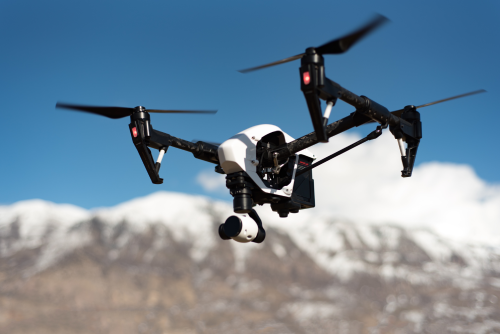
The Quantum Systems Trinity Pro is an active German-built VTOL fixed-wing drone aimed at professional mapping and survey work. It matters because this type of aircraft combines vertical takeoff and landing convenience with the area coverage efficiency of a fixed-wing platform. For survey firms, GIS teams, engineering operators, and enterprise buyers, the Trinity Pro is most relevant as a current Trinity-series option from a specialist manufacturer rather than as a consumer camera drone.
Quick Summary Box
- Drone Name: Quantum Systems Trinity Pro
- Brand: Quantum Systems
- Model: Trinity Pro
- Category: Mapping/survey
- Best For: Professional surveying, mapping, corridor work, and enterprise geospatial operations
- Price Range: Not publicly confirmed in supplied data
- Launch Year: Not publicly confirmed in supplied data
- Availability: Not publicly confirmed in supplied data
- Current Status: Active
- Overall Rating: Not rated due to limited confirmed data
- Our Verdict: A promising current VTOL fixed-wing survey platform from a respected German manufacturer, but buyers should verify the exact payload, software, pricing, regulatory fit, and support package before making a decision.
Introduction
The Trinity Pro sits in the professional end of the drone market, where operators care more about workflow efficiency, data quality, fleet reliability, and supportability than casual flying features. That distinction matters. In the consumer world, buyers often ask about camera smoothness, obstacle sensors, and social-media-friendly video specs. In the mapping and survey world, the real questions are different: How much ground can this aircraft cover? How reliable is the data output? How easy is it to deploy in awkward field locations? How well does it fit into an existing GIS or photogrammetry workflow?
Quantum Systems positions itself as a specialist in VTOL fixed-wing aircraft, and the Trinity Pro fits naturally into that reputation. If you need a drone for mapping or survey missions and want the convenience of runway-free deployment, this model is worth a closer look.
The broader reason the Trinity Pro matters is that enterprise drone operations increasingly demand both field flexibility and high productivity. A multirotor is easy to launch almost anywhere, but it may be less efficient when covering larger parcels, corridors, or repeated survey blocks. A classic fixed-wing can be efficient over distance, but launch and recovery requirements can become awkward in rough, confined, or obstacle-filled environments. A VTOL fixed-wing platform tries to solve that operational problem by combining the strengths of both categories.
That does not automatically make the Trinity Pro the right choice for every organization. It does mean it belongs in the conversation for buyers who need a mission system, not just an aircraft.
Overview
Professional mapping drones generally fall into three groups: multirotors for smaller sites, traditional fixed-wings for maximum coverage, and VTOL fixed-wings for teams that want fixed-wing efficiency without needing launch and landing strips. The Trinity Pro belongs to that third category.
That category has become increasingly important because field conditions rarely match ideal lab assumptions. Survey crews may need to launch from construction staging areas, roadside pull-offs, uneven agricultural access points, or remote environmental sites where a smooth runway simply does not exist. In those scenarios, a drone that can rise vertically, transition to efficient forward flight, and then recover vertically again can significantly reduce operational friction.
What kind of drone is it?
The Trinity Pro is a VTOL fixed-wing drone from Quantum Systems of Germany, built for the mapping/survey segment. VTOL means it can take off and land vertically like a multirotor, then transition to fixed-wing forward flight for more efficient area coverage.
This is an important distinction because the aircraft is not primarily designed for hovering camera work, dramatic orbit shots, or general recreational flying. Its mission identity is much more specific: it is intended for planned aerial data collection, where repeatability and productivity matter more than freestyle maneuvering.
Who should buy it?
This model is most relevant for:
- Surveying companies
- GIS and geospatial data teams
- Engineering and construction firms
- Infrastructure and corridor inspection planners
- Environmental and land-management operators
- Enterprise buyers comparing professional mapping aircraft
It may also interest organizations that need to standardize survey operations across multiple teams or regions. A company managing recurring site surveys, utility right-of-way documentation, or infrastructure planning may value a platform like this not just for one-off flight performance, but for whether it can support a repeatable operational process.
What makes it different?
Its main differentiator is the airframe concept itself: vertical launch and recovery plus fixed-wing mission efficiency. That matters in the field because survey teams often work in places where a runway is impractical, but a pure multirotor may be slower or less efficient for covering larger areas.
The Trinity Pro also benefits from being part of Quantum Systems’ current Trinity-series platform rather than a clearly legacy-only product. For enterprise buyers, that can be as important as raw performance. A current product usually implies a better chance of ongoing software updates, parts availability, training resources, and support continuity.
In other words, what makes the Trinity Pro attractive is not just the aircraft shape. It is the idea that the platform may fit into a modern professional drone program where deployment speed, survey throughput, and long-term support matter as much as the hardware itself.
Key Features
- VTOL fixed-wing configuration for runway-free takeoff and landing
- Professional mapping/survey positioning rather than consumer photography focus
- Current active platform in the Trinity family
- German manufacturer with a strong enterprise drone identity
- Likely well suited to larger-area missions than a typical quadcopter, based on airframe class
- Practical fit for corridor, land, and site-mapping work, where efficient forward flight matters
- Enterprise-oriented buying path, meaning final configuration may depend on payload, software, and support package
- Exact figures for flight time, range, speed, and payload options are not publicly confirmed in supplied data
Those headline features tell you what kind of product this is. They also hint at how it should be evaluated. A drone like the Trinity Pro should not be judged the same way as a consumer aircraft with a fixed camera bundle. The real value may depend on the full solution stack: the airframe, payload, mission-planning environment, support agreement, and downstream data workflow.
That is especially true for organizations that need reliable output rather than occasional aerial imagery. A survey buyer should think in terms of deliverables: orthomosaics, digital surface models, stockpile measurements, topographic outputs, progress documentation, corridor maps, or GIS-ready imagery. The aircraft is only one part of that chain.
Full Specifications Table
| Specification | Details |
|---|---|
| Brand | Quantum Systems |
| Model | Trinity Pro |
| Drone Type | VTOL fixed-wing |
| Country of Origin | Germany |
| Manufacturer | Quantum Systems |
| Year Introduced | Not publicly confirmed in supplied data |
| Status | Active |
| Use Case | Mapping / survey |
| Weight | Not publicly confirmed in supplied data |
| Dimensions (folded/unfolded) | Not publicly confirmed in supplied data |
| Max Takeoff Weight | Not publicly confirmed in supplied data |
| Battery Type | Not publicly confirmed in supplied data |
| Battery Capacity | Not publicly confirmed in supplied data |
| Flight Time | Not publicly confirmed in supplied data |
| Charging Time | Not publicly confirmed in supplied data |
| Max Range | Not publicly confirmed in supplied data |
| Transmission System | Not publicly confirmed in supplied data |
| Top Speed | Not publicly confirmed in supplied data |
| Wind Resistance | Not publicly confirmed in supplied data |
| Navigation System | Not publicly confirmed in supplied data |
| Obstacle Avoidance | Not publicly confirmed in supplied data |
| Camera Resolution | Not publicly confirmed in supplied data |
| Video Resolution | Not publicly confirmed in supplied data |
| Frame Rates | Not publicly confirmed in supplied data |
| Sensor Size | Not publicly confirmed in supplied data |
| Gimbal | Not publicly confirmed in supplied data |
| Zoom | Not publicly confirmed in supplied data |
| Storage | Not publicly confirmed in supplied data |
| Controller Type | Not publicly confirmed in supplied data |
| App Support | Not publicly confirmed in supplied data |
| Autonomous Modes | Not publicly confirmed in supplied data |
| Payload Capacity | Not publicly confirmed in supplied data |
| Operating Temperature | Not publicly confirmed in supplied data |
| Water Resistance | Not publicly confirmed in supplied data |
| Noise Level | Not publicly confirmed in supplied data |
| Remote ID Support | Not publicly confirmed in supplied data |
| Geo-fencing | Not publicly confirmed in supplied data |
| Certifications | Not publicly confirmed in supplied data |
| MSRP / Launch Price | Not publicly confirmed in supplied data |
| Current Price | Not publicly confirmed in supplied data |
Because many details are not confirmed in the supplied data, this table should be read as a verification checklist, not a complete technical profile. That may feel limiting, but for enterprise buyers it is still useful. It highlights exactly which areas need confirmation before purchase: endurance, payload type, compliance features, software environment, and total mission-ready configuration.
For a consumer drone, missing specs are frustrating. For a professional drone, missing specs are a reason to request a formal technical package or demo quote.
Design and Build Quality
Because the supplied data does not confirm dimensions, weight, material composition, or folded transport size, the Trinity Pro cannot be scored precisely on portability from public information alone. What can be said with confidence is that a VTOL fixed-wing survey platform is typically designed for field deployment rather than backpack-style casual carry.
That usually means buyers should expect a design philosophy centered around:
- repeatable setup and teardown
- transport-case compatibility
- stable landing gear or vertical landing capability
- mission readiness in open outdoor environments
- easier deployment than a hand-launched fixed-wing in constrained sites
A professional aircraft in this class is often better understood as a portable system than as a simple drone. That usually includes the aircraft, controller or ground station, batteries, charging equipment, sensor payload, mission-planning tools, and protective transport solutions. For crews working out of trucks, utility vehicles, survey vans, or temporary field offices, this system-level approach matters more than whether the aircraft folds compactly enough for leisure travel.
Another important design question is field serviceability. Mapping operations can be interrupted by relatively small issues: prop wear, connector damage, transport stress, weather exposure, or sensor recalibration needs. Enterprise buyers should therefore ask not only whether the airframe looks robust, but also how easy it is to maintain in practice. Can a team replace wear parts quickly? Are spare components standardized? Is the payload mount easy to inspect? Are preflight checks simple enough for routine team use?
As analysis, VTOL fixed-wing aircraft often feel more “system-like” than consumer drones. They may be less convenient for spontaneous flying, but more practical for structured survey work. For the Trinity Pro specifically, buyers should verify:
- assembly time from case to launch
- field serviceability
- spare parts access
- transport dimensions
- environmental durability expectations
- ease of cleaning and inspection after dusty or muddy site work
- how easily the airframe can be transported between job sites
A final design consideration is landing footprint. Even though VTOL reduces runway dependence, teams still need a safe takeoff and recovery area. In cluttered industrial or construction environments, that can still be a meaningful planning factor. The Trinity Pro’s practical value may depend not only on whether it can land vertically, but on how predictable and stable that recovery process is in real field conditions.
Flight Performance
With the Trinity Pro, flight performance should be thought of in two parts: vertical launch/recovery behavior and fixed-wing cruise efficiency.
That two-phase nature is central to the appeal of the platform. The vertical phase helps solve deployment problems. The fixed-wing phase helps solve productivity problems. A buyer evaluating the Trinity Pro should therefore ask how smoothly the aircraft transitions between those modes and how confidently it maintains a survey pattern once in forward flight.
Based on its airframe type, the likely strengths are:
- easier deployment than a traditional fixed-wing in tight field locations
- better area coverage efficiency than many multirotors
- suitability for outdoor geospatial missions rather than close-range cinematic hovering
- likely better productivity on larger sites than a standard quadcopter
However, the exact confirmed figures for endurance, range, top speed, ceiling, and wind resistance are not publicly confirmed in supplied data. That matters because mapping performance can change significantly depending on payload, battery condition, weather, overlap settings, terrain, and mission profile.
In practical terms:
- Outdoor use: Yes, this is clearly an outdoor mission aircraft
- Indoor use: Not appropriate
- Wind handling: Likely stronger in forward flight than a small multirotor, but exact capability must be verified
- Takeoff/landing behavior: VTOL should reduce the need for launch strips, which is a major operational advantage for field teams
- Signal confidence: Depends on the actual communications system and region-specific setup, which are not confirmed here
If you are comparing it against a multirotor mapper, the Trinity Pro’s likely appeal is not agility but coverage efficiency and mission workflow.
That distinction becomes especially important on larger survey blocks. A multirotor may be perfectly adequate for a compact construction site, a roof inspection, or a stockpile yard. But once the site expands, or when the job involves long corridor runs, field teams start to care more about how much area can be captured per battery cycle and per crew hour. VTOL fixed-wing platforms are attractive precisely because they can reduce the number of flight segments needed for a comparable output.
Another key performance factor is survey consistency. For mapping work, the best-performing drone is not always the fastest one. It is the one that can maintain planned track lines, target overlap, and stable data capture under realistic field conditions. Even small inconsistencies can affect photogrammetry outputs and reflight rates. Buyers should therefore ask not only for marketing endurance figures, but for realistic expectations under:
- standard mapping overlap settings
- typical wind speeds in the intended region
- the actual payload being quoted
- terrain-following or corridor mission use
- local temperature conditions
Transition performance also deserves attention. VTOL fixed-wing aircraft rely on a controlled shift from vertical lift to forward flight and back again. In professional operations, confidence during that transition matters for both safety and operator stress. Teams that deploy near roads, utility corridors, or limited recovery zones may care less about headline range and more about how predictable the aircraft feels during launch and landing.
Camera / Payload Performance
The Trinity Pro is best understood as a survey platform first, with the exact camera or sensor package being a critical part of the purchase decision. The supplied data does not confirm the payload type, camera resolution, sensor size, gimbal setup, zoom capability, or supported sensor list.
That means buyers should verify:
- which camera is included in the quoted configuration
- whether the sensor is optimized for photogrammetry, multispectral work, or another workflow
- whether the shutter type is suitable for mapping accuracy needs
- what georeferencing options are supported
- how payload changes affect endurance and mission planning
- whether the workflow fits your existing photogrammetry or GIS stack
For mapping teams, payload quality often matters more than the airframe alone. A good survey drone is not just about flight time; it is about whether the aircraft, sensor, and software pipeline produce reliable and repeatable outputs. Until the exact Trinity Pro payload configuration is confirmed, it is best treated as a potentially capable enterprise mapping airframe rather than a fully specified imaging package.
This section is where serious buyers should slow down and ask more detailed questions. Not every “camera drone” is appropriate for survey-grade work. Mapping-focused payload decisions often include considerations such as:
- Global shutter vs. rolling shutter
- Ground sampling distance requirements
- RTK or PPK georeferencing support
- Radiometric or multispectral needs
- Calibration procedures
- Image interval and trigger reliability
- Lens consistency and distortion handling
For example, a construction firm may only need consistent RGB data for progress mapping and site documentation. An agricultural operator may prioritize multispectral capability. An environmental team may care more about repeatable vegetation indices than pure visual resolution. A land-survey workflow may depend heavily on georeferencing support and how well the aircraft integrates with ground control or correction data.
The airframe can be excellent and still be the wrong purchase if the payload package does not match the intended output. That is why enterprise drone procurement often revolves around the question: What deliverable are we trying to produce, and how repeatably can this system produce it?
Buyers should also verify how much the final image product depends on external processing tools. Some platforms are strong in flight hardware but rely on third-party photogrammetry software for the real value. That is not inherently a problem, but it changes the total workflow cost and training requirements. If the Trinity Pro will be used by an established survey team, integration may be straightforward. If it is being adopted by a new internal drone program, the learning curve could be more significant.
Smart Features and Software
Enterprise mapping drones usually live or die by their software workflow. In this category, buyers typically look for features such as:
- mission planning
- waypoint-based autonomous survey flights
- repeatable route execution
- automated takeoff and landing
- live telemetry and aircraft health monitoring
- geotagging and survey data export
- compatibility with processing and GIS tools
For the Trinity Pro specifically, the exact software stack, app names, cloud tools, SDK access, API support, return-to-home behavior, terrain following, and mapping automation features are not publicly confirmed in supplied data.
That does not mean those functions are absent; it means they should be confirmed directly with official sales or support materials before purchase. For serious buyers, the right questions are:
- What mission planning environment is used?
- What output formats are supported?
- Is there integration with common geospatial processing workflows?
- What autonomy features are standard versus optional?
- What training is required for first deployment?
Software matters because mapping work is less about manual piloting and more about operational consistency. An enterprise team wants to be able to define a survey area, set overlap and altitude, confirm terrain considerations, launch safely, monitor progress, and recover the aircraft with minimal ambiguity. The smoother that chain is, the easier it becomes to scale operations across projects or staff.
A strong software ecosystem can also reduce hidden costs. It may simplify operator training, lower reflight rates, improve mission repeatability, and make it easier to standardize outputs across teams. By contrast, a drone with excellent flight hardware but clumsy software can become expensive in practice because it burns time in planning, data handling, troubleshooting, and onboarding.
Depending on the buyer’s workflow, software questions may include:
- Is terrain-following available for uneven ground?
- Can corridor missions be planned efficiently?
- Are flight logs exportable for audit or compliance needs?
- Is remote fleet oversight possible?
- How are firmware and software updates delivered?
- Are there role-based permissions for larger teams?
- Can data be handed off easily to survey, CAD, or GIS staff?
Organizations that already use established tools like photogrammetry suites, GIS platforms, or internal asset systems should confirm whether the Trinity Pro supports a clean handoff into those environments. In many enterprise deployments, integration quality ends up mattering as much as the aircraft itself.
Use Cases
The Trinity Pro makes the most sense in structured professional workflows where runway-free deployment and fixed-wing efficiency can save time.
- Large-area land surveying: Useful where site size makes multirotor coverage inefficient and field access is uneven.
- Topographic mapping: Relevant for repeated area capture where consistent route execution matters.
- Construction progress documentation: Suitable for regular site surveys that need broader coverage than a simple aerial photo pass.
- Corridor mapping for roads, rail, and utilities: One of the most natural fits for a fixed-wing-style survey platform.
- Site planning and land development surveys: Helpful when early-stage development areas are large but launch space is constrained.
- Mining and quarry documentation: Potentially valuable for large, open outdoor environments with recurring measurement needs.
- Environmental monitoring: Useful for repeated observation over land parcels, restoration zones, or remote field sites.
- Agricultural field mapping: Relevant if fitted with a suitable sensor package for the intended agronomic workflow.
- Post-event site assessment and rapid geospatial documentation: May help teams capture broad-area context quickly.
- Enterprise fleet deployment: Appropriate where repeatable survey operations and standardized procedures matter across teams.
Each of those use cases has slightly different priorities. A utility corridor operator may care about efficient route planning and reliable long linear coverage. A construction group may care more about predictable weekly outputs and compatibility with project management tools. A mining team may focus on recurring area surveys and operational ruggedness. An environmental program may value repeatability over months or seasons.
That is why the Trinity Pro should be assessed not only by general category, but by mission pattern. The best fit is usually an organization that already knows what kind of deliverable it needs and wants a platform designed to support that process with fewer field compromises.
Pros and Cons
Pros
- VTOL fixed-wing layout is highly relevant for professional mapping workflows
- Current active platform status is more reassuring than buying a clearly discontinued legacy model
- German enterprise manufacturer with a recognized position in professional drone markets
- Better conceptual fit for large-area survey work than a typical small multirotor
- Runway-free launch and landing can reduce field constraints
- Likely attractive to teams that value mission efficiency over consumer-friendly features
Cons
- Many core specs, including flight time, range, speed, weight, and payload details, are not publicly confirmed in supplied data
- Price transparency is limited in the supplied information
- Not a casual buyer product; it likely requires workflow planning, training, and procurement review
- Exact camera/sensor package must be verified before any real buying decision
- Less suitable than a small multirotor for close-quarters, indoor, or ad-hoc visual shooting
- Support quality may depend heavily on regional dealer and service coverage
The biggest strength here is conceptual clarity. The Trinity Pro appears aimed at a real professional need rather than trying to be all things to all users. The biggest weakness is that without confirmed specs and configuration details, a buyer cannot responsibly judge the full value proposition on public information alone.
Comparison With Other Models
Exact apples-to-apples comparison is limited because the supplied Trinity Pro data does not include confirmed public figures for flight time, price, weight, or payload configuration. Still, the models below are relevant benchmarks in the same broader survey market.
| Model | Airframe | Price | Flight Time | Camera or Payload | Best For | Winner |
|---|---|---|---|---|---|---|
| Trinity Pro | VTOL fixed-wing | Not publicly confirmed in supplied data | Not publicly confirmed in supplied data | Not publicly confirmed in supplied data | Buyers wanting a current Quantum Systems Trinity-series survey platform | Best if the final Quantum Systems configuration fits your workflow |
| WingtraOne GEN II | VTOL fixed-wing | Enterprise quote-based; verify current pricing | Verify current manufacturer figure | Survey-focused payload ecosystem | Teams prioritizing a well-known VTOL mapping workflow | Strong close competitor when published ecosystem detail matters |
| senseFly eBee X | Fixed-wing | Enterprise quote-based; verify current pricing | Verify current manufacturer figure | Survey-focused sensor options | Large-area mapping where VTOL is not required | Strong alternative for fixed-wing-first operators |
| Trinity F90+ | VTOL fixed-wing | Verify current market pricing and support | Verify current official or dealer data | Varies by configuration | Buyers comparing Trinity-family generations | Older option only if support and pricing still make sense |
Trinity Pro vs a close competitor
Against a close VTOL mapping competitor such as the WingtraOne GEN II, the Trinity Pro enters the same core conversation: runway-free operations, survey efficiency, and enterprise data workflows. The deciding factors will usually be payload options, software maturity, support availability, procurement terms, and total ownership cost rather than headline marketing alone.
A buyer choosing between the two should ask:
- Which platform has the stronger sensor package for our deliverables?
- Which one has better regional support?
- Which mission-planning workflow will our team learn faster?
- Which system produces the least operational friction over a year of use?
Trinity Pro vs an alternative in the same segment
Against a traditional fixed-wing alternative like the senseFly eBee X, the key trade-off is operational style. If you do not need VTOL, a hand-launched fixed-wing can still be compelling for coverage-focused missions. If your sites are constrained or landing conditions are awkward, VTOL can be a major operational advantage.
In simple terms:
- If launch and recovery space is easy and your team is comfortable with classic fixed-wing operations, a non-VTOL aircraft may still be attractive.
- If your jobs regularly involve rough, confined, or unpredictable field conditions, VTOL may justify itself quickly.
Trinity Pro vs an older or previous-generation option
Compared with earlier Trinity-family aircraft, the Trinity Pro is most interesting as a current platform. That matters because survey buyers should think beyond headline performance and consider software support, parts availability, fleet standardization, training continuity, and long-term maintainability.
Older aircraft can sometimes look attractive on price, but a lower upfront cost may be offset by weaker parts supply, reduced support attention, or software limitations. For enterprise use, the safer long-term decision is often the platform that can still be supported in a structured way.
Manufacturer Details
Quantum Systems is the manufacturer, and the company is based in Germany and is widely known for building electric VTOL fixed-wing drone systems for professional and institutional users.
In market terms, Quantum Systems has built a reputation around aircraft that try to bridge the gap between:
- fixed-wing efficiency
- VTOL deployment convenience
- enterprise-grade mission use
Its broader reputation is stronger in professional and government-facing drone categories than in mainstream consumer photography. That makes the Trinity Pro a more serious fit for organizations with structured workflows than for casual buyers browsing camera drones.
This manufacturer background matters because enterprise drone purchases are partly about the company behind the hardware. Buyers are not only acquiring an airframe; they are committing to a relationship involving updates, training, support, parts, and roadmap confidence. A specialist manufacturer may be better aligned with professional needs than a general consumer brand, especially when the job involves repeatable operational use rather than occasional flights.
A specialized maker also tends to think in terms of mission outcomes rather than lifestyle appeal. For buyers in survey, engineering, utilities, environmental monitoring, or public-sector operations, that alignment can be valuable.
Support and Service Providers
For a drone in this class, support quality can matter almost as much as the aircraft itself. The supplied data does not confirm a specific repair or warranty network for the Trinity Pro, so buyers should verify official support options in their own region.
Key support questions to ask before purchase:
- Is support handled directly by the manufacturer or by a regional dealer?
- Are airframe parts, batteries, and propulsion components stocked locally?
- What is the repair turnaround time?
- Is operator onboarding or training included?
- Are software updates and mission-planning tools part of the package?
- Is there field-service guidance for survey teams?
- What happens if the payload or navigation hardware needs calibration or replacement?
For enterprise users, local distributor quality can significantly affect uptime, so regional service coverage should be treated as a buying factor, not an afterthought.
It is also worth asking about escalation paths. If a mission-critical issue appears during a project, who responds first: the reseller, the integrator, or the manufacturer? How quickly are replacement parts dispatched? Are loaner systems available? Are software support tickets handled during local business hours? These questions can make a bigger real-world difference than a small variation in top speed or brochure endurance.
Organizations deploying multiple aircraft should also verify whether support includes:
- fleet onboarding
- standardized training for multiple operators
- preventive maintenance guidance
- update management procedures
- service-level expectations for institutional clients
A professional drone system is only as useful as its sustained operational availability. For that reason, buyers should evaluate support as a core product feature.
Where to Buy
The Trinity Pro is best approached as an enterprise procurement or specialist dealer product rather than a mass-market consumer drone. Buyers should expect to source it through:
- the official Quantum Systems sales channel
- authorized enterprise drone dealers
- geospatial or surveying equipment distributors
- regional integration partners
In some markets, availability may depend on region-specific support, import handling, or commercial procurement processes. If you are buying for a company, university, utility, or government body, you may need a formal quote rather than a simple online checkout.
That buying path is normal for this class of equipment. It often allows the seller to tailor the package to the actual mission requirement. Instead of a generic retail bundle, the buyer may be offered a specific combination of aircraft, payload, batteries, software access, accessories, training, and support.
Before placing an order, it is smart to request:
- a detailed configuration sheet
- a formal quote with all included items
- a training outline
- warranty and repair terms
- local support contact details
- expected delivery timeline
- confirmation of software or subscription dependencies
For larger organizations, a field demo or workflow demonstration may be even more valuable than a spec sheet.
Price and Cost Breakdown
The supplied data does not confirm launch price, MSRP, or current street price for the Trinity Pro. That means budget planning should focus on the total system cost, not just the airframe.
Before buying, verify the cost of:
- aircraft base package
- controller or ground control hardware
- installed mapping payload
- extra batteries
- chargers and power accessories
- transport cases
- spare props and airframe parts
- software licenses or subscriptions
- training and onboarding
- maintenance or service plans
- insurance
- repair logistics and downtime risk
With enterprise survey drones, pricing is often configuration-dependent. A quote that looks competitive at first may change once payloads, training, or service support are added. Serious buyers should compare complete mission-ready packages, not headline aircraft-only pricing.
It is also useful to think in terms of cost per deliverable, not just purchase price. A more expensive system may still be the better value if it reduces field time, improves output consistency, lowers reflight rates, or integrates more cleanly with existing survey processes. Conversely, a cheaper system can become expensive if it causes workflow friction or support delays.
Hidden costs may include:
- staff training time
- software renewal fees
- travel or shipping for repairs
- replacement batteries over the life of the system
- payload calibration
- compliance or operational approval work
- data processing infrastructure
For organizations preparing a procurement case, it helps to build a simple ownership model covering year-one purchase cost and expected ongoing operating cost. That will produce a more honest comparison than looking at airframe price alone.
Regulations and Compliance
As with any professional drone, legal use depends on your jurisdiction, aircraft configuration, mission type, and operator credentials.
Practical points to verify:
- operator and aircraft registration requirements
- commercial remote pilot licensing or competency rules
- whether your mission is allowed under standard visual line of sight rules
- whether BVLOS or extended operations require separate approval
- privacy and land-access permissions for mapping work
- airspace restrictions near populated, controlled, or sensitive areas
- data handling obligations for survey imagery and geospatial outputs
- local takeoff and landing site rules
Important cautions:
- Remote ID support is not publicly confirmed in supplied data
- Weight class is not publicly confirmed in supplied data
- No universal compliance claim should be assumed
If compliance matters to your organization, confirm the final aircraft configuration against the exact rules in your country before procurement.
This is particularly important for enterprise users because the operational environment may be more complex than simple recreational flying. Survey work can involve industrial sites, transportation corridors, agricultural land, utility infrastructure, or public-sector projects. Each of those can bring additional rules or approvals, especially when the mission is commercial, repeated, or close to sensitive infrastructure.
Organizations should also consider internal compliance questions such as:
- pilot qualification standards
- operational manuals and checklists
- maintenance logging
- battery handling procedures
- incident reporting requirements
- data retention and security policies
A professional drone program is not just a hardware purchase; it is part of an operational framework.
Who Should Buy This Drone?
Best for
- Professional surveyors needing a mission-focused airframe
- GIS and mapping teams working across larger outdoor sites
- Engineering and infrastructure operators who value VTOL deployment
- Organizations standardizing on enterprise-grade geospatial workflows
- Buyers who are comfortable verifying payload, software, and support details directly with the vendor
This is the right kind of platform for teams that already understand their data requirements and want a more efficient way to meet them in the field. If your organization routinely captures land, site, or corridor data and often works in spaces where a runway is impractical, the Trinity Pro’s category alone makes it relevant.
Not ideal for
- Casual hobby pilots
- Buyers looking for a simple consumer camera drone
- Indoor operators
- Cinematic creators who mainly need hover-based filming tools
- Anyone who wants fully transparent retail pricing and instant checkout without enterprise sales steps
- Users unwilling to invest in training, workflow setup, and support verification
It is also not ideal for organizations that are still uncertain about their use case. A professional VTOL survey drone delivers the most value when deployed into a defined workflow, not when purchased as a general-purpose experiment.
Final Verdict
The Trinity Pro looks most compelling as a current professional VTOL fixed-wing mapping platform from an established German specialist. Its biggest strength is the concept: vertical takeoff and landing combined with fixed-wing survey efficiency, which is exactly the formula many field teams want for practical geospatial work. Its biggest weakness, based on the supplied data, is the lack of fully confirmed public detail around price, payload, endurance, range, and software.
That does not make it a poor option; it makes it a buyer-beware, verify-the-configuration option.
If you are a serious enterprise, survey, or mapping buyer and you want a Trinity-series aircraft from Quantum Systems, the Trinity Pro deserves a place on your shortlist. But it should be shortlisted in the right way: with a request for a full configuration sheet, payload details, software explanation, support terms, and region-specific compliance guidance.
In practical buying terms, the Trinity Pro is most attractive to organizations that:
- need more efficient coverage than a typical multirotor can provide,
- operate in places where a runway-based fixed-wing is inconvenient,
- value repeatable mission planning and data output,
- and are prepared to evaluate the full system rather than the airframe in isolation.
So the final judgment is straightforward: the Trinity Pro appears to be a strong category fit for professional mapping operations, but the decision should be made on the final quoted package, not on broad platform reputation alone. If the payload, software workflow, support structure, and pricing align with your operational needs, it could be a very capable solution. If those details do not line up, then even an appealing VTOL fixed-wing concept may not be enough.
For the right buyer, though, that concept remains highly compelling. In a market where field teams often have to choose between multirotor convenience and fixed-wing efficiency, the Trinity Pro represents the type of aircraft designed to offer both.
