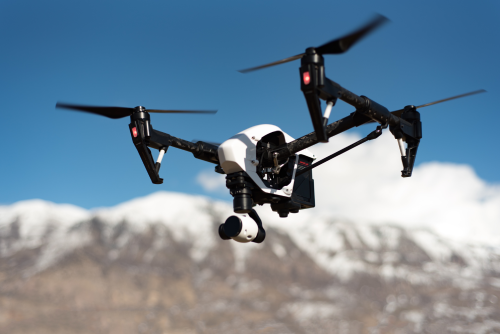
Walkera F210 3D is a Walkera multirotor in the consumer/FPV segment, identified in the supplied record as an FPV racing drone. It is most relevant to hobbyists and FPV pilots who care more about manual control, agility, and aerobatic potential than about automated camera-drone features. The model matters because racing-class drones live or die by handling, repairability, and setup details, and those are exactly the areas buyers need to verify carefully here.
Quick Summary Box
- Drone Name: Walkera F210 3D
- Brand: Walkera
- Model: F210 3D
- Category: Consumer / FPV
- Best For: FPV racing, manual aerobatic flying, hobby pilots comparing racing platforms
- Price Range: Not publicly confirmed in supplied data
- Launch Year: Not publicly confirmed in supplied data
- Availability: Not publicly confirmed in supplied data
- Current Status: Active
- Overall Rating: Not rated due to limited confirmed data
- Our Verdict: A niche Walkera FPV racing platform with likely acro-first appeal, but buyers should verify core specs, bundle contents, radio/video compatibility, and parts support before purchase.
Introduction
The Walkera F210 3D is positioned as a consumer FPV multirotor from Walkera, a Chinese drone and RC brand with a long presence in the hobby market. Based on the supplied record, its core identity is straightforward: this is an FPV racing drone, not a camera-first creator drone or an enterprise work platform. Readers should care about it if they are shopping for a manual-flight quad, comparing Walkera’s racing lineup, or researching older-school FPV designs where pilot skill matters more than automation.
That distinction is important. A lot of drone shopping today is dominated by camera drones with strong software features, beginner modes, GPS stabilization, and polished apps. Racing and acro quads live in a different world. They are judged more by feel than by feature lists, more by responsiveness than by convenience, and more by repair practicality than by slick marketing. If you are the kind of buyer who wants to know how a quad behaves after a hard turn, how easy it is to replace damaged parts, and whether the FPV system fits your existing gear, the F210 3D is relevant in a way many mainstream consumer drones are not.
At the same time, the supplied data leaves many technical details unverified. That means this article needs to do two things at once: identify what is clearly established, and separate it from category-based expectations. In other words, the F210 3D can still be evaluated meaningfully, but it should be evaluated like a specialist FPV platform rather than a fully documented mass-market camera drone.
Overview
What kind of drone is it?
The F210 3D is a multirotor drone in the consumer/FPV category. The supplied notes identify it specifically as an FPV racing drone, which strongly suggests a platform built around speed, maneuverability, and pilot-view flying rather than stabilized aerial photography or autonomous missions.
That matters because the FPV racing category has a very different design philosophy from general consumer drones. A racing quad is typically optimized for:
- fast changes in direction
- low-latency control response
- direct throttle authority
- a frame that can survive or at least be repaired after crashes
- a layout that prioritizes flight dynamics over polished packaging
In practical use, this means the F210 3D is best understood as a hobby machine for active flying, not as a casual gadget for sightseeing from the sky.
The “3D” naming also points toward an aerobatic identity. In RC aircraft terminology, “3D” usually implies aggressive acro potential rather than beginner-friendly cruising, although the exact implementation behind that branding is not publicly confirmed in the supplied data. In some corners of RC and drone culture, “3D” can also suggest more advanced inverted or unusual maneuver capability, but without a verified technical sheet, buyers should treat the name as a strong hint of purpose rather than proof of a specific flight mechanism.
Who should buy it?
This model is best suited to:
- FPV hobbyists
- Racing-focused pilots
- Acro and freestyle learners with some simulator or manual-flight background
- Walkera fans comparing the F210 family
- Buyers comfortable checking spare parts and setup compatibility before purchase
It is less likely to suit first-time drone buyers who want safety features, obstacle avoidance, or point-and-shoot simplicity.
A useful way to think about the target user is this: the ideal buyer is someone who already understands that flying is only part of FPV ownership. Setup, battery management, repair, firmware familiarity, transmitter compatibility, and post-crash maintenance all matter. If that sounds interesting rather than intimidating, the F210 3D may fit your style.
By contrast, a buyer who wants to open a box, charge one battery, tap a phone screen, and rely on the aircraft to manage most of the flying workload is shopping in the wrong category. Even if the F210 3D turns out to be well packaged, it belongs to a part of the market where pilot input remains central.
What makes it different?
What stands out most is its positioning. Many consumer drones are camera platforms first, but the F210 3D appears to be pilot-focused first. Its value is likely in how it flies, how quickly it responds, and how well it fits the racing/acro niche.
The “3D” branding gives it an identity beyond a generic racing quad. Even when hard specs are unavailable, naming in this segment often signals intent. Buyers may interpret this model as aimed at more aggressive flyers, or at least at users who want the option of more advanced aerobatic behavior than a beginner racing quad would emphasize.
Another differentiator is brand context. Walkera is not a random name in RC. For long-time hobbyists, the company has recognition and history, which can matter when comparing niche products. That said, brand recognition alone is not enough in FPV. The real ownership experience depends heavily on parts availability, electronic compatibility, and whether the model still has support in the region where you live.
The key limitation is that many hard specifications are not publicly confirmed in the supplied data. That means the drone is interesting as a category fit, but not something buyers should choose without verifying the exact package, electronics, battery requirements, and support path.
Key Features
- FPV racing focus: The supplied record explicitly identifies the F210 3D as an FPV racing drone. That immediately tells buyers where it sits in the market and what kind of flying experience to expect.
- Multirotor airframe: Confirmed as a multirotor rather than a fixed-wing or hybrid design, making it suitable for rapid directional changes, hovering, and acrobatic control inputs.
- Consumer/FPV market segment: Positioned for hobby and enthusiast use, not enterprise workflows or camera-led travel content creation.
- Active status: Listed as active in the supplied master record. That is useful, but buyers should still confirm real-world stock and current parts support rather than assuming easy availability.
- Aerobatic branding: The “3D” model name suggests an acro-oriented identity; this is a reasonable interpretation, not a fully confirmed technical spec.
- Likely manual-flight emphasis: Racing drones typically prioritize direct control over automation; no advanced autonomous feature set is publicly confirmed here.
- Likely compact, rigid frame: FPV racing multirotors are usually non-folding and optimized for responsiveness, though exact frame dimensions are not publicly confirmed.
- Repair and parts considerations matter: In this class, spare props, motors, frame parts, and battery fit are often purchase-critical, but specific component details are not publicly confirmed in the supplied data.
- Likely tuned for responsiveness over endurance: Racing and acro quads generally sacrifice long flight times in exchange for punch and control authority, though no verified endurance figure is available here.
- Potential compatibility questions: For FPV buyers, radio protocol, receiver options, video system type, and charger requirements can matter as much as the aircraft itself. These details should be checked listing by listing.
- Appeal to experienced hobby users: Even without a complete spec sheet, the product positioning suggests it will be more attractive to people who know how to compare FPV ecosystems than to casual mass-market shoppers.
- Possible bundle variation risk: FPV products are often sold in multiple forms, such as airframe-only, near-ready, or ready-to-fly packages. The supplied data does not define the bundle contents, so real value may vary significantly by seller.
Full Specifications Table
| Field | Details |
|---|---|
| Brand | Walkera |
| Model | F210 3D |
| Drone Type | Multirotor |
| Country of Origin | China |
| Manufacturer | Walkera |
| Year Introduced | Not publicly confirmed in supplied data |
| Status | Active |
| Use Case | FPV racing, manual aerobatics, hobby flying |
| Weight | Not publicly confirmed in supplied data |
| Dimensions (folded/unfolded) | Not publicly confirmed in supplied data |
| Max Takeoff Weight | Not publicly confirmed in supplied data |
| Battery Type | Not publicly confirmed in supplied data |
| Battery Capacity | Not publicly confirmed in supplied data |
| Flight Time | Not publicly confirmed in supplied data |
| Charging Time | Not publicly confirmed in supplied data |
| Max Range | Not publicly confirmed in supplied data |
| Transmission System | Not publicly confirmed in supplied data |
| Top Speed | Not publicly confirmed in supplied data |
| Wind Resistance | Not publicly confirmed in supplied data |
| Navigation System | Not publicly confirmed in supplied data |
| Obstacle Avoidance | Not publicly confirmed in supplied data |
| Camera Resolution | Not publicly confirmed in supplied data |
| Video Resolution | Not publicly confirmed in supplied data |
| Frame Rates | Not publicly confirmed in supplied data |
| Sensor Size | Not publicly confirmed in supplied data |
| Gimbal | Not publicly confirmed in supplied data |
| Zoom | Not publicly confirmed in supplied data |
| Storage | Not publicly confirmed in supplied data |
| Controller Type | Not publicly confirmed in supplied data |
| App Support | Not publicly confirmed in supplied data |
| Autonomous Modes | Not publicly confirmed in supplied data |
| Payload Capacity | Not publicly confirmed in supplied data |
| Operating Temperature | Not publicly confirmed in supplied data |
| Water Resistance | Not publicly confirmed in supplied data |
| Noise Level | Not publicly confirmed in supplied data |
| Remote ID Support | Not publicly confirmed in supplied data |
| Geo-fencing | Not publicly confirmed in supplied data |
| Certifications | Not publicly confirmed in supplied data |
| MSRP / Launch Price | Not publicly confirmed in supplied data |
| Current Price | Not publicly confirmed in supplied data |
Because so many fields remain unverified in the supplied record, the table is best read as a checklist of what to confirm before purchase. For a normal camera drone, a missing spec or two might be a minor inconvenience. For an FPV racer, unclear information about battery type, receiver system, or video transmission can completely change the ownership experience.
Design and Build Quality
Publicly confirmed design details for the Walkera F210 3D are limited, so this section relies partly on careful category-based analysis. As an FPV racing multirotor, the most likely design direction is a compact, rigid frame with exposed propellers and a layout tuned for low weight and fast directional changes rather than portability or polished industrial styling.
Foldability is not indicated in the supplied data, and racing drones are typically not foldable. That usually benefits structural rigidity and repair access, but it also means less convenience for casual travel compared with foldable camera drones. In the FPV world, that tradeoff is usually acceptable. Pilots often care more about predictable frame stiffness and cleaner handling than about making the aircraft fit in a small shoulder bag.
Build quality in this class is judged less by cosmetic finish and more by practical questions such as:
- How easy is it to replace props?
- Are arms and electronics straightforward to access?
- Is battery mounting secure?
- Are spare parts easy to source?
- Can crash damage be repaired without replacing the entire aircraft?
Those specifics are not publicly confirmed here, so prospective buyers should inspect current product listings carefully and verify spares support before committing.
It is also worth thinking about build quality in the context of crash reality. Racing and acro drones are not just expected to fly hard; they are expected to survive at least occasional mistakes. A frame may look attractive in photos, but what really matters is whether components are arranged sensibly, wires are protected, antennas are not overly exposed, and replacement parts are realistically obtainable. An FPV drone with poor parts availability can become uneconomical after a relatively minor impact.
Another practical consideration is serviceability in the field. Experienced FPV users often judge a quad by how quickly they can inspect it, tighten hardware, replace a prop, swap a motor, or secure a battery lead after a rough landing. A drone that is slightly less elegant on the shelf but easier to maintain can be the better real-world machine.
If you are considering the F210 3D today, especially from older stock or the secondary market, pay attention to signs of product age. Ask whether plastics or canopy parts are still sold, whether the frame uses standard hardware sizes, and whether replacement electronics can be integrated without major custom work. Even if the original setup is appealing, long-term ownership depends on how repairable the platform remains.
Flight Performance
No confirmed endurance, speed, range, or ceiling figures are supplied for the F210 3D, so any performance discussion has to stay within realistic FPV-racing expectations. In general, racing multirotors are built for responsiveness first. That usually means quick acceleration, sharp roll and pitch response, and a more demanding flight character than GPS-stabilized camera drones.
The “3D” label suggests that Walkera wanted this model to appeal to pilots interested in aggressive acro behavior. That can be a major attraction for experienced users, but it also hints at a steeper learning curve for beginners. If that interpretation is correct, the F210 3D is likely better suited to open outdoor spaces, club tracks, or dedicated FPV practice areas than to confined casual flying.
In a racing-style quad, the headline feeling often matters more than the headline number. Pilots tend to ask:
- Does it feel locked in during turns?
- Is throttle response smooth or abrupt?
- Does the frame carry momentum predictably?
- How stable is it under quick recovery inputs?
- Does it inspire confidence at speed?
The supplied data does not answer those questions directly, but they are the questions that should shape a buying decision more than generic marketing terms.
Wind handling is not publicly confirmed. Racing drones often have enough power to cut through moderate wind better than small toy quads, but without verified thrust, weight, and control-tuning data, that should not be treated as a guaranteed strength. A powerful setup can help in wind, yet a light race frame may still require an attentive pilot when conditions become gusty.
Signal confidence is also unclear because the transmission system and controller stack are not publicly confirmed in the supplied data. For FPV buyers, that is a major detail to verify before purchase. A fast quad with a weak or incompatible FPV link is far less useful than a slightly slower quad with dependable control and video.
Another factor is endurance versus performance. Racing quads generally do not chase long flight times. Instead, they are tuned for short, energetic sessions where battery voltage, prop choice, and motor behavior all influence how the aircraft feels. For a buyer new to this part of the hobby, that can be surprising. A short flight time does not necessarily mean poor quality; it can simply reflect a performance-first design. The key is whether the aircraft delivers satisfying control during those shorter flights.
For training use, the F210 3D may be most attractive to pilots who have already spent time in an FPV simulator or on a more forgiving manual quad. Jumping directly into an acro-oriented racing platform without preparation often leads to frustration, especially if the aircraft lacks beginner assist features. Line-of-sight flying may be possible, but a drone designed around FPV really reveals its character when flown in the way it was intended.
Camera / Payload Performance
The F210 3D does not appear to be a camera-led drone in the way a photography or cinewhoop platform would be. The supplied record identifies it as an FPV racing drone, which means any onboard video system is more likely intended for piloting than for professional image capture.
Important imaging details are not publicly confirmed in the supplied data, including:
- Camera resolution
- Video resolution
- Frame rates
- Sensor size
- Gimbal stabilization
- Storage format
That lack of confirmed camera information is significant. If your goal is cinematic footage, stabilized travel video, mapping, or inspection imagery, this model should not be assumed to deliver those workflows. If your goal is pilot-view racing or acro flying, the lack of camera-first specs is less surprising.
For FPV pilots, video quality means something different than it does for camera-drone buyers. The primary questions are often:
- Is latency low enough to fly confidently?
- Is the image clear in varied light?
- How durable is the camera mount?
- Is the video system easy to replace or upgrade?
- Does the aircraft support any secondary recording solution?
The supplied data does not confirm those answers, but they are more relevant than megapixel count alone.
Payload capacity is also not publicly confirmed. Buyers planning to mount an external action camera or aftermarket accessories should verify frame compatibility, power demands, and weight impact before buying. On a racing quad, even a modest payload increase can change flight feel, stress motors more heavily, and reduce usable flight time.
If your main objective is footage rather than flying dynamics, you are likely better served by a platform designed around stabilization and recording. If your main objective is immersion, control precision, and fast manual maneuvering, then a simpler pilot-view camera setup may be entirely appropriate.
Smart Features and Software
No advanced software or autonomy stack is publicly confirmed for the Walkera F210 3D. That includes no confirmed details for:
- Return to home
- Waypoints
- Follow me
- Obstacle avoidance
- Mapping features
- AI tracking
- Mobile app ecosystem
- Cloud fleet tools
- SDK or developer support
What is implied is FPV use. Since the supplied notes call it an FPV racing drone, pilot-view operation is part of the product identity, but the exact video link, goggles compatibility, controller type, and app support are not publicly confirmed in the supplied data.
That likely puts the F210 3D on the manual-control side of the market rather than the automation side. For many FPV enthusiasts, that is a feature, not a flaw. Less automation can mean fewer locked-down systems, fewer app dependencies, and a more direct flying experience. It can also mean more responsibility for the pilot.
In practical terms, the absence of confirmed smart features means buyers should pay extra attention to setup details that mass-market drones often hide in software. These include arming behavior, failsafe behavior, radio binding, battery alarms, and whatever tuning or calibration process may be required. Even if the F210 3D is sold in a user-friendly package, FPV gear generally rewards owners who are comfortable learning the basics of configuration rather than relying on the aircraft to do everything automatically.
For hobby pilots, that can be part of the appeal. A racing drone that expects active pilot involvement often delivers a more authentic RC experience. For mainstream buyers, it can feel like extra friction.
Use Cases
The most realistic use cases for the Walkera F210 3D are the ones that match its FPV racing identity.
- FPV racing at clubs or private flying venues
- Acro and freestyle practice for manual-flight pilots
- Hobby flying for users who prefer fast-response multirotors
- Walkera platform comparison for collectors and long-time RC enthusiasts
- Project or spare FPV build candidate, depending on actual bundle contents and parts availability
- Training progression for pilots moving from simulator time to real-world racing-style control
It is not the most realistic fit for surveying, mapping, inspection, cinema production, delivery, or autonomous commercial workflows based on the supplied data.
A particularly plausible use case is skill development. Pilots who have built confidence in simulators often want a real aircraft that forces them to learn throttle control, orientation, cornering, recovery, and disciplined battery management. A racing-style quad can teach those habits much more effectively than a highly automated consumer drone.
Another use case is hobby experimentation. Depending on the actual hardware included, a model like the F210 3D could appeal to users who enjoy comparing radio systems, trying different batteries, adjusting rates, or evaluating how a specific Walkera platform fits within the brand’s FPV lineage. That does not make it a tinkerer’s toy by default, but it can be more interesting to hands-on users than a fully locked-down aircraft.
Where it is less convincing is casual family use. High-response FPV drones are usually too demanding, too loud, and too crash-prone in inexperienced hands to serve as relaxed backyard flyers. They can certainly be flown recreationally, but they are best matched with intent and preparation.
Pros and Cons
Pros
- Clear FPV racing role in the supplied record
- Multirotor format suits agile manual flying
- “3D” branding gives it niche appeal for aerobatic-minded pilots
- Active status suggests it is not merely a historical or fully retired listing
- Walkera is a recognized name in RC and drone circles
- More interesting to enthusiasts than generic beginner drones if the setup is right
- Likely better aligned with pilots who want direct control than with buyers seeking automation
- Potentially attractive for collectors or brand loyalists comparing Walkera’s racing family
Cons
- Key specifications are largely unconfirmed in the supplied data
- No verified price, launch year, or regional availability information
- Camera system details are not publicly confirmed
- No confirmed autonomous features or safety-assist systems
- Support, spares, and repair coverage need to be checked by region
- Likely less beginner-friendly than GPS-stabilized camera drones
- Real value may depend heavily on whether a seller includes transmitter, batteries, charger, and FPV gear
- Unclear ecosystem details make pre-purchase research more important than usual
Comparison With Other Models
Because verified spec data for the Walkera F210 3D is thin, the comparison below focuses on market positioning rather than hard benchmark numbers.
| Model | Price | Flight Time | Camera or Payload | Range | Weight | Best For | Winner |
|---|---|---|---|---|---|---|---|
| Walkera F210 3D | Not publicly confirmed in supplied data | Not publicly confirmed in supplied data | FPV racing view; camera specs not publicly confirmed | Not publicly confirmed in supplied data | Not publicly confirmed in supplied data | Manual FPV racing and aerobatic flying | Best if you specifically want the 3D/acro identity |
| Walkera F210 | Not publicly confirmed in supplied data | Not publicly confirmed in supplied data | FPV racing platform | Not publicly confirmed in supplied data | Not publicly confirmed in supplied data | Buyers who want the broader F210 family without the 3D angle | Better for simpler family positioning |
| DJI Avata 2 | Higher consumer FPV price tier | Longer camera-oriented flight class | Integrated stabilized camera platform | Longer digital-FPV style operating envelope | Heavier protected-prop design | FPV video capture and easier entry into modern consumer FPV | Better for video-first buyers |
| Walkera Runner 250 | Legacy-market pricing varies | Not publicly confirmed in supplied data | Older FPV racing platform | Not publicly confirmed in supplied data | Not publicly confirmed in supplied data | Bargain seekers and Walkera legacy fans | Better only if found cheaply and supported |
F210 3D vs a close competitor
Against the standard Walkera F210, the F210 3D appears to be the more niche choice. If the “3D” branding reflects a stronger aerobatic focus, it may appeal more to pilots who specifically want acro-style identity rather than a more conventional racing family option. Buyers who just want a known Walkera racer may find the standard F210 easier to understand and source.
The practical issue is clarity. In a family of related models, the simpler version often wins on buyer confidence because there are fewer assumptions involved. If the F210 3D is being considered, it should ideally be because you actively want what makes it different, not because it happened to appear in a listing at a similar price.
F210 3D vs an alternative in the same segment
Compared with a modern consumer FPV alternative like the DJI Avata 2, the F210 3D sits at the opposite end of the philosophy spectrum. The Walkera looks more like a pilot-first racing quad, while the Avata-style option is more camera-led, software-assisted, and newcomer-friendly. If your main goal is immersive video capture, the Walkera is probably the wrong tool unless you specifically want a racing-type platform.
The Avata-style path gives you a more integrated experience: easier entry, polished digital video, stronger automation, and better mainstream support. The tradeoff is less of the stripped-down racer feeling that many hobby pilots actually prefer. The F210 3D, by contrast, is appealing precisely because it seems less like a flying camera and more like a machine designed to be flown aggressively.
F210 3D vs an older or previous-generation option
Against an older Walkera racer like the Runner 250, the F210 3D should look more targeted and potentially more refined in concept, though the supplied data does not confirm exact improvements. The older option may only make sense if you are shopping the used market and are comfortable with legacy support risk.
Used-market buyers should be realistic here. Older FPV platforms can seem like bargains until battery compatibility, worn electronics, outdated FPV gear, or unavailable frame components turn them into parts projects. In that context, the F210 3D may be attractive if it offers a newer-feeling platform or a more focused aerobatic identity, but only if spare parts and configuration support are still practical.
Bottom-line comparison view
The F210 3D is not trying to beat modern camera-FPV hybrids on convenience. Its case, if it has one for your needs, is that it may offer a more traditional, more direct, and more enthusiast-centered flying experience. That is a real advantage for the right buyer and a real disadvantage for the wrong one.
Manufacturer Details
Walkera is both the brand and the manufacturer for the F210 3D. The company is based in China and is widely known in hobby RC and drone circles for producing radio-controlled helicopters, multirotors, transmitters, and FPV-related products.
Walkera’s reputation is tied more to enthusiast and RC heritage than to the polished camera-drone ecosystem associated with mainstream photography brands. That makes the company relevant to buyers who appreciate configurable flying platforms, but it also means product research can require more careful listing-by-listing verification.
In this case, there is no distinction between the consumer-facing brand and the manufacturing company name: both are Walkera.
For some buyers, the manufacturer story matters because support expectations differ by brand type. A company with hobby roots may offer products that are more interesting to skilled users but less standardized in terms of retail presentation, ecosystem simplicity, and region-specific service. That does not make the platform worse; it just means the buyer may need to do more homework.
Support and Service Providers
Support options for the F210 3D should be verified before purchase. The safest path is to check:
- Official Walkera support channels
- Official brand store information
- Authorized dealers
- Regional RC hobby retailers
- FPV repair technicians familiar with racing quads
- Community forums and owner groups for setup and spare-parts advice
Warranty terms are not publicly confirmed in the supplied data. Spare-parts availability is especially important for racing drones, since props, motors, ESCs, frame pieces, and batteries often determine whether ownership stays practical after minor crashes.
If you are buying outside your home region, confirm service turnaround, parts stock, and battery shipping support before ordering.
It is also smart to distinguish between official support and real-world support. Official channels may exist, but hobby drones often live or die by community knowledge. A model with active owner groups, setup videos, archived manuals, and available replacement parts can be easier to own than a model with nominal support but little practical information.
Before buying, ask sellers or service providers questions like:
- Are replacement props and motors currently in stock?
- Is the flight controller or ESC setup still serviceable if one component fails?
- Are receiver or radio options still compatible with common transmitters?
- Is the FPV system original, upgraded, or mixed?
- Are batteries proprietary or easy to source?
Those answers often matter more than a vague warranty statement.
Where to Buy
Potential buying channels may include:
- Official Walkera store listings
- Authorized Walkera dealers
- Specialized RC and FPV retailers
- Regional drone distributors
- Secondary marketplaces for older stock or used units
Availability is not publicly confirmed in the supplied data, even though the model is listed as active. That means buyers should not assume broad global stock.
Before buying, confirm whether the package includes:
- Aircraft only or ready-to-fly bundle
- Battery
- Charger
- Controller/transmitter
- FPV viewing hardware
- Receiver configuration
- Spare propellers or accessories
For FPV products, these details can change the real value of a listing dramatically.
If you shop through hobby retailers, pay close attention to common listing terms. Some sellers use variations of airframe only, bind-and-fly, plug-and-play, or ready-to-fly, and those differences can translate into major additional cost. A drone that looks cheap may actually require a separate transmitter, receiver, batteries, charger, and goggles.
Buying used can be tempting, especially for niche or older FPV models, but it deserves extra caution. Ask for clear photos of the frame, motors, wiring, and connectors. Request information on crashes, replaced parts, battery age, and whether the firmware or setup has been modified. In FPV, a clean-looking aircraft may still hide heavy wear if it has seen repeated impacts.
Price and Cost Breakdown
No launch price or current price is publicly confirmed in the supplied data for the Walkera F210 3D. That means budgeting should go beyond the advertised airframe price and include the full ownership stack.
Key costs to verify include:
- Drone or bundle price
- Battery count and replacement battery cost
- Charger cost
- Controller/transmitter cost
- FPV display or goggle cost, if not included
- Spare propellers
- Frame and motor replacement parts
- Repair costs after crashes
- Shipping, import duties, or regional taxes
- Optional carrying case and field tools
For racing-style drones, total ownership cost can be much higher than the sticker price if the listing does not include the full FPV setup. Buyers should ask sellers exactly what is in the box before making comparisons.
A smart way to budget is to think in three layers:
- Getting airborne: aircraft, transmitter, video viewing solution, at least one battery, charger
- Flying comfortably: extra batteries, spare props, basic tools, safe storage, transport case
- Owning realistically: replacement parts, occasional repairs, updated accessories, shipping delays, consumables
That third layer is where many first-time FPV buyers underestimate the real cost. Racing quads are often affordable at entry but more maintenance-intensive over time than camera drones designed around minimal pilot involvement.
If the F210 3D is found at an attractive price, that is only meaningful if the bundle includes what you actually need and if replacement parts are accessible. A low upfront cost paired with scarce batteries or proprietary components can end up being poor value.
Regulations and Compliance
The F210 3D’s weight is not publicly confirmed in the supplied data, so its registration category will depend on your local rules and the final flying configuration. In many regions, FPV operation also comes with additional requirements beyond standard recreational flight.
Practical compliance points to check:
- Whether the aircraft must be registered based on takeoff weight
- Whether FPV flight requires a visual observer or spotter
- Whether Remote ID is required in your jurisdiction
- Whether the flight area permits high-speed or FPV operations
- Whether commercial use needs additional licensing
- Whether local privacy and airspace rules restrict camera-equipped aircraft
Remote ID support is not publicly confirmed in the supplied data. Geo-fencing and certifications are also not publicly confirmed.
Do not assume universal compliance. Always verify the current law in the country, state, and airspace where you plan to fly.
FPV adds a layer of complexity because some jurisdictions treat pilot-view flying differently than normal line-of-sight recreational use. Even if the aircraft itself is legal to own, where and how you use it may be more restricted than with a slow park flyer or a GPS camera drone.
It is also worth remembering that racing-style flying often happens near clubs, organized courses, or private land specifically because those environments make compliance easier. Public parks, crowded spaces, and casual urban flying are generally poor matches for fast manual quads both legally and practically.
Who Should Buy This Drone?
Best for
- FPV hobbyists who want a racing-oriented multirotor
- Pilots interested in manual acro or aggressive flight styles
- Buyers already familiar with Walkera products
- Enthusiasts willing to verify parts support and bundle contents
- Researchers or collectors comparing Walkera’s FPV lineage
- Simulator-trained users ready to move into real-world manual flying
Not ideal for
- First-time drone buyers wanting automated safety features
- Aerial photographers and video creators needing a stabilized camera platform
- Enterprise users needing documented specs and workflow tools
- Buyers who want fully confirmed pricing and broad retail clarity
- Pilots who prefer quiet, slow, beginner-friendly flying
- Anyone unwilling to deal with setup verification, spare parts, or ongoing maintenance
A simple buyer test is this: if you read “manual acro,” “spare parts,” and “receiver compatibility” and think those are normal pre-purchase concerns, you may be in the right audience. If you want seamless convenience, the F210 3D is probably too specialized.
Final Verdict
The Walkera F210 3D looks like a niche FPV racing multirotor with an acro-focused identity and clear appeal to manual-flight enthusiasts. Its biggest strengths are its category fit, its enthusiast-oriented positioning, and the distinctive “3D” angle that suggests something more aggressive than a generic entry-level quad. Its biggest drawback is simple: too many core details are not publicly confirmed in the supplied data, including price, endurance, speed, camera specs, and support specifics.
That means the F210 3D is worth serious consideration only if you already know what you want from a racing drone and are prepared to verify the full package before buying. If you want convenience, documented smart features, or creator-grade camera output, look elsewhere. If you want a Walkera FPV platform with potential niche acro appeal, the F210 3D is a model to research closely rather than buy blindly.
The most honest recommendation is a conditional one. For the right pilot, a product like this can be more exciting than a polished mainstream drone because it puts flight character at the center of the experience. For the wrong buyer, it can feel under-documented, demanding, and incomplete. In other words, the F210 3D is not a universal recommendation, but it may be a very interesting one for hobbyists who know how to evaluate FPV gear on its own terms.
