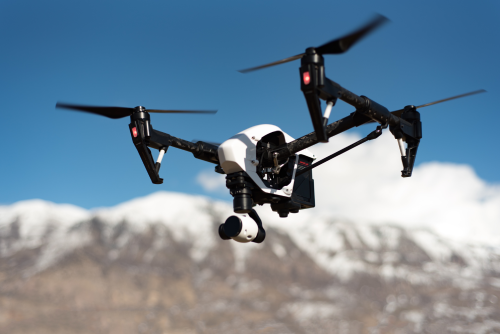
Yuneec H520E is an enterprise-focused multirotor built for professional aerial work rather than casual flying. Positioned as a Yuneec enterprise hexacopter, it is most relevant to inspection teams, public-safety users, survey workflows, and industrial operators that need a mission-oriented airframe. What makes it interesting is not flashy consumer marketing, but the fact that it sits in the professional drone category where reliability, payload choice, and support matter more than headline specs alone.
In that sense, the H520E should not be judged by the same criteria people often use for travel drones, content-creator camera platforms, or entry-level foldables. Enterprise buyers usually care more about repeatability, service access, compatibility with internal workflows, procurement practicality, and whether the aircraft can support a real job to completion. That makes the H520E worth examining even when not every public-facing specification is immediately obvious, because in commercial drone purchasing, the right question is often not “Is this the most exciting spec sheet?” but “Will this platform fit the mission, the team, and the support environment?”
Quick Summary Box
- Drone Name: Yuneec H520E
- Brand: Yuneec
- Model: H520E
- Category: Enterprise/industrial multirotor hexacopter
- Best For: Industrial inspections, public-safety operations, site documentation, and professional aerial missions
- Price Range: Not publicly confirmed in supplied data
- Launch Year: Not publicly confirmed in supplied data
- Availability: Not publicly confirmed in supplied data
- Current Status: Active
- Overall Rating: Not rated due to limited confirmed data
- Our Verdict: A serious enterprise drone platform for organizations that want a professional Yuneec hexacopter, but buyers should verify the exact payload bundle, software tools, support coverage, and total ownership cost before committing.
Introduction
The H520E is an active enterprise/industrial drone from Yuneec, a brand associated with China and Hong Kong and known for both consumer and professional unmanned aircraft. This model belongs to the multirotor class and, based on the supplied record, is specifically an enterprise hexacopter. Readers should care about it if they are comparing commercial drone platforms for inspection, public safety, industrial imaging, or other jobs where payload flexibility and operational workflow matter more than recreational features.
That distinction matters. The commercial drone market is full of aircraft that look impressive in product photos but are ultimately designed around convenience, portability, or general-purpose imaging. The H520E appears to sit in a different lane. It is better understood as a work platform: something an organization might deploy from a vehicle, from a site case, or as part of a documented operating procedure. In those environments, the practical concerns become more grounded:
- Can the aircraft support the right sensor?
- Can crews train on it consistently?
- Can it be maintained without excessive downtime?
- Does the vendor and dealer network support real field use?
- Will it fit internal compliance and recordkeeping requirements?
Those are the questions that shape enterprise drone purchasing, and they are the questions through which the H520E makes the most sense.
Another reason the H520E deserves attention is vendor diversity. Many enterprise buyers automatically begin with the most dominant drone ecosystem, but not every organization wants to be locked into a single brand path. Some teams prefer to evaluate alternatives for procurement flexibility, data-policy reasons, regional support preferences, or simple operational familiarity. Yuneec has relevance here because it offers a recognizable name in professional UAVs without being just another hobby-first manufacturer trying to scale upward.
Overview
What kind of drone is it?
The Yuneec H520E is an enterprise/industrial multirotor drone with a six-rotor layout. In practical terms, that places it in the professional VTOL category used for close-range aerial work, documentation, and task-specific missions rather than long-range fixed-wing mapping or consumer photography.
A hexacopter format usually signals a different design philosophy from compact recreational drones. Instead of being built primarily for easy packing, automatic social-media capture, or low-friction consumer use, aircraft in this class are more often selected for measured, repeatable operations where hover quality and platform control matter. That includes the sort of jobs where an operator may need to maintain position near a roofline, move deliberately around a tower, hold a stable visual angle on an asset, or revisit the same structure over time for condition monitoring.
Because it is a multirotor, the H520E is most naturally suited to missions that benefit from vertical takeoff and landing, the ability to fly in confined launch areas, and the flexibility to stop, hover, reposition, and observe. Those strengths are exactly why multirotors dominate many inspection and public-safety tasks. They are less about covering maximum acreage in one pass and more about precision at the point of interest.
Who should buy it?
It is most relevant to:
- Enterprise operators who need an aircraft chosen for professional work rather than personal use
- Inspection contractors performing visual checks on buildings, structures, roofs, facades, towers, or industrial assets
- Utilities and infrastructure teams that need a controlled aerial platform for site assessment and ongoing documentation
- Public-safety departments seeking an operational drone for scene awareness, observation, or incident support
- Survey and documentation crews that may require a multirotor platform for site progress capture or selected mapping workflows
- Organizations already invested in Yuneec equipment or support channels and looking for platform continuity
It may also appeal to procurement teams that prioritize field service, dealer consultation, or payload fit over public hype. In the enterprise world, an aircraft can be valuable precisely because it does not try to be everything to everyone. A platform that does a narrower set of professional tasks well can be more useful than a more broadly marketed drone that is optimized for mixed consumer use.
What makes it different?
The main differentiator is its hexacopter enterprise positioning. Compared with smaller consumer quads, a professional six-rotor platform is generally chosen for mission confidence, stable hover behavior, and better suitability for payload-driven work. The H520E also matters because it remains listed as active in the supplied record, which is important for teams trying to avoid clearly obsolete airframes.
Its other point of distinction is how it should be evaluated. Many drones are sold as complete all-in-one camera products. The H520E is more meaningful as a system. That usually means the aircraft, controller environment, payload package, support relationship, and operational software all matter together. A buyer who only compares the headline airframe may miss the real story. With enterprise aircraft, value often comes from:
- how well the payload suits the job,
- how reliable the support channel is,
- how straightforward the maintenance process becomes,
- and whether the whole package reduces time, risk, or labor in the field.
The H520E also sits in an interesting competitive space as a non-DJI enterprise option. For some organizations, that alone is enough to justify a closer look.
Key Features
-
Enterprise/industrial positioning rather than hobby or creator focus
The H520E is framed as a work tool first. That affects how it should be judged: less by entertainment features and more by operational suitability. -
Multirotor VTOL airframe for close-range professional operations
Vertical takeoff and landing make it practical for deployment from roadsides, work zones, construction staging areas, and other locations where runway-style launch is impossible. -
Hexacopter configuration, which is typically favored for payload stability and mission-oriented flying
A six-rotor layout often appeals to operators who value deliberate control and platform presence. Exact fail-safe behavior should still be confirmed in official documentation. -
Active status in the supplied record, suggesting it remains relevant in Yuneec’s broader enterprise lineup
For procurement teams, active product status matters because it can affect accessories, support, and long-term maintainability. -
Suitable in principle for inspection, public safety, and industrial documentation workflows
The airframe category fits these mission types well, assuming the selected payload and software match the task. -
Likely intended to be evaluated as a platform-plus-payload system rather than as a fixed-spec consumer camera drone
This is important. The H520E may only make full sense once the exact sensor bundle is known. -
Yuneec branding, which may appeal to operators seeking a non-DJI enterprise option
Some buyers want procurement diversity, a different dealer network, or a platform from a manufacturer outside the most dominant ecosystem. -
Potentially useful for organizations that prioritize controlled flight around structures over travel convenience
Enterprise users often value deployment discipline and airframe function more than foldable portability. -
Better aligned with formal operating procedures than spontaneous recreational flying
This type of aircraft is generally purchased for scheduled missions, trained crews, and documented use. -
Exact camera, endurance, range, software stack, and autonomy suite are not publicly confirmed in the supplied data
That caveat is central. The H520E should be shortlisted only after confirming the current official package.
Full Specifications Table
| Field | Specification |
|---|---|
| Brand | Yuneec |
| Model | H520E |
| Drone Type | Multirotor hexacopter |
| Country of Origin | China/Hong Kong |
| Manufacturer | Yuneec |
| Year Introduced | Not publicly confirmed in supplied data |
| Status | Active |
| Use Case | Enterprise/industrial |
| Weight | Not publicly confirmed in supplied data |
| Dimensions (folded/unfolded) | Not publicly confirmed in supplied data |
| Max Takeoff Weight | Not publicly confirmed in supplied data |
| Battery Type | Not publicly confirmed in supplied data |
| Battery Capacity | Not publicly confirmed in supplied data |
| Flight Time | Not publicly confirmed in supplied data |
| Charging Time | Not publicly confirmed in supplied data |
| Max Range | Not publicly confirmed in supplied data |
| Transmission System | Not publicly confirmed in supplied data |
| Top Speed | Not publicly confirmed in supplied data |
| Wind Resistance | Not publicly confirmed in supplied data |
| Navigation System | Not publicly confirmed in supplied data |
| Obstacle Avoidance | Not publicly confirmed in supplied data |
| Camera Resolution | Not publicly confirmed in supplied data |
| Video Resolution | Not publicly confirmed in supplied data |
| Frame Rates | Not publicly confirmed in supplied data |
| Sensor Size | Not publicly confirmed in supplied data |
| Gimbal | Not publicly confirmed in supplied data |
| Zoom | Not publicly confirmed in supplied data |
| Storage | Not publicly confirmed in supplied data |
| Controller Type | Not publicly confirmed in supplied data |
| App Support | Not publicly confirmed in supplied data |
| Autonomous Modes | Not publicly confirmed in supplied data |
| Payload Capacity | Not publicly confirmed in supplied data |
| Operating Temperature | Not publicly confirmed in supplied data |
| Water Resistance | Not publicly confirmed in supplied data |
| Noise Level | Not publicly confirmed in supplied data |
| Remote ID Support | Not publicly confirmed in supplied data |
| Geo-fencing | Not publicly confirmed in supplied data |
| Certifications | Not publicly confirmed in supplied data |
| MSRP / Launch Price | Not publicly confirmed in supplied data |
| Current Price | Not publicly confirmed in supplied data |
Because so many hard specifications are not publicly confirmed in the supplied data, this table should be read as a baseline identification sheet rather than a buying decision on its own. For enterprise buyers, the next step is not guesswork but documentation. Ask for the current official datasheet, payload matrix, supported controller information, battery details, software environment, and service terms for your region.
That may sound obvious, but it is particularly important here. A drone can be an excellent fit for a specific mission while still being a poor fit for another if the payload package, controller interface, or software stack differ from what your team expects. In enterprise procurement, assumptions are expensive.
Design and Build Quality
Because the confirmed record identifies the H520E as an enterprise hexacopter, its design should be understood through that lens. A six-rotor industrial platform is usually built to prioritize controlled hover, payload carriage, and field mission utility over pocketability or travel convenience.
Exact dimensions, weight, materials, and folded transport size are not publicly confirmed in the supplied data, so it would be misleading to describe the H520E as compact, ruggedized, weather-sealed, or highly portable without checking the official product documents for the current configuration. What can be said more safely is that enterprise multirotors in this class are generally meant for repeat deployment from cases, vehicles, and job sites rather than casual daypack carry.
That distinction affects how design quality should be evaluated. With a consumer drone, buyers often ask whether it folds small enough for travel or whether it looks sleek. With an enterprise aircraft like the H520E, the better questions are operational:
- How intuitive is preflight setup?
- How easy is it to inspect motors, props, and landing gear before launch?
- Can batteries be swapped quickly without awkward handling?
- Is the payload mount convenient and secure?
- How manageable is the aircraft when crews are wearing gloves or working from uneven ground?
- Does the aircraft feel like a platform built for repeated work cycles?
For buyers, the real design questions are practical ones:
- How quickly can it be unpacked and deployed?
- How easy is propeller, battery, and payload servicing in the field?
- Does the frame suit close-in inspection work?
- Are spare parts readily available through authorized channels?
Those details matter more here than cosmetic styling.
A hexacopter also carries certain expectations in the field, even when exact specifications are unknown. Operators often associate six-rotor airframes with a more substantial physical presence, which can be beneficial in professional operations where the drone is expected to behave like a tool rather than a gadget. That can help with crew confidence, especially in industrial environments where equipment is judged by whether it integrates into the workflow cleanly.
Build quality in this category is also closely tied to serviceability. Even the best enterprise drone is not truly useful if a minor component issue results in long downtime. So when assessing the H520E, organizations should treat maintainability as part of build quality:
- availability of replacement props,
- battery pricing and stock,
- repair turnaround time,
- local technician access,
- and whether the aircraft can be kept operational over multiple seasons of use.
A design that looks robust but is difficult to support may prove less practical than a more conventional aircraft backed by a strong dealer network.
Flight Performance
Hard performance benchmarking is limited because the supplied data does not confirm endurance, range, top speed, wind resistance, or ceiling. That means the H520E cannot be fairly scored against rivals on numbers alone from the information provided.
From a platform-analysis perspective, a hexacopter enterprise drone is usually selected for stable, deliberate flight rather than aggressive acceleration or lightweight portability. In professional use, that often translates into better suitability for:
- Hover-based inspection
- Slow, repeatable passes
- Controlled orbiting
- Precise visual positioning around structures and sites
That matters because many enterprise missions are not about getting from point A to point B as quickly as possible. They are about staying in the right place, at the right angle, with the right level of control. An infrastructure inspection team may need to pause repeatedly and examine details. A public-safety crew may need to maintain observation over a scene without unnecessary movement. A construction documentation pilot may need smooth, repeatable flight paths rather than high-speed performance. In those cases, stable behavior is often more useful than raw speed.
A six-motor layout can also be attractive to enterprise crews because it suggests a more mission-focused airframe than a basic consumer quad. However, readers should not assume specific redundancy behavior, wind limits, or fail-safe capability without checking the official operating manual for the H520E. Some buyers instinctively treat hexacopters as inherently more fault-tolerant, but operational resilience depends on the actual system design, firmware behavior, maintenance condition, and payload configuration.
Indoor flying is likely to be a specialized use case rather than the default. Most enterprise drones of this type are far more at home outdoors on planned missions than in tight indoor spaces.
For practical evaluation, organizations considering the H520E should ask for more than a spec sheet. A demo flight can reveal whether the aircraft behaves the way the mission requires. Points to assess include:
- hover stability near structures,
- responsiveness to small stick inputs,
- confidence in braking and stopping,
- gimbal steadiness during slow flight,
- telemetry clarity on the controller,
- and how the aircraft handles realistic job-site wind.
Those factors often matter more than a marketing maximum range claim. Enterprise teams rarely want to push a drone to theoretical limits. They want predictable performance inside the safe operational envelope.
Battery strategy is another major part of real-world flight performance. Since no confirmed endurance figure is provided here, it is especially important to ask what mission duration is realistic with the actual payload you plan to fly. A drone may offer one endurance figure in a bare configuration and another in a working inspection setup. For organizations running multiple flights per day, the key issue is often not the longest single flight but how efficiently the system rotates through batteries, charging, cooling, and relaunch.
Camera / Payload Performance
The supplied record does not identify the H520E’s included camera or payload. For an enterprise drone, that is a major limitation because the payload often determines the real value of the aircraft more than the airframe itself.
Instead of thinking of the H520E as a single camera drone, it is better to think of it as a professional aerial platform whose usefulness depends on the sensor package being purchased. That means buyers should verify whether their specific bundle includes:
- Standard visual imaging
- Zoom capability
- Thermal imaging
- Inspection-oriented optics
- Mapping-oriented imaging
- Stabilized gimbal support
- Compatible storage and export workflows
For industrial users, payload performance is less about cinematic appeal and more about mission outcome. A platform like the H520E can be attractive if it supports the exact workflow required for asset inspection, public-safety documentation, site awareness, or survey capture. But if your work depends on thermal accuracy, evidentiary imaging, photogrammetry quality, or detailed optical zoom, do not assume capability from the airframe name alone.
This is one of the most important buying principles in the entire enterprise drone category: airframe first is the wrong mindset if the mission is sensor-driven. For example:
- A utility inspector may care most about zoom reach, stabilization, and the ability to maintain framing on poles, lines, or mounted equipment.
- A public-safety department may prioritize quick scene awareness, low-light usefulness, or thermal support, depending on its operating profile.
- A construction team may want consistent visual documentation and straightforward media management.
- A survey workflow may require a payload specifically suitable for capture consistency, overlap, and image export into downstream processing tools.
Those needs can differ dramatically, even when the aircraft is the same.
That is why enterprise buyers should request a payload matrix or bundle list before making any judgment. Questions worth asking include:
- Which payloads are currently supported?
- Are those payloads still active products?
- Are there regional restrictions on certain sensors?
- Is the payload interchangeable in the field?
- What calibration or setup steps are required when changing sensors?
- How are images and video stored and exported?
- Are thermal or zoom features tied to specific controller software versions?
- What file formats are generated, and will they fit existing reporting tools?
A drone platform may be excellent in the air yet still underperform operationally if the payload workflow is awkward. For professional teams, time spent struggling with media access, naming conventions, incompatible export formats, or limited reporting support can erase the advantage of good flight behavior.
Stabilization is another area that enterprise buyers should verify directly. In inspection and documentation work, the quality of the gimbal and the steadiness of the sensor package matter at least as much as raw resolution. A stable, well-controlled payload with usable zoom behavior can produce more actionable results than a higher-resolution camera that is harder to aim precisely.
In short, the H520E should not be evaluated as “Does it have a good camera?” but as “Can it carry the right sensor package for the mission, and can our team reliably turn that captured data into decisions or documentation?”
Smart Features and Software
The supplied data does not publicly confirm the H520E’s exact software stack, controller, autonomy modes, or third-party integration support. As a result, this is an area where buyers should be especially careful before procurement.
For an enterprise drone, the most important software questions are usually:
- Does it support waypoint missions?
- Can crews repeat the same route consistently?
- Is there a reliable return-to-home workflow?
- How is live telemetry handled?
- What inspection or mapping workflow support is available?
- Are data export and reporting tools included?
- Is fleet management or role-based team operation supported?
- Can it integrate with existing enterprise software tools?
That is the right evaluation framework for the H520E. If your organization depends on specific autonomy features, API access, cloud reporting, or mission-planning workflows, ask for confirmation from Yuneec or an authorized enterprise dealer rather than assuming parity with other brands.
Software can be the deciding factor in enterprise adoption. Two drones may appear similar as airframes, but the one with better route planning, mission repeatability, data handling, and controller usability will often deliver a far better ownership experience. This is especially true for inspections, where repeatable routes reduce operator variability, and for public-sector use, where clear telemetry and evidence handling may matter more than advanced cinematic settings.
Here are some software considerations worth reviewing in depth:
Mission Planning
If the H520E is to be used for repeat inspection routes or site progress documentation, mission planning support is critical. Teams should verify whether they can build and save structured flight plans, whether those plans can be reused, and whether route parameters can be standardized across multiple crews.
Repeatability
A major value driver in industrial drone work is the ability to revisit the same position over time. If a platform supports repeatable flight patterns, organizations can compare asset condition across weeks or months with greater consistency. That is far more useful than simply having manual flight capability.
Telemetry and Situational Awareness
Enterprise operators usually need more than a simple live video feed. Battery status, signal strength, flight path awareness, GPS confidence, and mission state all influence safety and productivity. A platform that presents telemetry clearly can reduce workload for the pilot and improve crew coordination.
Controller Workflow
The controller experience can have a huge impact on training time and day-to-day use. Even an otherwise capable drone becomes frustrating if crews find the interface cluttered, inconsistent, or difficult to learn. Organizations considering the H520E should ask to see the current controller environment and understand how updates are handled.
Data Governance
Some organizations care deeply about where flight data is stored, whether cloud services are optional, and how captured media is transferred and archived. For public-safety, infrastructure, and regulated industries, those concerns can be more important than any single hardware feature.
Integration
If your team uses existing inspection software, mapping platforms, asset-management systems, or reporting tools, the drone does not operate in isolation. The real test is whether the H520E can fit into the broader process with minimal friction.
In other words, smart features are not just about autonomy buzzwords. They are about whether the aircraft shortens the path from launch to useful result.
Use Cases
The most realistic use cases for the Yuneec H520E are professional missions where a multirotor hexacopter makes more sense than a small consumer drone.
-
Infrastructure inspection
Bridges, towers, structural elements, elevated equipment, and external surfaces often benefit from a stable hovering aircraft that can approach deliberately and hold visual angles. -
Utility and energy asset documentation
Power, telecom, and related infrastructure teams may need routine visual checks, maintenance support imagery, or condition records from hard-to-reach viewpoints. -
Industrial site monitoring
Large facilities can use enterprise drones for periodic visual review, situational awareness, and operational documentation without relying solely on ground access. -
Public-safety aerial observation and scene documentation
Police, fire, rescue, and emergency management users often need a drone that feels operational rather than recreational, especially in formal response contexts. -
Construction progress tracking
Repeated flights over a site can provide stakeholders with visual records of progress, staging changes, and project milestones. -
Roof and facade inspection
A multirotor can reduce the need for ladders, lifts, or manual access in some scenarios by providing close visual coverage of surfaces from safer stand-off positions. -
Survey and mapping work, if paired with a suitable payload and software workflow
The key caveat is payload suitability. The airframe alone does not confirm mapping readiness. -
Training for enterprise drone crews
Organizations may use a platform like this to standardize internal operating procedures and pilot competency around a dedicated professional airframe. -
Fleet standardization for organizations already using Yuneec systems
Existing Yuneec users may find the H520E relevant as part of a continuity plan rather than a fresh entry from another ecosystem.
These use cases all share a common theme: the drone is acting as a field instrument, not a leisure device. The H520E makes the most sense where organizations want to formalize aerial tasks into recurring workflows. That could mean a municipality documenting infrastructure, a contractor building inspection reports, or a safety team improving visibility during operations.
What it is probably not best understood as is a one-size-fits-all answer for every drone task. If a team mainly needs ultra-portable deployment from a backpack, or a creator-style camera experience, or long-area coverage better suited to another airframe type, the H520E may be less compelling. But for deliberate close-range professional work, its category is a strong fit.
Pros and Cons
Pros
-
Enterprise-focused platform instead of a recreational crossover product
That alone makes it more relevant to organizations with formal operating needs. -
Hexacopter layout is generally well suited to stable hover and close-range mission work
Especially useful in inspections and structure-adjacent operations. -
Active status reduces the risk of evaluating a clearly retired platform
Important for support planning and accessory procurement. -
Multirotor VTOL design is useful for inspections and operations from confined takeoff areas
Helpful on construction sites, road shoulders, and industrial grounds. -
Yuneec offers a credible alternative brand in the professional drone market
Valuable for buyers seeking options beyond the most dominant ecosystem. -
Better aligned with task-based aerial work than entry-level consumer drones
The platform category itself points toward more serious use. -
Potentially attractive for organizations already familiar with Yuneec support or training paths
Existing operational familiarity can reduce transition friction.
Cons
-
Many important specifications are not publicly confirmed in the supplied data
This limits direct comparison and makes due diligence essential. -
Exact payload, camera, and sensor bundle are not identified here
For an enterprise drone, that is a major unknown. -
No confirmed price data, making value-for-money comparison difficult
Procurement teams will need quote-based evaluation. -
Unknown range, endurance, top speed, and obstacle-sensing capability limit direct benchmarking
Rivals with transparent data may be easier to shortlist initially. -
Enterprise drones often have higher ownership costs for batteries, training, repairs, and support
The purchase price is rarely the full cost. -
Likely less portable and less simple than compact foldable enterprise quads
Teams prioritizing rapid backpack deployment may prefer another style of platform. -
Software and workflow fit must be confirmed rather than assumed
This can lengthen evaluation time.
Comparison With Other Models
Because the supplied H520E data is limited, the table below is best read as a strategic comparison rather than a precise spec-sheet shootout.
| Model | Price | Flight Time | Camera or Payload | Range | Weight | Best For | Winner |
|---|---|---|---|---|---|---|---|
| Yuneec H520E | Not publicly confirmed in supplied data | Not publicly confirmed in supplied data | Payload bundle not publicly confirmed in supplied data | Not publicly confirmed in supplied data | Not publicly confirmed in supplied data | Teams wanting a Yuneec enterprise hexacopter | Depends on confirmed package |
| DJI Matrice 30 Series | Typically higher enterprise-tier pricing depending on package | Enterprise mission class | Integrated enterprise payload approach | Enterprise-grade platform class | Compact enterprise quad class | Buyers prioritizing ecosystem maturity and integrated workflow | DJI for ecosystem depth |
| Autel EVO Max 4T | Enterprise-priced; varies by region | Compact enterprise class | Integrated visual/thermal payload concept | Enterprise-grade compact class | Portable enterprise quad class | Teams prioritizing portability and rapid deployment | Autel for portability |
| Yuneec H520 | Older H520-family pricing varies by market and remaining stock | Older-generation enterprise class | Older Yuneec payload ecosystem | Older-generation platform class | Not publicly confirmed in supplied data | Existing H520 users assessing continuity | H520E for newer active positioning |
H520E vs a close competitor
Against a model like the DJI Matrice 30 Series, the H520E’s appeal would likely rest on platform preference, payload fit, and organizational comfort with the Yuneec ecosystem. DJI usually has stronger visibility in the enterprise market, but that does not automatically make it the better choice if a buyer wants a different vendor path or already works with Yuneec-compatible processes.
The most likely reasons a buyer would choose a more established competitor are software maturity, integrated payload convenience, and ecosystem depth. The most likely reasons to still consider the H520E are:
- desire for brand diversification,
- preference for a more traditional enterprise airframe style,
- existing Yuneec familiarity,
- or a better payload/support match through a regional dealer.
H520E vs an alternative in the same segment
Compared with a more compact integrated option such as the Autel EVO Max 4T, the H520E looks more like a traditional enterprise airframe choice. The tradeoff in this kind of comparison is usually portability versus platform style: some teams want a fast-deploy folding quad, while others prefer a mission-specific airframe they view as more professional or better suited to their workflow.
A compact integrated drone often wins on convenience:
- quicker packing,
- easier transport,
- simpler deployment,
- and a more consumer-friendly interface.
A traditional enterprise platform may win when the organization values:
- procedural operation,
- platform identity,
- payload-centric thinking,
- or integration with an established support channel.
That does not mean one class is inherently superior. It means the procurement question is really about operational philosophy.
H520E vs an older or previous-generation option
The obvious legacy comparison is the earlier H520 family. If you are already operating older Yuneec enterprise aircraft, the H520E may be worth investigating as a continuity option. The key question is not just whether it is newer, but whether the payload compatibility, support path, and software workflow genuinely improve your operation.
For existing Yuneec users, the H520E could potentially reduce training friction if controls, maintenance logic, or operational habits feel familiar. On the other hand, legacy users should still verify:
- whether older accessories remain compatible,
- whether existing batteries or chargers transfer,
- whether software workflows have changed,
- and whether the newer package solves actual field pain points.
How to compare the H520E intelligently
Because public hard specs are limited here, the smartest way to compare the H520E against rivals is to build a mission matrix rather than rely on broad impressions. Score each candidate against:
- Payload suitability
- Support availability in your region
- Repair turnaround expectations
- Controller and software workflow
- Battery logistics
- Training burden
- Data export and reporting compatibility
- Procurement terms and total cost
This approach often produces a better decision than comparing only range, resolution, or top speed. Enterprise drones succeed when they fit the organization, not just the marketing sheet.
Manufacturer Details
Yuneec is both the brand and manufacturer in this case. The company is associated with China and Hong Kong and is known in the drone market for producing multirotor aircraft across consumer and enterprise categories.
In the broader market, Yuneec has often been viewed as an alternative to the largest dominant drone brands, with particular relevance in camera drones and professional mission platforms. Its reputation tends to center on practical flying platforms rather than purely spec-driven marketing. For enterprise buyers, that means the brand is usually evaluated on support, payload availability, mission workflow, and fleet suitability rather than on lifestyle appeal.
Manufacturer identity matters more in enterprise aviation than many first-time buyers realize. The brand is not just the logo on the airframe; it shapes firmware updates, controller design, part availability, documentation quality, and the long-term support path. A drone can be technically capable, but if manufacturer support is thin in your region, that capability may be difficult to access in practice. That is why Yuneec’s role as an enterprise manufacturer is part of the purchase equation, not just background information.
Support and Service Providers
Support quality matters more for an enterprise drone than for a casual hobby model. With the H520E, buyers should look beyond the aircraft itself and verify:
- Official technical support availability in their region
- Authorized repair options
- Spare battery and propeller availability
- Payload servicing options
- Firmware update process
- Training support for crew onboarding
- Turnaround time for warranty or non-warranty repairs
If your organization needs uptime guarantees, it is smarter to buy through an authorized enterprise dealer or regional distributor than through a generic marketplace listing. Readers should also verify whether local service coverage exists before deployment planning, since enterprise support quality can vary by country and dealer network.
This is one area where dealer quality can matter almost as much as manufacturer quality. A strong enterprise reseller can often help with:
- initial configuration,
- workflow advice,
- training,
- warranty coordination,
- battery planning,
- and accessory sourcing.
A weak reseller, by contrast, may leave the buyer with little more than a box and a phone number. That difference can become costly once the aircraft enters regular field use.
Organizations should also ask support-oriented questions before purchase:
- What is the standard repair process?
- Are loaner units available in any service program?
- What is the expected support response time?
- Can the dealer help with pilot onboarding and SOP development?
- Are spare payloads or backup batteries stocked locally?
- How are firmware issues escalated?
For public-sector and industrial users, these are not minor details. They directly affect mission continuity.
Where to Buy
Because the H520E is an enterprise/industrial drone, the most sensible buying routes are usually:
- Official brand sales channels
- Authorized Yuneec enterprise dealers
- Regional commercial drone distributors
- Specialized public-safety or industrial UAV resellers
Even if a listing appears on a general marketplace, enterprise buyers are usually better served by procurement through a dealer that can confirm the payload package, batteries, software, training, and after-sales support. Since the supplied data does not publicly confirm retail availability by region, buyers should verify local stock and service coverage before ordering.
For many organizations, especially businesses and government departments, the purchase process may involve more than simply finding the lowest listed price. It can include:
- formal quotations,
- compliance documentation,
- approved vendor review,
- training proposals,
- and service agreements.
That is another reason why dealer-led purchasing often makes more sense than anonymous online checkout.
Used-market purchasing may occasionally appear tempting, particularly if an older Yuneec system is available at a discount. But for an active enterprise program, used procurement should be approached carefully unless maintenance history, battery condition, payload support, and firmware status are all clear.
Price and Cost Breakdown
No confirmed launch price or current price is provided in the supplied data. That means buyers should not budget for the H520E based on assumptions alone.
Before purchase, verify the full cost of ownership, including:
- Airframe price
- Included controller and display hardware
- Camera or sensor payload package
- Number of batteries in the bundle
- Charger type and charging capacity
- Spare props and routine wear parts
- Carry case or transport solution
- Training or onboarding costs
- Repair and maintenance costs
- Insurance or business liability coverage
- Any software licensing or subscription fees
With enterprise drones, the difference between a basic bundle and a ready-to-deploy operational kit can be substantial.
This is where many first-time commercial buyers underestimate the real budget. An aircraft that seems manageable at quote stage can become much more expensive once the organization adds the items required for dependable daily use. In practical terms, a serious operational setup may need:
- enough batteries for back-to-back flights,
- multi-battery charging infrastructure,
- duplicate props,
- spare landing components,
- rugged transport storage,
- media handling accessories,
- pilot training time,
- and possibly internal policy or documentation work before first deployment.
If the H520E is being purchased for inspections or public-safety use, downtime cost should also be considered. A cheaper package that lacks strong support can become more expensive over time if repairs are slow or parts are hard to source.
A useful way to evaluate the H520E financially is to divide costs into three buckets:
1. Initial Acquisition
This includes the aircraft, payload, controller, batteries, chargers, and any required accessories. This is the number most buyers focus on first.
2. Operational Readiness
This includes training, spare parts, transport cases, workflow setup, insurance, and any software required to actually turn the drone into a functioning field tool.
3. Ongoing Ownership
This includes battery replacement over time, repairs, maintenance, firmware management, service support, and the labor associated with keeping the system in rotation.
For enterprise users, the third category is often where the true difference between platforms appears. An aircraft that is easy to maintain and supported by a responsive dealer may deliver better long-term value even if the initial quote is higher.
Regulations and Compliance
The H520E sits in a professional drone category where compliance matters as much as hardware. Regulations vary by country, so operators should verify local law before any commercial or public-sector use.
Key issues to check include:
- Aircraft registration requirements
- Pilot certification or licensing for commercial operations
- Operational approvals for enterprise work
- Rules for flying near people, roads, or critical infrastructure
- Privacy and data-protection rules for imaging missions
- Thermal imaging restrictions where applicable
- Remote ID requirements
- Logging, maintenance, and incident reporting obligations
The supplied data does not publicly confirm Remote ID support, weight class, or specific certifications for this model. Those items should be verified directly from official documentation before deployment in regulated environments.
Enterprise compliance goes beyond pilot licensing. Many organizations also need internal procedures covering:
- preflight documentation,
- maintenance logs,
- battery tracking,
- firmware update controls,
- mission risk assessment,
- data retention,
- and incident escalation.
Public-safety and infrastructure operators may have additional policy concerns, especially when flights involve sensitive sites, evidentiary media, or contracted service work.
If the H520E is being considered for public contracts or regulated industrial operations, buyers should confirm not only whether the aircraft can legally fly, but whether it can be documented in the way the organization requires. That may include asset records, chain-of-custody practices for imagery, internal procurement compliance, or cybersecurity review depending on jurisdiction and sector.
The broad point is simple: enterprise drone adoption is never just about buying hardware. The aircraft must fit the legal and administrative environment surrounding the mission.
Who Should Buy This Drone?
Best for
-
Enterprise teams needing a professional multirotor rather than a consumer drone
Especially those with repeatable operational needs and formal procedures. -
Inspection crews operating around buildings, utilities, or industrial sites
These users often value hover control, close-in maneuvering, and payload flexibility. -
Public-safety organizations evaluating non-consumer aerial platforms
A dedicated enterprise aircraft can feel more appropriate for official deployment. -
Buyers already familiar with Yuneec systems or dealer support
Existing ecosystem comfort can shorten evaluation and training time. -
Organizations that choose hardware based on workflow and payload fit, not just headline specs
This is the ideal mindset for assessing the H520E.
Not ideal for
-
Casual hobby pilots
This platform category is not aimed at leisure use. -
Travel-focused users who want a small foldable drone
A compact enterprise quad will likely be more convenient. -
Buyers who need transparent public pricing and a simple consumer checkout path
The H520E appears better suited to quote-based procurement. -
Operators who require confirmed detailed specs before shortlisting
If hard public data is a must, this may be a frustrating evaluation. -
Creators shopping mainly for cinematic photo and video features
The H520E is best approached as a mission tool, not a content lifestyle drone.
Final Verdict
The Yuneec H520E looks most compelling as a mission-oriented enterprise hexacopter, not as a mass-market drone. Its biggest strengths are its professional positioning, multirotor practicality, and the fact that it remains active in the supplied record. Its biggest drawbacks are the lack of publicly confirmed detail on core specs, payload package, software features, and pricing.
For the right buyer, that does not rule it out. It simply means the H520E should be purchased like a professional tool: with careful verification of the exact sensor bundle, controller, support channel, and total ownership cost. If your organization wants a Yuneec enterprise platform for inspection, industrial work, or public-safety style missions, the H520E is worth serious consideration. If you need easy consumer-style transparency and instant spec-sheet certainty, it is a harder sell until those details are confirmed.
The clearest way to think about the H520E is this: it is not trying to win a popularity contest. It is relevant because enterprise drones are judged by mission outcome, not by broad consumer appeal. If the H520E’s available payloads, service path, software capabilities, and procurement terms line up with your needs, it could be a very sensible professional choice. If they do not, then the missing public detail becomes more than an inconvenience and turns into a decision barrier.
So the best conclusion is a practical one. Shortlist it if you are specifically looking for:
- a professional Yuneec hexacopter,
- a non-consumer workflow-oriented drone,
- and a platform to be evaluated as part of a full operational package.
But do not buy it on name alone. Confirm the configuration, confirm the support, confirm the software, and confirm the total ownership model. In the enterprise UAV world, that is what separates a good purchase from an expensive experiment.
