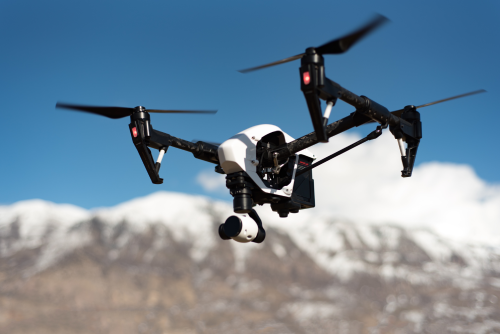
Yuneec H520E RTK is an enterprise/industrial multirotor built for professional work where positioning accuracy matters more than consumer-friendly convenience. It sits in Yuneec’s active enterprise lineup as an RTK-enabled hexacopter aimed at survey, inspection, and other repeatable data-capture jobs. For buyers comparing industrial drone platforms, the H520E RTK matters because it combines a six-rotor airframe concept with precision-oriented workflow potential.
Quick Summary Box
- Drone Name: Yuneec H520E RTK
- Brand: Yuneec
- Model: H520E RTK
- Category: enterprise/industrial
- Best For: RTK mapping, inspection, and industrial field operations that benefit from hexacopter stability
- Price Range: Not publicly confirmed in supplied data
- Launch Year: Not publicly confirmed in supplied data
- Availability: Not publicly confirmed in supplied data
- Current Status: Active
- Overall Rating: Not rated due to limited confirmed data
- Our Verdict: A specialized Yuneec enterprise RTK hexacopter best suited to professional teams that value precision workflows and a six-rotor platform, but buyers should verify payload bundle, software, support, and pricing before procurement.
Introduction
The Yuneec H520E RTK is a Yuneec-branded enterprise drone from China/Hong Kong designed for industrial and professional users rather than casual flyers. Its core identity is clear from the supplied record: this is an active RTK hexacopter intended for accuracy-sensitive operations. Readers should care about it if they are comparing mapping and inspection platforms, evaluating alternatives to more common enterprise brands, or standardizing a fleet around Yuneec hardware.
That positioning is important because the H520E RTK is not trying to win on the same terms as mainstream consumer drones. It is not primarily about cinematic video, social-media-friendly portability, or buying a single box from a general electronics retailer and being airborne ten minutes later. Instead, it belongs in the category of working aircraft: tools selected because they fit a mission, an accuracy requirement, a maintenance plan, and an organization’s existing procurement and support model.
In practical buying terms, the H520E RTK should be viewed as part of a workflow rather than as a standalone gadget. Enterprise operators typically care about whether a drone can hold a precise hover over an inspection point, repeat the same route across multiple site visits, geotag collected data accurately, integrate with mission-planning processes, and remain supportable over time. Those are the questions that make this platform relevant.
The challenge for prospective buyers is that the supplied public data leaves many important line-item specifications unconfirmed. That does not make the aircraft unimportant; it just means the buying decision has to be more disciplined. Instead of shopping by headline numbers alone, teams considering the H520E RTK should focus on the operational concept: six rotors, RTK-capable navigation, enterprise orientation, and probable suitability for mapping, inspection, public-sector, and industrial tasks where consistency matters.
Overview
What kind of drone is it?
The H520E RTK is an enterprise/industrial multirotor with a hexacopter layout and RTK positioning capability. In practical terms, that means it is aimed at professional jobs where stable hovering, repeatable routes, and more precise geospatial positioning are more important than portability or consumer-style content creation.
The combination of multirotor flight and RTK matters because it speaks directly to use case. Fixed-wing aircraft can cover large mapping areas efficiently, but multirotors remain the preferred option for many organizations that need vertical takeoff and landing, controlled low-altitude flight, close-in inspection, and flexible deployment from constrained sites. Add RTK, and the platform becomes more attractive for workflows where location confidence and repeated data collection are central to the mission.
The hexacopter element deserves emphasis too. Six-rotor aircraft sit in a distinct place within the enterprise market. They usually project a more traditional industrial feel than small foldable quadcopters, and for many buyers they signal stability, deliberate handling, and a platform designed with professional field work in mind.
Who should buy it?
This model is most relevant to survey teams, inspection operators, infrastructure managers, public-sector users, and enterprise buyers who want a professional drone platform rather than a hobby aircraft. It may also appeal to organizations already using Yuneec systems and looking for an RTK-capable option inside the same brand ecosystem.
It is especially worth a look for teams that value consistency over novelty. If your operation depends on recurring flight plans, structured field procedures, chain-of-custody around captured imagery, or documented workflows for internal quality control, the H520E RTK’s general profile makes sense. A municipal engineering department, utility contractor, civil survey team, or industrial asset owner may be a more natural buyer here than a freelance creator or general enthusiast.
The platform can also be strategically relevant for organizations that do not want to standardize exclusively around the dominant enterprise drone brand in the market. For some buyers, vendor diversity, procurement policy, internal IT requirements, or established Yuneec support relationships can make an alternative platform more attractive than defaulting to the most obvious competitor.
What makes it different?
The biggest differentiator is the mix of RTK capability and a hexacopter airframe. Compared with smaller RTK quadcopters, a six-rotor design is typically associated with stronger hover confidence and redundancy analysis, while compared with larger enterprise heavy-lift platforms it may offer a more focused, mission-oriented configuration. Exact package details still need verification, but the positioning of the H520E RTK is clearly professional and precision-driven.
That difference matters because enterprise buyers are not all solving the same problem. Some want maximum sensor flexibility and are willing to carry a larger, more expensive platform to get it. Others want the lightest possible RTK aircraft for rapid deployment by a single pilot. The H520E RTK appears to sit between those poles: not a pocketable system, not obviously a heavy-lift flagship, but a dedicated industrial multirotor aimed at predictable operational work.
There is also a philosophical distinction. A lot of compact enterprise drones are designed as highly capable extensions of consumer-friendly product lines. The H520E RTK, by contrast, reads more like a purpose-built utility aircraft. For some teams, that matters because the aircraft’s identity aligns more closely with inspection, mapping, and field operations than with hybrid photo/video marketing.
Key Features
- Enterprise/industrial multirotor platform
- Hexacopter configuration, as noted in the supplied data
- RTK positioning focus for higher-precision workflow potential
- Active product status in Yuneec’s enterprise lineup
- Suited to mapping, surveying, inspection, and repeatable field operations
- Vertical takeoff and landing convenience typical of multirotor aircraft
- Likely designed around field deployment rather than recreational flying
- Payload and camera package should be verified by bundle, since exact included sensor details are not publicly confirmed in the supplied data
- Key numeric performance figures such as endurance, range, speed, and weight are not publicly confirmed in the supplied data
Those bullet points summarize the confirmed profile, but the real value is in how they interact. RTK by itself is useful, but RTK paired with an aircraft designed for professional route repetition becomes much more meaningful. A hexacopter by itself suggests a certain flight character, but in an enterprise context it also shapes maintenance planning, spare parts requirements, and operator expectations. And active lineup status matters because enterprise buyers need more than a working aircraft today; they need a platform that still sits within a live support and firmware environment.
Another feature worth noting, even if indirectly, is the probable workflow orientation of the platform. Enterprise aircraft are often evaluated by what they reduce: fewer repeat flights, less manual correction, less ambiguity in documentation, fewer compromises during inspection hover work, and less friction in fleet management. The H520E RTK’s appeal is likely strongest in exactly those operational savings, not in flashy feature checklists.
Full Specifications Table
| Field | Specification |
|---|---|
| Brand | Yuneec |
| Model | H520E RTK |
| Drone Type | Enterprise/industrial multirotor hexacopter |
| Country of Origin | China/Hong Kong |
| Manufacturer | Yuneec |
| Year Introduced | Not publicly confirmed in supplied data |
| Status | Active |
| Use Case | Surveying, mapping, inspection, and enterprise operations |
| Weight | Not publicly confirmed in supplied data |
| Dimensions (folded/unfolded) | Not publicly confirmed in supplied data |
| Max Takeoff Weight | Not publicly confirmed in supplied data |
| Battery Type | Not publicly confirmed in supplied data |
| Battery Capacity | Not publicly confirmed in supplied data |
| Flight Time | Not publicly confirmed in supplied data |
| Charging Time | Not publicly confirmed in supplied data |
| Max Range | Not publicly confirmed in supplied data |
| Transmission System | Not publicly confirmed in supplied data |
| Top Speed | Not publicly confirmed in supplied data |
| Wind Resistance | Not publicly confirmed in supplied data |
| Navigation System | GNSS navigation with RTK capability |
| Obstacle Avoidance | Not publicly confirmed in supplied data |
| Camera Resolution | Not publicly confirmed in supplied data |
| Video Resolution | Not publicly confirmed in supplied data |
| Frame Rates | Not publicly confirmed in supplied data |
| Sensor Size | Not publicly confirmed in supplied data |
| Gimbal | Payload-dependent; not publicly confirmed in supplied data |
| Zoom | Not publicly confirmed in supplied data |
| Storage | Not publicly confirmed in supplied data |
| Controller Type | Not publicly confirmed in supplied data |
| App Support | Not publicly confirmed in supplied data |
| Autonomous Modes | Not publicly confirmed in supplied data |
| Payload Capacity | Not publicly confirmed in supplied data |
| Operating Temperature | Not publicly confirmed in supplied data |
| Water Resistance | Not publicly confirmed in supplied data |
| Noise Level | Not publicly confirmed in supplied data |
| Remote ID Support | Not publicly confirmed in supplied data |
| Geo-fencing | Not publicly confirmed in supplied data |
| Certifications | Not publicly confirmed in supplied data |
| MSRP / Launch Price | Not publicly confirmed in supplied data |
| Current Price | Not publicly confirmed in supplied data |
The table above makes one thing obvious: public certainty around this aircraft is stronger at the category level than at the exact specification level. That means buyers should resist the temptation to compare it too literally against competitors using incomplete numbers. In the enterprise market, bundle composition can materially change how a product should be evaluated. A version sold with one sensor suite, one controller, or one software arrangement may be a very different proposition from another region’s package, even when the aircraft name is the same.
For that reason, the most responsible way to use this specification table is as a checklist for procurement. Each “not publicly confirmed” line is not just a missing fact; it is a question that should be answered before purchase. How long does it actually fly in your intended configuration? What correction workflow is supported? What controller is bundled? Which data outputs are available? What payload is included? What support commitments exist? Enterprise teams should turn these unknowns into formal pre-purchase verification items.
Design and Build Quality
Even with limited published measurements in the supplied data, the H520E RTK’s role is fairly easy to interpret. A hexacopter enterprise airframe usually prioritizes mission stability, rotor redundancy, and operational confidence over travel convenience. That makes it a very different proposition from compact folding RTK drones designed to fit into a small backpack.
For industrial buyers, that matters. A larger six-rotor frame generally suggests better suitability for controlled hover work, precise positioning tasks, and field deployments where consistency matters more than ultra-light portability. It can also be attractive for organizations that want a platform with a more conservative enterprise feel than a lightweight foldable quadcopter.
There is a psychological component to design in enterprise procurement as well. Clients, safety managers, and internal stakeholders often respond differently to an aircraft that visibly looks like a professional tool. A dedicated hexacopter platform can project seriousness in ways that matter during contract work, public-sector deployment, or infrastructure inspection. That does not automatically make it superior, but it can influence how a drone program is perceived inside a larger operation.
Build quality in this segment is also about serviceability, not just finish. Industrial operators care whether propellers are easy to inspect and replace, whether batteries are straightforward to manage in the field, whether landing procedures feel stable on uneven ground, and whether transport from vehicle to launch point is practical for a crew wearing PPE or carrying other equipment. Even without precise construction details, the H520E RTK’s category suggests that these concerns are more relevant than style or aesthetics.
What cannot be confirmed from the supplied data are the exact materials, folded size, service access points, propeller format, or landing gear design. So the safest conclusion is that the H520E RTK appears purpose-built for professional outdoor work, but buyers should still verify transport case size, pack-out complexity, setup time, propeller replacement procedure, and maintenance requirements before purchase.
A useful procurement question is not simply “Is it well built?” but “Is it well built for our field routine?” A platform can be robust yet still awkward for a two-person inspection team operating from roadside pull-offs, or durable but inconvenient for rapid deployment between multiple sites in a day. The H520E RTK’s design philosophy likely suits deliberate operations better than high-frequency travel hopping.
Flight Performance
Because the supplied record does not confirm endurance, range, speed, or ceiling, any performance judgment has to stay conservative. What can be said with confidence is that a hexacopter RTK drone is usually intended for deliberate, controlled, outdoor work rather than aggressive speed or lightweight travel missions.
From an analysis standpoint, the six-rotor layout should help the H520E RTK feel more planted in hover and more reassuring during precision capture tasks than smaller consumer-style aircraft. RTK capability also suggests that positional accuracy and repeatability are central to its mission profile, which is especially relevant for mapping grids, inspection hold points, and repeated site documentation.
For many industrial operators, “good performance” does not mean maximum speed. It means predictable behavior in wind, clean station-holding, dependable response to commands, and the ability to execute structured flight patterns without drama. A drone used for corridor mapping, roof inspection, utility structure observation, or construction progress capture benefits more from disciplined flight characteristics than from sport-like acceleration.
The likely tradeoff is portability and possibly efficiency. Hexacopters tend to be less compact than small RTK quadcopters, and buyers should not assume class-leading flight time without checking the official package documentation. Indoor use is also likely to be niche: RTK brings its biggest value outdoors, and enterprise hexacopters are typically more at home in open work environments than in tight indoor spaces.
Another aspect of performance worth considering is operational tempo. Larger enterprise aircraft may require more preparation before launch, from propeller checks to battery handling to site setup. That is not necessarily a weakness if the aircraft rewards that preparation with stable, repeatable mission execution. But it does mean the H520E RTK is probably best matched with teams that run checklists and treat flights as formal work tasks rather than opportunistic ad hoc sorties.
RTK also changes how performance should be understood. In a survey environment, positional confidence can be as important as raw flight endurance. If better geospatial accuracy reduces the need for rework, additional checkpoints, or repeated flights, then real-world productivity may improve even if the aircraft is not the smallest or longest-flying option on the shortlist.
Camera / Payload Performance
For the H520E RTK, payload value matters more than pure camera marketing. This is not best understood as a casual photography drone; it is better viewed as a professional aerial work platform where the sensor package and geospatial workflow determine real-world usefulness.
The exact included camera or payload is not publicly confirmed in the supplied data. That is important, because enterprise buyers should not assume every H520E RTK package ships with the same sensor, zoom capability, or inspection tooling. Different dealer bundles and regional enterprise packages can materially change what the aircraft is best at.
That bundle dependence affects almost every buying decision. A mapping-oriented payload may make the aircraft useful for orthomosaic generation, terrain modeling, and site progress records. A zoom-oriented setup may shift its value toward tower, roofline, or infrastructure inspection. Another bundle may prioritize general documentation. The same airframe can therefore support very different mission sets depending on what is hanging underneath it and what software is used to process the results.
What RTK does add, however, is workflow value. In mapping and documentation jobs, better positional accuracy can improve geotag confidence, reduce reliance on less precise location metadata, and support more repeatable results across multiple flights. If you are considering the H520E RTK for inspection or surveying, the critical buying question is not just “what drone is this?” but “which sensor and software bundle comes with it?”
It is also worth separating still-image requirements from video requirements. Some enterprise buyers need highly consistent stills with reliable overlap and stable geospatial metadata. Others need live inspection visibility, perhaps with zoom or detailed framing during hover. Still others need documentation footage for reporting and stakeholder communication. The H520E RTK’s suitability will depend on whether the included payload aligns with your dominant output, not with the broad label “camera drone.”
For procurement teams, the right way to evaluate payload performance is to request sample deliverables. Ask the dealer or integrator for representative datasets, test maps, or inspection imagery from the exact bundle under consideration. A sensor that looks adequate on paper may be poor for your actual targets, and a bundle that sounds specialized may turn out to be exactly what your workflow needs.
Smart Features and Software
The smartest confirmed part of the H520E RTK story is its RTK focus. That strongly points to precision-oriented positioning and survey-friendly mission potential. For professionals, that matters more than consumer novelty features.
In enterprise drone operations, software often matters as much as the aircraft. A good airframe with weak workflow integration can become an expensive bottleneck. Conversely, a platform with a coherent mission-planning and data-handling process can save significant labor across a project lifecycle. That is why smart-feature evaluation should move beyond “does it have automation?” and into “does the automation match our documentation, QA, and reporting process?”
Beyond RTK, the exact software stack is not publicly confirmed in the supplied data. Buyers should verify:
- Which controller is included in the current package
- What mission-planning software is supported
- Whether waypoint, grid, corridor, or repeatable-route workflows are included
- Whether any SDK, API, or fleet-management tools are available
- How the drone handles correction data, logs, and export formats
- Which failsafe and return-to-home functions are implemented in the current firmware
Those questions are especially important for teams that operate at scale. A single-pilot owner-operator may tolerate some software friction if the aircraft itself fits the job. A department running multiple crews or reporting into engineering, legal, or public-works systems usually cannot. They need consistent file handling, predictable firmware behavior, and a documented path from mission plan to processed output.
It is also wise to confirm whether the RTK workflow depends on external services, local base station arrangements, or specific post-processing steps. The existence of RTK capability alone does not tell you how easy it is to deploy in your region or how much operator training is needed to use it effectively. Some organizations have strong geospatial expertise already; others need a more turnkey experience.
In other words, the platform clearly belongs in the smart enterprise category, but the details of automation and software integration should be confirmed directly through Yuneec or an authorized enterprise reseller. Software compatibility, update support, and data export options should all be treated as core buying criteria, not afterthoughts.
Use Cases
The most realistic use cases for the H520E RTK are the ones where precision positioning and stable multirotor flight matter most.
- RTK-assisted aerial mapping and site surveying
- Construction progress documentation with improved positional repeatability
- Utility, infrastructure, and asset inspection
- Municipal and public-works surveying
- Environmental monitoring and land-management tasks
- Industrial facility documentation
- Public-sector evidence and scene documentation where geospatial accuracy matters
- Enterprise pilot training within a Yuneec-based fleet
These use cases all share one theme: the value of flying the same job well, not merely flying it once. In construction, repeatable flights allow better comparison between milestones. In utilities, stable hover and controlled approach behavior matter when viewing fixed assets. In environmental work, positional accuracy supports time-series comparison. In municipal documentation, more reliable geospatial reference can improve how captured data fits into planning or asset-management systems.
The H520E RTK may also be appealing in jobs where access constraints favor multirotors over larger fixed-wing survey systems. Launching from a tight roadside shoulder, a construction laydown area, or a fenced industrial compound is often more practical with a vertical takeoff platform. That does not mean it is ideal for every large-area mapping task, but it does make it versatile for mixed inspection-and-documentation duty.
Public-sector use deserves a special mention. Agencies sometimes need aircraft that feel purpose-built, support internal accountability, and can be deployed for methodical documentation rather than dramatic aerial media. A platform like the H520E RTK can be easier to justify internally if its strengths align with evidence capture, infrastructure review, or public-works measurement rather than broad marketing imagery.
Pros and Cons
Pros
- RTK positioning focus makes it relevant for precision-oriented professional workflows
- Hexacopter layout is attractive for stable hover work and redundancy-minded buyers
- Clear enterprise/industrial positioning instead of consumer feature overload
- Active status suggests it remains part of a current lineup rather than a fully retired legacy model
- Likely a good fit for organizations already invested in Yuneec systems and support channels
The strongest advantage here is focus. The H520E RTK appears built around practical industrial outcomes rather than around trying to be everything to everyone. That tends to appeal to buyers who know their mission and want a platform selected for operational fit rather than marketing versatility.
Another meaningful advantage is ecosystem continuity for existing Yuneec users. Organizations that already understand the brand’s workflow, dealer relationships, and support practices may find it easier to integrate the H520E RTK than to switch to a completely different fleet standard. Transition cost in enterprise programs is not just hardware cost; it includes retraining, procedure updates, battery inventory, and internal sign-off.
Cons
- Many major specs are not publicly confirmed in the supplied data, including flight time, range, speed, and weight
- Exact camera or payload bundle is not clearly established in the supplied data
- Likely less portable than compact RTK quadcopters
- Procurement may require more dealer consultation than a straightforward retail purchase
- Software, support, and compliance details should be verified carefully before fleet adoption
The biggest downside is uncertainty. Not because the platform is necessarily weak, but because enterprise decisions require specifics. When specs, bundle contents, or workflow details are unclear, buyers have to spend more time validating the fit. That is normal in some industrial categories, but it can slow procurement.
Portability is another probable compromise. A six-rotor aircraft can be an excellent work platform yet still be less appealing for teams that need to move quickly between many sites, hike long distances to launch points, or minimize vehicle footprint. If your operation rewards minimal gear and immediate deployment, a smaller RTK quadcopter may be easier to justify.
Comparison With Other Models
Because the H520E RTK’s public bundle details are limited in the supplied data, the fairest comparison is high-level rather than spec-sheet absolutist.
| Model | Price | Flight Time | Camera or Payload | Range | Weight | Best For | Winner |
|---|---|---|---|---|---|---|---|
| Yuneec H520E RTK | Not publicly confirmed in supplied data | Not publicly confirmed in supplied data | Bundle-dependent enterprise payload; RTK-focused use | Not publicly confirmed in supplied data | Not publicly confirmed in supplied data | Yuneec-based mapping and inspection with hexacopter appeal | Best when Yuneec ecosystem and six-rotor layout matter most |
| DJI Matrice 350 RTK | Higher enterprise-tier class | Longer-endurance heavy enterprise class | Broad interchangeable payload ecosystem | Long-range enterprise class | Heavy platform class | Large inspection, public safety, and multi-sensor work | Matrice 350 RTK for payload breadth and large-scale operations |
| DJI Mavic 3 Enterprise with RTK | Lower/lighter enterprise class | Strong compact enterprise class | Compact fixed-camera surveying/inspection workflow | Strong for portable enterprise use | Much lighter class | Fast deployment and portable survey jobs | Mavic 3 Enterprise for portability and ease of deployment |
| Yuneec H520 | Legacy or used-market dependent | Older-generation class | Earlier H520 enterprise workflow options | Older-generation class | Similar large multirotor class | Existing legacy Yuneec fleet continuity | H520E RTK for newer precision-focused buying |
The key to these comparisons is to avoid treating them as purely numerical contests. Enterprise aircraft differ in philosophy. Some are platforms first and workflows second; others are workflows first and platforms second. The H520E RTK appears to belong to the latter category: a tool chosen because its form factor, RTK orientation, and likely bundle options suit a certain class of jobs.
H520E RTK vs a close competitor
Against DJI’s Matrice 350 RTK, the H520E RTK looks like the more niche alternative. DJI’s larger platform usually wins on ecosystem depth, supported payload breadth, and top-end enterprise scale. The Yuneec case is stronger when a buyer specifically wants Yuneec fleet continuity or prefers a hexacopter platform in that brand family.
This is essentially a question of scope. The Matrice 350 RTK often appeals to organizations that expect one aircraft family to cover many payload types, multiple mission profiles, and a deep integration environment. The H520E RTK is more attractive when the mission is narrower and the buyer values focus over ecosystem sprawl. If your goal is to run a broad enterprise aviation program with extensive accessory and sensor options, the DJI platform will usually look stronger. If your goal is to procure a more dedicated Yuneec-based precision aircraft, the H520E RTK becomes more defensible.
H520E RTK vs an alternative in the same segment
Compared with a compact RTK-ready platform like the DJI Mavic 3 Enterprise setup, the H520E RTK likely gives up some portability in exchange for a more traditional enterprise airframe concept. For fast-deploy survey teams and one-operator field work, compact systems may be easier to live with. For operators who value a larger six-rotor aircraft and Yuneec integration, the H520E RTK may still be more appealing.
The tradeoff here is everyday operational friction. A compact RTK drone often wins when crews need to move fast, travel light, or launch from variable locations with minimal setup. A larger hexacopter can win when teams place more weight on flight demeanor, platform presence, or mission comfort during precise hover and repeat-route work. Neither approach is universally better; it depends on whether the job rewards agility or stability more heavily.
H520E RTK vs an older or previous-generation option
Compared with the older H520 line, the H520E RTK is the more relevant choice for new buyers focused on precision data collection. Unless you already run legacy H520 hardware and want fleet consistency at lower used-market cost, the RTK-equipped H520E variant is the stronger modern-fit option.
For existing H520 users, however, the comparison should include transition cost. If batteries, training, payload familiarity, and maintenance processes are already built around the older platform, moving to the H520E RTK could be attractive if it preserves some operational familiarity while improving positioning-related workflow value. In that scenario, the upgrade case may be less about dramatic new capability and more about modernization within a known ecosystem.
Manufacturer Details
Yuneec is both the brand and the manufacturer in this case. The company has roots in China/Hong Kong and has long been active in electric aviation and drone markets, with product lines spanning consumer multirotors and enterprise UAV platforms.
In the drone market, Yuneec is commonly viewed as an alternative to the most dominant enterprise brands rather than the absolute category leader. Its reputation has often centered on integrated flight systems, practical multirotor platforms, and a willingness to serve inspection, public-safety, and industrial use cases alongside consumer segments. Within that context, the H520E family fits naturally as part of Yuneec’s professional lineup.
That positioning has pros and cons. On the positive side, being outside the single most dominant ecosystem can appeal to buyers seeking alternatives, diversification, or a better fit for specific operational preferences. On the other hand, buyers may need to do more due diligence around dealer capability, local support quality, and software compatibility. Enterprise procurement often rewards brands with very clear ecosystem narratives, so Yuneec buyers should confirm the practical details rather than relying on general brand familiarity.
A sensible view of Yuneec here is not “mainstream consumer brand with an enterprise label,” but “established drone manufacturer with a meaningful enterprise track.” That distinction matters because professional buyers should judge the H520E RTK in the context of workflow support, service continuity, and mission suitability rather than brand visibility alone.
Support and Service Providers
Support quality is especially important for enterprise drones, and that is doubly true for RTK platforms. Buyers should expect support questions to include not just flight hardware, but also calibration, firmware, batteries, controllers, mission-planning software, and correction workflow setup.
Before buying, verify:
- Official support portal coverage in your region
- Authorized repair and maintenance options
- Spare battery and propeller availability
- Payload servicing and gimbal repair options
- Firmware update policy
- Enterprise training or onboarding support
- Turnaround time for service and replacement parts
The reason this matters so much is simple: downtime costs money. A survey team waiting on batteries, a public-works department unable to replace a damaged component, or an inspection contractor dealing with unresolved firmware issues can lose much more than the original hardware value. Enterprise drones should be bought with a support plan, not with hope.
It is also worth asking whether your chosen dealer is merely a reseller or a genuine integration partner. The best enterprise sellers often help with initial setup, correction workflow understanding, training, compliance, and after-sales troubleshooting. That kind of support is especially valuable for RTK platforms because the aircraft’s value is tied to how well the entire system is used, not just whether it can take off.
If your region’s service network is unclear, do not assume global support parity. Confirm local dealer backing and post-sale technical help before committing to the platform. A good aircraft with weak regional support can be a poor enterprise investment.
Where to Buy
The H520E RTK is best approached as an enterprise purchase rather than an impulse retail buy. Depending on region, it may be available through:
- Official brand enterprise sales channels
- Authorized Yuneec dealers
- Industrial drone resellers
- Mapping and surveying integrators
- Regional distributors
- Public-sector or enterprise procurement partners
Because payload package, support, and software details matter so much here, an authorized dealer is usually a better buying path than a generic marketplace listing. Ask for a written bundle breakdown before purchase.
A good purchase conversation should include more than price. It should cover exact payload configuration, controller version, batteries included, charger type, spares availability, software entitlements, onboarding support, firmware status, and expected lead times for parts. If the seller cannot answer those questions clearly, that is a warning sign.
For public-sector or larger enterprise buyers, it may also be useful to request a demonstration flight or data sample. Seeing how the aircraft fits your internal process can be more valuable than comparing incomplete brochures. In industrial drone procurement, clarity beats convenience.
Price and Cost Breakdown
No confirmed launch price or current street price is provided in the supplied data, so buyers should treat pricing as bundle-dependent until verified. That matters because enterprise RTK drones are rarely just “airframe only” decisions.
Items worth checking before budgeting include:
- Airframe and controller package
- Included payload or camera package
- Spare batteries and charging accessories
- Carrying case or transport solution
- Extra propellers and maintenance items
- Mapping or processing software costs
- Any correction-data service or RTK workflow costs
- Insurance and liability coverage
- Pilot training and internal onboarding costs
- Repair reserve and downtime planning
In short, do not budget the H520E RTK like a normal camera drone. Budget it like a working tool with ecosystem and support costs attached.
A more complete cost model should also consider labor impact. If a better-suited platform reduces repeat flights, simplifies reporting, or shortens on-site time, total cost of ownership may compare favorably even if upfront price is higher than expected. Conversely, a seemingly affordable package can become expensive if it lacks the software, support, or accessories needed for productive operation.
For organizations making a formal procurement case, it helps to frame costs in terms of mission output. Ask how many survey-grade site visits, inspection reports, or recurring documentation flights the system is expected to support annually. From there, hardware cost becomes easier to compare against outsourced service fees, current manual workflows, or the cost of using a less specialized platform.
Regulations and Compliance
Enterprise RTK drones are usually operated in regulated commercial contexts, so legal checks are essential. Even without confirmed weight data in the supplied record, buyers should assume that registration, operator qualification, and mission-specific restrictions may apply depending on country and use case.
Practical compliance points to verify include:
- Aircraft registration requirements
- Commercial pilot or operator certification rules
- Remote ID obligations in your jurisdiction
- Local mapping and privacy restrictions
- Critical infrastructure and no-fly-zone rules
- Rules for operations over people, roads, or sensitive sites
- Corporate data handling and geospatial privacy policies
- Any requirements tied to surveying, public works, or government contracts
RTK capability does not automatically mean universal compliance, and enterprise status does not exempt the operator from local aviation law. Always verify current national and local rules before flight.
There is also an organizational compliance layer beyond aviation law. Many enterprise buyers must satisfy internal safety manuals, IT policies, procurement standards, and data-governance rules. For example, inspection images may need controlled storage; municipal work may require documented procedures; survey outputs may need traceability; and infrastructure operators may have strict site-access protocols. The right drone is one that can live inside those rules without constant exception handling.
For some use cases, especially surveying or government-related work, procurement teams should also confirm whether there are contract-specific requirements concerning equipment origin, security review, or approved vendor lists. The H520E RTK may be operationally suitable yet still require internal review before adoption.
Who Should Buy This Drone?
Best for
- Survey and mapping teams that want an RTK-capable multirotor
- Industrial operators who prefer a hexacopter platform
- Organizations already using or evaluating Yuneec enterprise systems
- Inspection teams that value stable hovering and repeatable positioning
- Public-sector and infrastructure users comparing non-consumer drone platforms
This is the right kind of drone for buyers who start with the mission and work backward to the aircraft. If your team already knows it needs precise positioning, deliberate multirotor behavior, and a professional field platform, the H520E RTK belongs on the shortlist. It is also a sensible candidate for departments that want an aircraft to feel like equipment, not like a prosumer accessory.
Not ideal for
- Casual hobbyists looking for an easy weekend drone
- Travel-focused users who need a compact folding aircraft
- Buyers who need fully transparent public specs before shortlisting
- Content creators shopping primarily for confirmed camera performance
- Price-sensitive users who are better served by smaller compact enterprise drones
In other words, this is not the universal recommendation. It fits a narrower, more professional slice of the market. Buyers who prioritize portability, retail simplicity, or broad public documentation may be frustrated by the level of pre-purchase validation required. If your workflow is simple, fast, and light, a compact RTK option may be easier to own and operate.
Final Verdict
The Yuneec H520E RTK looks like a serious, purpose-built enterprise drone whose main appeal is easy to understand: RTK positioning, a hexacopter format, and a professional mission profile. Those are meaningful strengths for surveying, inspection, and other accuracy-sensitive jobs.
Its biggest drawback is not a clearly bad feature, but a lack of fully confirmed public detail in the supplied data. Buyers still need to verify payload bundle, software environment, pricing, support coverage, and regional procurement specifics before making a decision. For an enterprise platform, those details are not minor—they are central to whether the aircraft is a good operational fit.
Still, the H520E RTK deserves attention because it occupies an interesting position in the market. It offers a more industrial, six-rotor alternative to compact RTK drones and a more specialized proposition than larger, broader heavy-enterprise systems. That makes it potentially attractive for organizations that know exactly what they need: precision-oriented multirotor work, likely repeat-route missions, and a Yuneec-centered ecosystem.
For organizations that want a Yuneec enterprise platform and specifically value a six-rotor RTK aircraft, the H520E RTK is worth serious consideration. For everyone else, especially buyers who need maximum portability or fully published package transparency, it is a model that should be shortlisted only after a dealer confirms the exact configuration in writing. In short: promising, professional, and potentially very useful—but only when evaluated as a complete workflow solution rather than as a name on a spec sheet.
